Back
Feeding Attendees At The Show: Meal Programs for Stadiums, Venues, and Live Events
A stadium can move thousands of people through the gates and still lose the room at lunch. One late truck, one unclear pickup zone, or a menu that ignores dietary requests can turn a scheduled meal into a concourse problem.
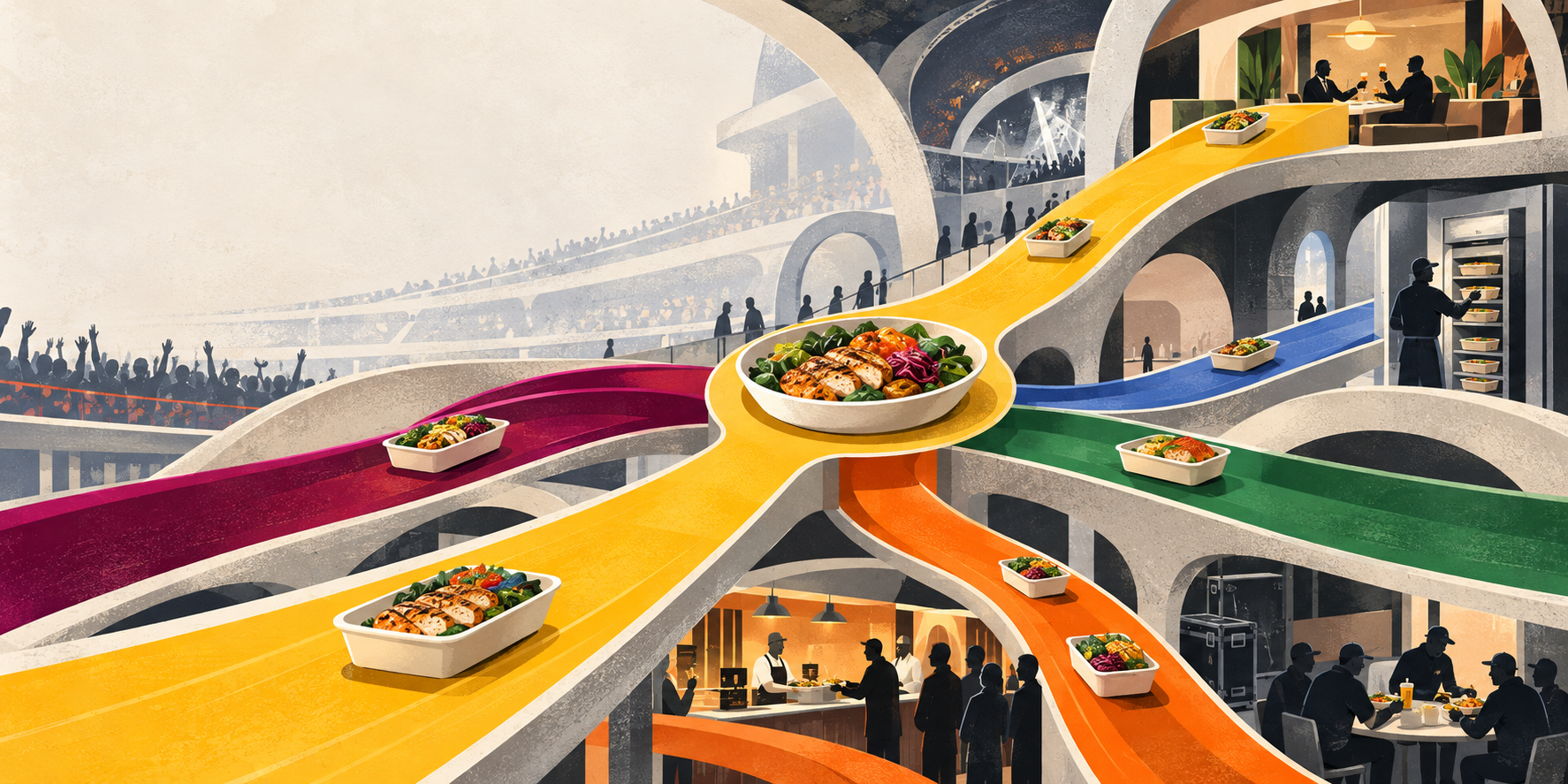
Meal programs for stadiums, venues, and live events work when operators plan food as part of the run of show. The meal has to reach each group at the right location and service window, whether that means suite guests, production crews, speakers, sponsors, or ticketed attendees moving between sessions.
This guide explains how to choose a service model, build a menu, plan distribution, manage dietary information, and measure the program after the last tray leaves the service area.
Key takeaways
Define each audience, service window, pickup point, and meal entitlement before choosing the menu.
Match the format to movement. Individually packed meals suit short breaks and distributed groups; staffed service suits longer windows and hosted spaces.
Use a focused menu with clear labels and enough variety to cover the dietary needs collected during registration.
Treat local food rules, temperature control, allergen procedures, and site access as operating requirements from the first planning call.
Track redemption, leftovers, wait time, order accuracy, and diner feedback so the next event starts with evidence instead of guesses.
What an event meal program covers
An event meal program is the repeatable plan for feeding a defined group during a live event. It sets the menu, quantity, schedule, distribution points, staffing, equipment, labeling, payment or entitlement rules, and backup plan. A program may run for one concert load-in or across an entire season.
Concession stands serve walk-up demand. A meal program covers planned groups and scheduled eating moments. Many venues need both. Concessions can handle spontaneous purchases while the meal program protects crew calls, conference breaks, premium hospitality, or prepaid attendee meals from long lines and uneven availability.
Meal program and concession service differences
Planning question | Meal program | Concession service |
Demand | Estimated or reserved by group | Driven by walk-up purchases |
Timing | Scheduled around the run of show | Open across a broad event window |
Menu | Curated for the group and site | Built for stand throughput and broad appeal |
Payment | Prepaid, subsidized, credentialed, or voucher-based | Usually paid at purchase |
Measurement | Redemption, fulfillment, waste, and feedback | Transactions, spend, and stand performance |
Where live event food service breaks down
The menu gets most of the attention because guests can see it. Operational failures usually start elsewhere: a break that shrinks by ten minutes, a loading dock shared with production, a refrigeration limit discovered on event day, or a credential rule that blocks the delivery team from the final handoff point.
Demand arrives in waves
Venues rarely serve a steady stream. Doors, intermission, session breaks, halftime, and post-show egress push people toward food at once. A meal program needs a defined serving capacity for each window. Count the number of meals that must leave the pickup point, divide by the available minutes, and test whether the staffing and handoff method can meet that pace.
One building contains several audiences
A single show may include ticketed guests, suite holders, artists, stagehands, security teams, volunteers, sponsors, and media. Their schedules and access zones differ. Group them by where they will be, when they can eat, and whether they can leave their post. This map determines whether meals belong at a central station, a suite pantry, a backstage refrigerator, or a mobile pickup point.
Site constraints shape the meal
A menu that works in a convention hall may fail on a concourse with limited power. Ask about refrigeration, hot holding, reheating, handwashing, waste removal, elevator access, dock appointments, fire lanes, security screening, and storage. Confirm who owns each space and who can approve a change.
How to choose a service model
Choose the smallest service model that can meet the audience and schedule. Extra complexity adds handoffs, equipment, and labor. The following formats can run alone or as a hybrid program.
Preordered individual meals
Attendees or organizers choose meals before the event. Each meal can carry a name, group, pickup window, or dietary identifier. This format gives planners a firmer count and gives diners more choice. It also requires a clean ordering cutoff, a process for late changes, and a retrieval method that avoids alphabetized-table gridlock.
Grab and go meal stations
A limited assortment of individually packed meals sits at one or more staffed pickup points. Guests choose on site and move quickly. Use large menu signs before the front of the line, separate high-demand options across the station, and place beverages or utensils after the meal handoff so people do not stop at the first touchpoint.
Timed meal drops
Meals arrive in planned waves based on session, shift, or access zone. Timed drops reduce the storage burden and can protect quality during a long event day. Build buffer into the delivery schedule for traffic, dock queues, and security. Assign one venue contact to receive each drop and record quantities.
Crew and staff meal programs
Crew feeding rewards reliability. The group may eat before doors, between shifts, or after the audience leaves. Offer meals that are easy to identify and collect, with enough range for the dietary information on file. A recurring refrigerator or stocked pickup area can serve teams whose breaks do not line up.
Hybrid programs
A hybrid may combine preordered meals for VIP guests, grab-and-go meals for conference attendees, scheduled drops for staff, and open concessions for everyone else. Give each format its own owner, count, service window, and post-event report. Shared inventory without clear ownership makes reconciliation harder.
How to build the operating plan
Map every eater to a time and place
Start with the run of show and a venue map. Create one line for each audience. Record expected headcount, order method, access zone, meal time, service duration, pickup point, dietary data source, and on-site owner. Add a separate line for staff working the food program. They need breaks and meals too.
Forecast orders with a range
A registered headcount is rarely the final meal count. Estimate likely redemption for each group, then set a base order and a controlled buffer. The buffer should reflect the cost of a missed meal, the ability to store surplus safely, and historical attendance. Avoid applying one percentage to every audience. A credentialed crew with a fixed break behaves differently from a conference attendee with several lunch choices.
Design the handoff before the menu
Write the attendee journey in plain steps: eligibility check, meal selection, handoff, utensil pickup, beverage pickup, and exit. Remove any step that can happen before the service window. Registration can collect meal choices. Badges can show pickup zones. Digital confirmations can display a time and location. The service line should handle the meal, not unfinished administration.
Assign one owner for each decision
Name the person who can change the count, approve a substitute, release a truck, move a station, and close service. Vendors and venue teams need a current contact sheet with mobile numbers and escalation order. A group chat can support event-day communication, but the written service plan remains the source of truth.
Menu planning for speed and choice
Venue menus need enough range to welcome the group without turning every pickup point into a custom kitchen. A focused assortment is easier to label, stage, replenish, and explain. Use registration data to build the mix instead of guessing from broad audience stereotypes.
Choose food that fits the setting
Match the meal to the available seating and utensils. Fork-friendly bowls can work in suites or session rooms. Handheld formats may suit standing areas. Ready-to-heat meals require verified equipment, power, and staff instructions. Consider aroma, sauces, packaging stability, and the distance between pickup and eating area.
Use variety where it changes the experience
Variety matters most across a multi-day program or recurring schedule. Rotate cuisines and core ingredients while keeping the service format familiar. At a single short event, a smaller menu can improve availability and line speed. Publish the options early enough for attendees to identify a suitable meal.
Write labels for decisions
A useful label gives the meal name, key ingredients, dietary information supported by the provider, reheating directions when relevant, and a clear identifier that matches the order record. Use large type and the same naming convention across menus, confirmations, cartons, and pickup signs. Decorative names can wait until the diner understands what is in the package.
Dietary requests and allergen communication
Collect dietary requests during registration and set a deadline for changes. Keep preference categories separate from allergy disclosures. Share only the information needed by the meal provider and authorized event staff, and follow the organization’s privacy practices when a request contains health information.
The FDA’s 2026 Food Code is a model used by regulators, while state and local jurisdictions adopt and enforce their own rules. The Code includes food-allergy awareness within employee food-safety duties. Venue teams should confirm the code adopted in the event location and document how the caterer, venue, and service staff will communicate allergen information and prevent cross-contact. See the FDA Food Code and local health department requirements.
Build a clear exception process
Late requests will happen. Decide who can approve them, what substitutions are available, how the replacement is labeled, and who confirms the handoff. Staff should avoid improvising ingredient answers. Route questions to the provider’s documented ingredient and allergen information or the designated food-safety lead.
Food safety and local compliance
Food safety belongs in the operating plan, not in a final reminder. Confirm permits, approved preparation sources, delivery requirements, employee practices, temperature control, holding limits, sanitation, and the venue’s rules with the responsible local authority and the contracted provider.
The current FDA Food Code 2026 provides a national model for retail and food-service safety. It does not replace local law. Ask the provider to identify the controls used from preparation through final service, then record who monitors them on site. If a service window slips, the team needs an approved action instead of an event-day guess.
Plan the site walk
Walk the actual route from dock to service point with operations, security, and food-service leads. Time the trip. Check door widths, elevators, restricted corridors, floor protection, power, refrigeration, water, and waste staging. Photograph the approved setup locations and include them in the final service plan.
Write a disruption plan
List the response for a late delivery, attendance spike, power loss, equipment failure, shortened break, missing dietary meal, or station relocation. Define the threshold that triggers each response. Keep backup meals controlled and labeled so the contingency does not create a second inventory problem.
Reduce waste before food arrives
The U.S. Environmental Protection Agency places prevention at the top of its Wasted Food Scale. Its guidance for food-service businesses recommends measuring waste, comparing purchasing with demand, adjusting menus, and improving storage and production practices. Those ideas translate cleanly to event meal programs.
Use event data to tighten the next order
Record ordered meals, meals delivered, meals redeemed, unopened surplus, discarded meals, and the reason for disposal. Split the data by audience, service window, location, and menu option. A venue can then see whether waste came from forecasting, a schedule change, poor signage, an unpopular item, or a distribution failure.
Create a safe surplus plan
Decide before the event whether unopened surplus can be reassigned, stored, donated, or must be discarded. Any recovery plan must follow local food rules, temperature controls, packaging requirements, and partner acceptance criteria. The EPA’s source-reduction guidance is a useful starting point for measurement and prevention.
Measure the meal program
A post-event report should connect the guest experience to the operating result. Use the same definitions across events so comparisons remain useful.
Redemption rate: meals collected divided by meals available to the eligible group.
Fulfillment accuracy: correct meals handed off divided by recorded orders.
Service time: minutes from joining the line to receiving the meal, sampled during peak windows.
Waste rate: unserved or discarded meals divided by meals delivered, separated by reason.
Cost per redeemed meal: total program cost divided by meals collected.
Diner feedback: a short rating plus one optional comment tied to the menu and service point.
Review the report with venue operations, the meal provider, registration, and the event owner. Assign changes while the details are fresh. Keep the parts that worked; revise the count, menu, station layout, or communication where the data points to a specific failure.
How CookUnity Business can support event meals
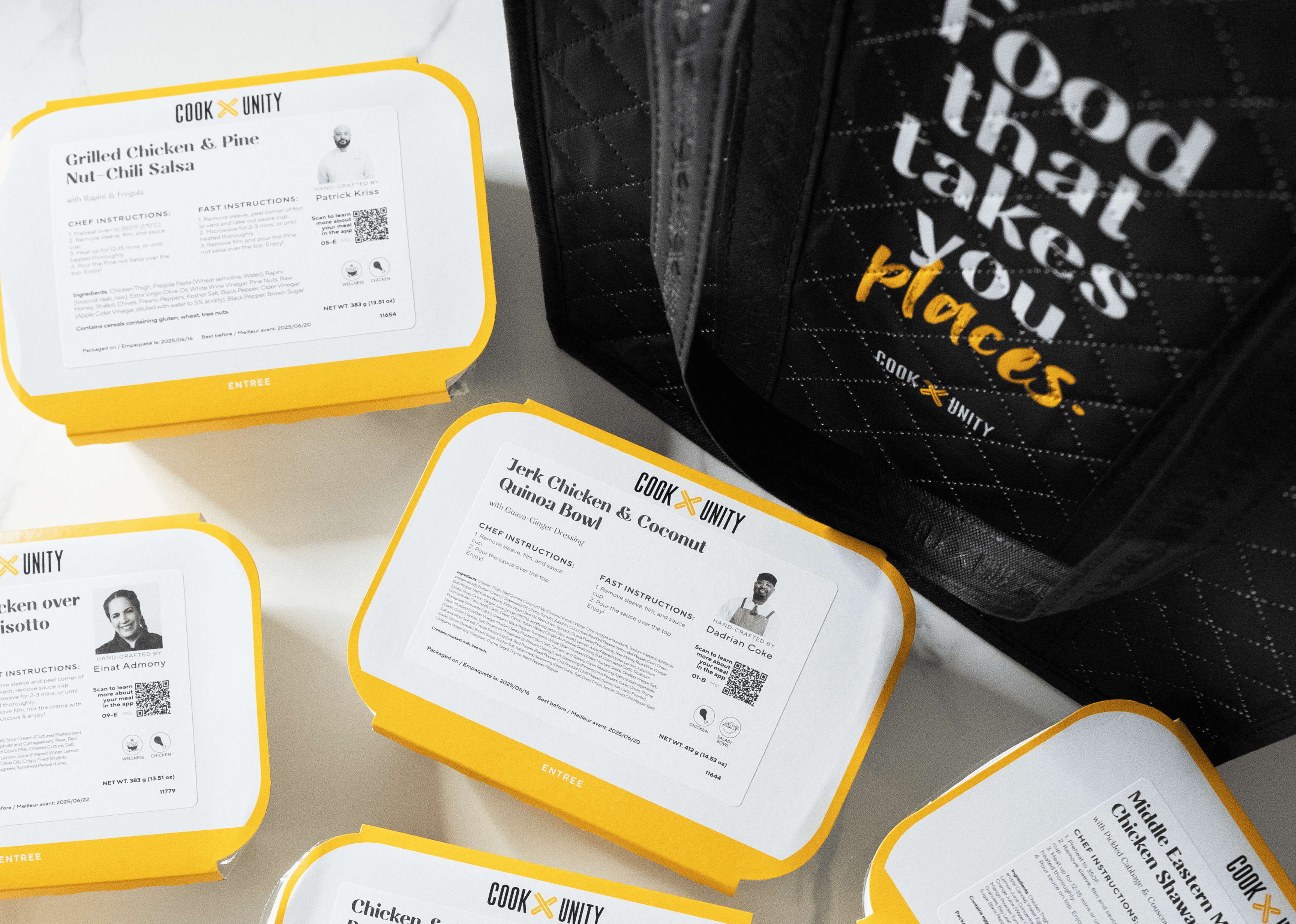
CookUnity Business offers group meal options that include individually boxed meals, ready-to-heat formats, event catering, and recurring on-site programs. Its current Business pages position these formats for meetings, conferences, trade shows, corporate events, and group programs, with menu and dietary options that can be tailored to the account.
For a stadium or live-event program, the right fit depends on the audience, site equipment, delivery market, volume, and service expectations. Share the event schedule, location, headcount range, ordering method, dietary-request process, loading requirements, and on-site handoff plan with the CookUnity Business team. Confirm current menu availability, pricing, delivery coverage, staffing, and minimums for the specific event.
Prepared meals work best for defined groups
Individually packed meals can serve crews, volunteers, speakers, sponsors, production teams, and conference attendees whose meal window and pickup location are known. They can also complement a venue’s concession operation by covering groups that need a prepaid or scheduled meal. Explore CookUnity’s corporate and event meal programs for current service formats.
Planning timeline for venue meal programs
Six to eight weeks before the event
Define audiences, headcount ranges, budget, meal entitlement, and service windows.
Confirm venue rules, dock access, equipment, storage, permits, and waste requirements.
Choose the provider and service model. Set ordering and dietary-request deadlines.
Three to four weeks before the event
Approve the menu, labels, signage plan, station locations, and staffing model.
Complete the site walk and document the dock-to-service route.
Test registration exports, order files, badge indicators, vouchers, or pickup confirmations.
One week before the event
Lock counts according to the contract and approve the controlled buffer.
Distribute contact sheets, delivery appointments, floor plans, and escalation steps.
Brief service staff on meal identification, dietary questions, safety controls, and exception handling.
Event day and post-event review
Verify quantities, labels, temperatures or other required controls, and station readiness at receipt.
Track redemptions, peak service time, substitutions, surplus, and disposal reasons.
Hold a short review within two business days and record changes for the next event.
Frequently asked questions
What is the best meal format for a stadium or arena
The best format follows the audience and service window. Individually packed meals work well for defined groups and short breaks. Staffed stations suit longer windows or hosted spaces. Open concessions remain useful for walk-up demand. Many large venues use a mix.
How far in advance should planners order event meals
Start provider and venue planning six to eight weeks before a large or operationally complex event. The contracted order deadline may come later. Earlier planning gives teams time to confirm site access, equipment, dietary-request collection, staffing, and delivery windows.
How should a venue plan for dietary requests
Collect requests during registration, separate allergies from preferences, and set a change deadline. Choose meals using provider-supported dietary information. Label them consistently and define who can answer ingredient or allergen questions on site.
How many extra meals should an event order
There is no universal buffer. Use historical redemption by audience, registration confidence, schedule risk, storage capacity, and the consequence of running short. Set the buffer by group and document the reason so the team can test it against actual use.
Can prepared meals replace stadium concessions
Prepared meals can cover planned groups, prepaid attendees, staff, or premium experiences. Concessions handle spontaneous demand and broader event-long purchasing. The two formats can work together when their inventory, payment rules, and service locations are clearly separated.
What should an event meal provider receive from the venue
Provide the run of show, headcount range, menu requirements, dietary-request process, floor plan, dock instructions, security rules, equipment list, service windows, on-site contacts, waste plan, and contingency procedures. Confirm the final count and change policy in writing.
Build the meal program around the run of show
The strongest venue meal programs begin with the people, schedule, and building. Once those pieces are mapped, the menu can do its job: give attendees and event teams a satisfying meal without pulling the day off course.
Talk with CookUnity Business about individually packed meals, event catering, or recurring meal programs for your group. Availability and service details depend on the event location, volume, and format.

Be the first to know about new offers
Multiorder discounts, free items and more.