Back
How to Provide Food for Night Shift Workers in Manufacturing Facilities
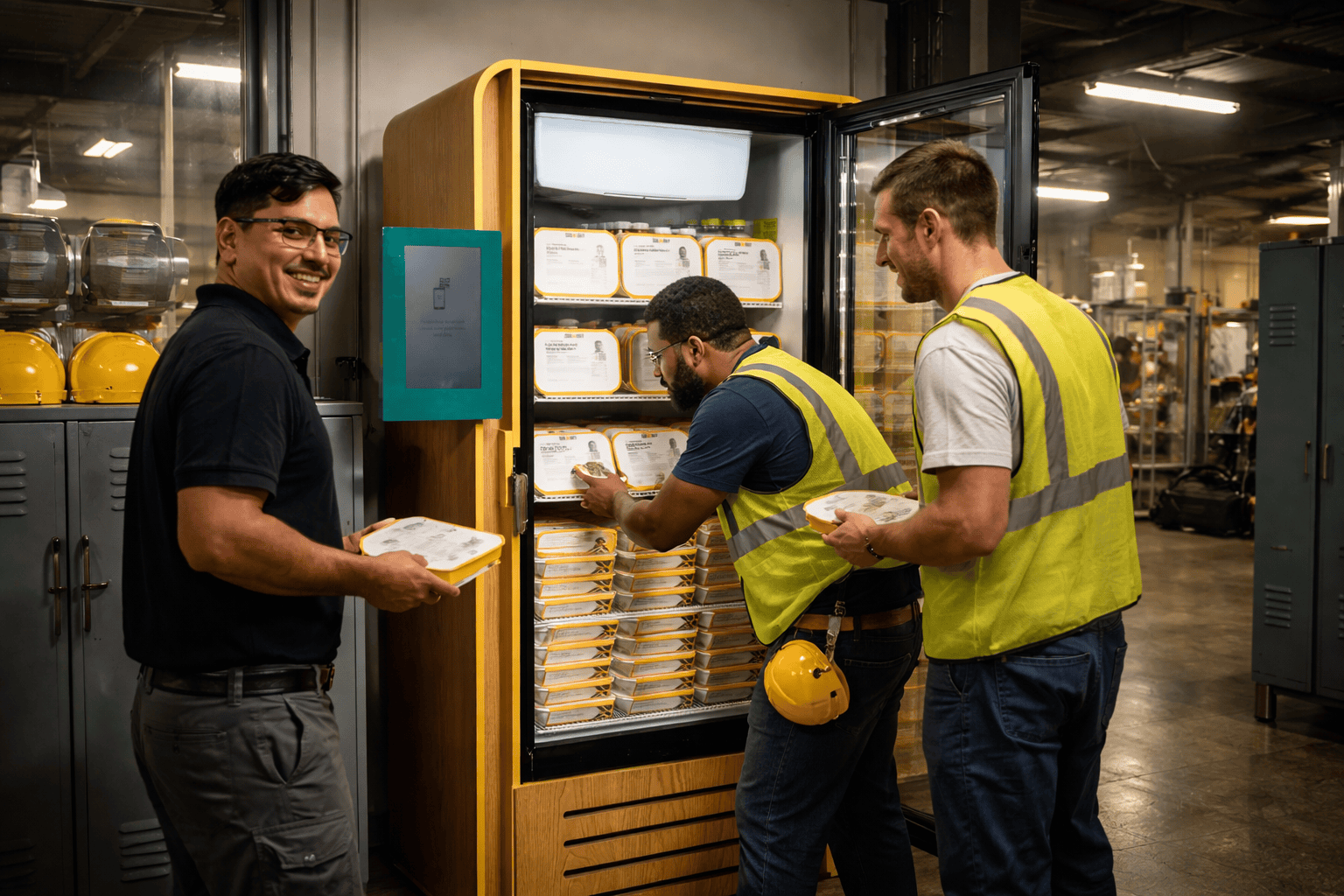
Manufacturing facilities operate around the clock, but food access rarely keeps up with the demands of overnight production. When cafeterias close and nearby restaurants shut down, employees working night shifts are often left with limited options—usually vending machines or packed meals brought from home.
Providing reliable meals for night shift workers is more than a convenience. It directly affects productivity, safety, morale, and retention. For manufacturing leaders and facilities teams, the challenge is finding a food solution that works across every shift without requiring a full kitchen or additional staff.
This guide explains the most effective ways to provide food for night shift workers in manufacturing environments and how modern workplace meal programs can support employees across 24/7 operations.
Why Food Access Is a Challenge for Night Shift Workers
Manufacturing facilities often operate with multiple shifts, including overnight production schedules. While this ensures continuous output, it also creates a food access problem.
Common challenges include:
Cafeterias that close before night shifts begin
Limited restaurants near industrial parks
Short break windows that prevent workers from leaving the facility
Vending machines offering only snacks or processed foods
For employees working long overnight shifts, these limitations can make it difficult to access nutritious meals when they need them most.
When teams lack convenient food options, it can lead to fatigue, lower morale, and time lost during breaks. Facilities leaders increasingly recognize that improving food access is a practical way to support both workforce well-being and operational efficiency.
What Manufacturing Workers Need During Night Shifts
Night shift workers have different needs than typical office employees. Food programs must support speed, convenience, and consistent availability.
24/7 Availability
Employees working overnight or rotating shifts need reliable access to meals at any hour, not just during traditional lunch periods.
Fast Breakroom Access
Breaks in manufacturing environments are often short. Workers need meal options located close to production areas or employee breakrooms.
Nutritious and Filling Meals
Long shifts require meals that provide sustained energy rather than quick snacks or sugary foods.
Minimal Operational Complexity
Facilities teams typically cannot manage full cafeteria operations overnight. Any food solution needs to run with minimal oversight. These needs make traditional catering or staffed cafeterias difficult to maintain in industrial environments.
Common Food Options for Night Shift Workers
Manufacturing facilities typically rely on several approaches to feed overnight teams. Each option has advantages and limitations.
Vending Machines
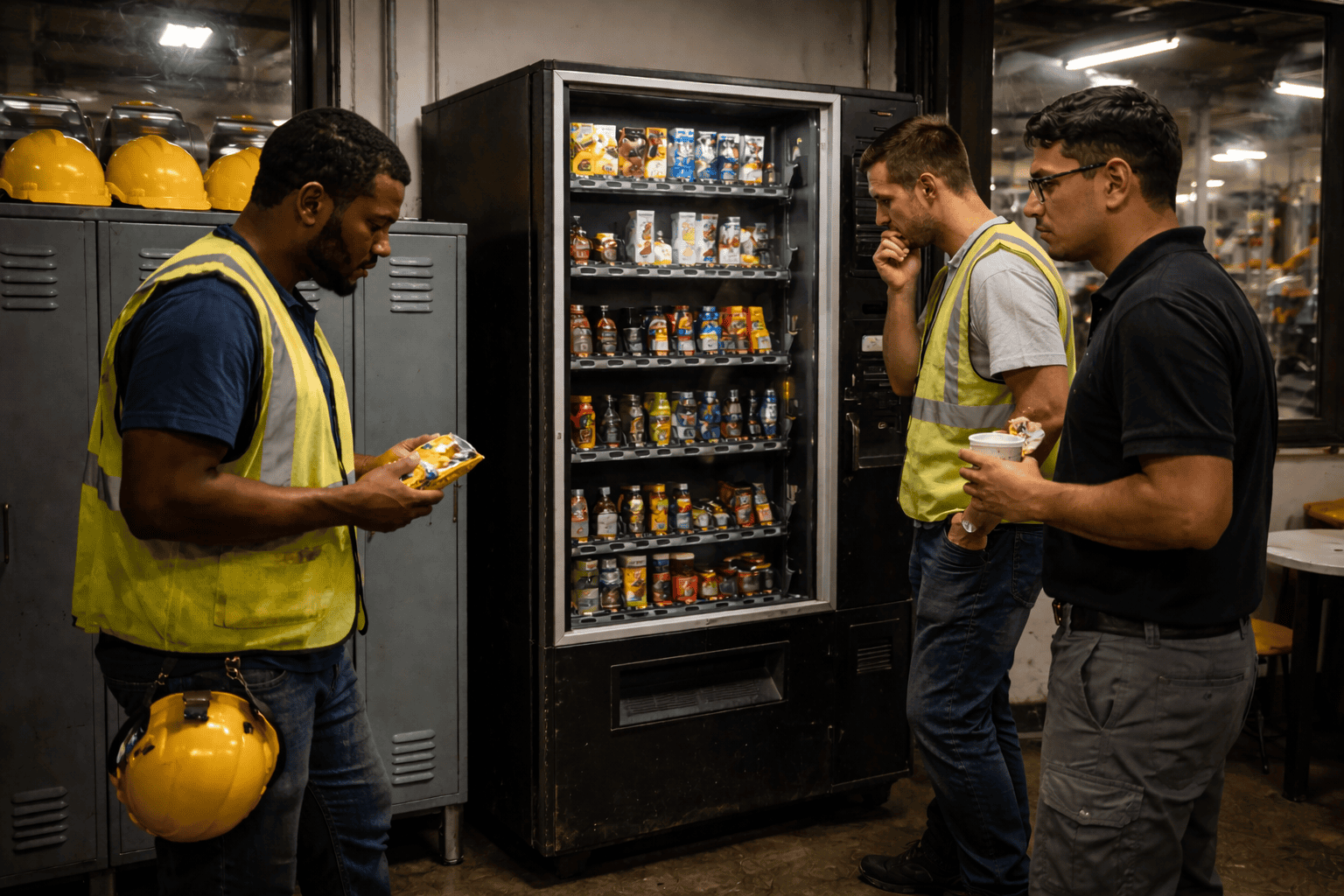
Vending machines are the most common breakroom food option in factories. While convenient, they usually offer limited selections such as snacks, candy, and packaged foods.
For employees working long shifts, vending machines rarely provide the balanced meals needed to maintain energy and focus.
Packed Meals from Home
Some workers bring meals from home to avoid relying on vending machines. While this works for some employees, it requires advance planning and refrigeration space, which is not always practical.
Off-Site Restaurants
In many industrial areas, restaurants are either closed overnight or located too far away to reach during short breaks.
On-Site Cafeterias
Cafeterias can provide fresh meals, but they require kitchens, staff, and consistent demand. Maintaining cafeteria service during overnight hours is often cost-prohibitive for many manufacturing facilities.
These challenges have led many companies to explore modern alternatives that provide fresh meals without the operational complexity of traditional food service.
A Modern Solution: 24/7 Smart Fridge Meals for Shift Workers
One increasingly popular solution for manufacturing environments is the use of stocked smart fridges that provide grab-and-go meals directly inside workplace breakrooms.
A workplace smart fridge functions as a fully managed meal access system that provides employees with ready-to-eat meals whenever they need them.
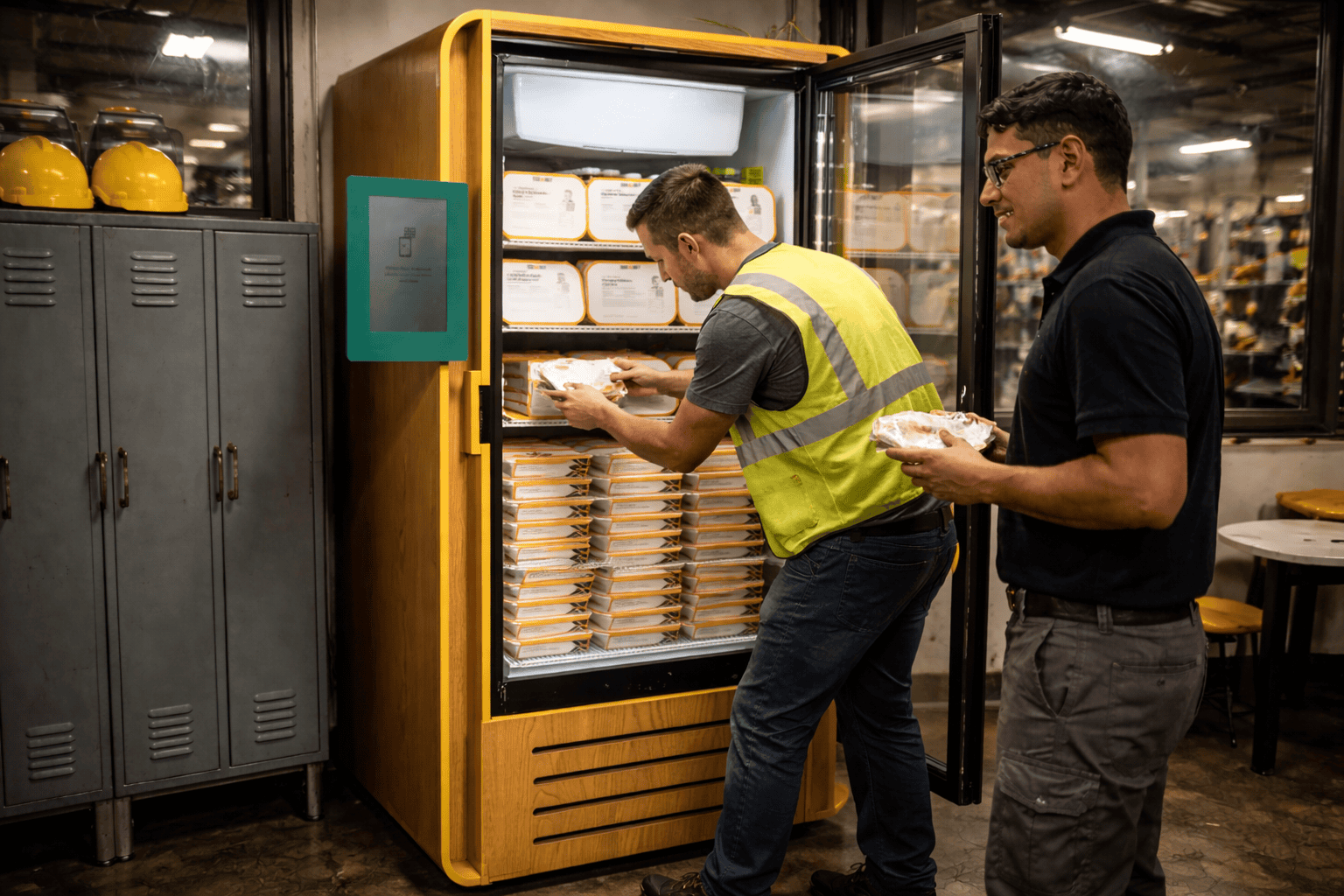
Smart fridge meal programs typically provide:
Fresh, chef-crafted meals available 24/7
Quick grab-and-go access during short breaks
Minimal footprint inside existing breakrooms
Fully managed restocking and logistics
Meal options that support diverse dietary needs
Because these systems require no kitchen infrastructure, they can be placed directly in manufacturing breakrooms or near production floors.
Companies using solutions like the CookUnity Smart Fridge for manufacturing facilities often deploy multiple units across large campuses so employees can access meals close to their work areas.
How Smart Fridges Improve Night Shift Food Access
Smart fridge programs help manufacturing organizations solve several operational challenges at once.
Consistent Food Access Across Every Shift
Employees can access meals during overnight hours without relying on staffed food service.
Reduced Time Lost During Breaks
Placing meal access directly in breakrooms eliminates long walks across large campuses to reach cafeterias.
Healthier Meal Options Than Vending
Chef-crafted meals provide balanced options that support sustained energy during long shifts.
Operational Simplicity for Facilities Teams
Smart fridge providers manage stocking, inventory, and maintenance, reducing the burden on internal staff.
For large industrial campuses, this approach allows companies to scale food access without expanding cafeteria infrastructure.
Best Practices for Feeding Night Shift Workers
Manufacturing leaders implementing meal programs for overnight teams should consider several best practices.
Place Food Access Near Production Areas
Meals should be located in high-traffic breakrooms or near production floors to minimize travel time during short breaks.
Provide Options That Support Different Dietary Needs
A rotating menu with vegetarian, high-protein, and globally inspired meals ensures employees across diverse teams can find meals they enjoy.
Ensure Meals Are Available Across All Shifts
Food programs should be stocked and maintained so night shift employees have the same access as daytime teams.
Keep the Experience Simple
Workers should be able to access meals quickly with minimal friction, ideally within seconds.
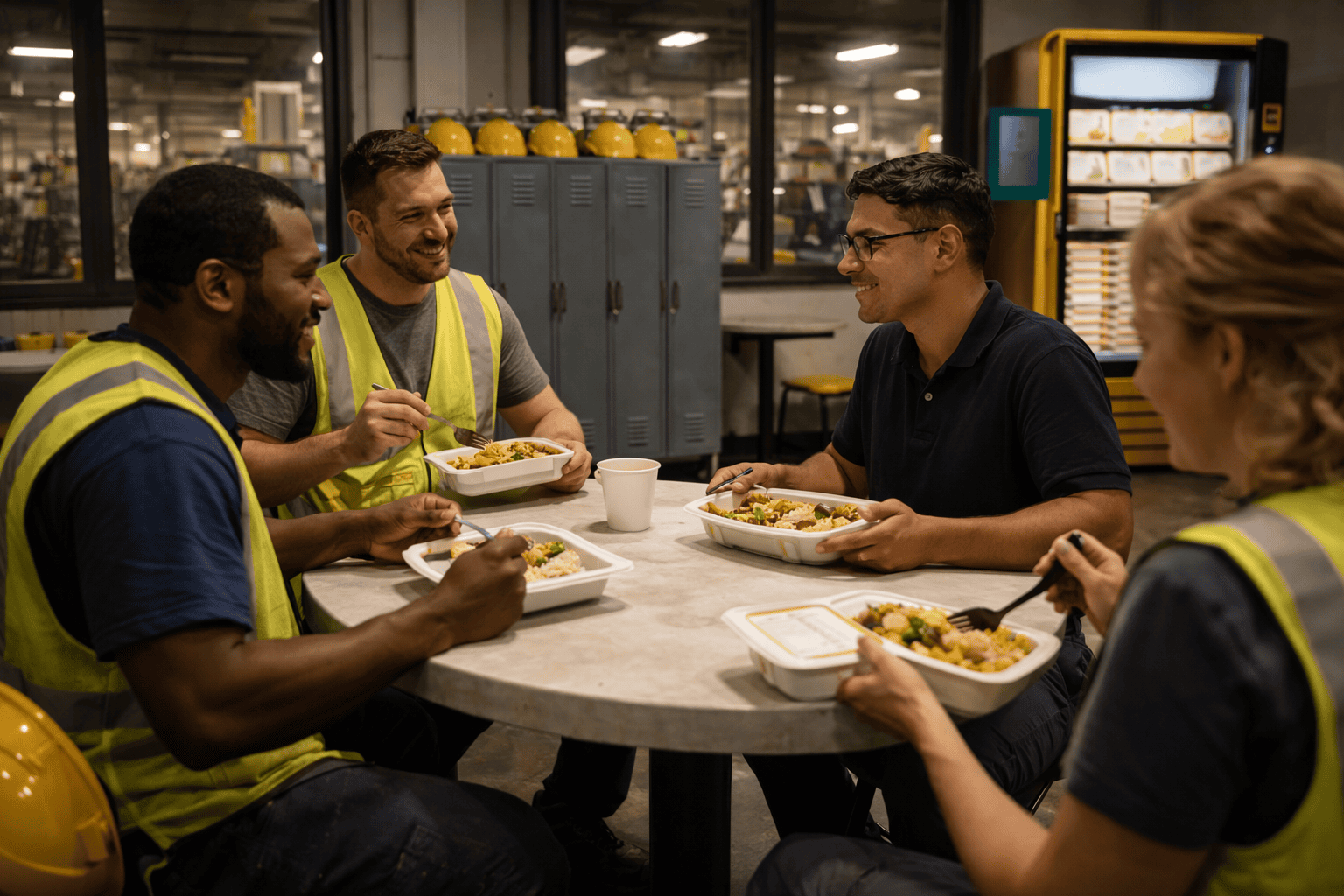
By focusing on convenience and consistency, facilities teams can create a meal program that employees actually use.
Why Manufacturing Leaders Are Rethinking Workplace Food
Manufacturing companies are increasingly recognizing that food access plays a meaningful role in workforce satisfaction.
Providing reliable meals during overnight shifts can help organizations:
Improve employee morale
Reduce time lost during breaks
Support healthier eating habits
Enhance employee retention
Deliver a practical workplace benefit
For facilities with multiple buildings or large campuses, modern solutions like stocked smart fridges make it possible to deliver high-quality meals across the entire site.
Frequently Asked Questions
What should night shift workers eat during long manufacturing shifts?
Night shift workers benefit from balanced meals that include protein, complex carbohydrates, and vegetables. These meals help maintain energy levels and focus throughout long shifts, especially when employees cannot access restaurants or cafeterias overnight.
How can manufacturing facilities provide meals during overnight shifts?
Manufacturing facilities often provide overnight meals through workplace meal programs such as stocked smart fridges, breakroom meal deliveries, or limited cafeteria service. Smart fridge systems are increasingly popular because they provide 24/7 access without requiring kitchen staff.
Are smart fridges better than vending machines for factory breakrooms?
Smart fridges typically provide fresh meals rather than packaged snacks. This allows employees to access full meals instead of relying solely on vending machines, making them a more practical option for long shifts.
Do smart fridges require a kitchen or cafeteria?
No. Most workplace smart fridges require only a small footprint and a standard electrical outlet, making them suitable for factory breakrooms, warehouses, and industrial campuses.

Be the first to know about new offers
Multiorder discounts, free items and more.