Back
Zero-Lift Food Amenity: What 'Fully Managed' Really Means for Your On-Site Team
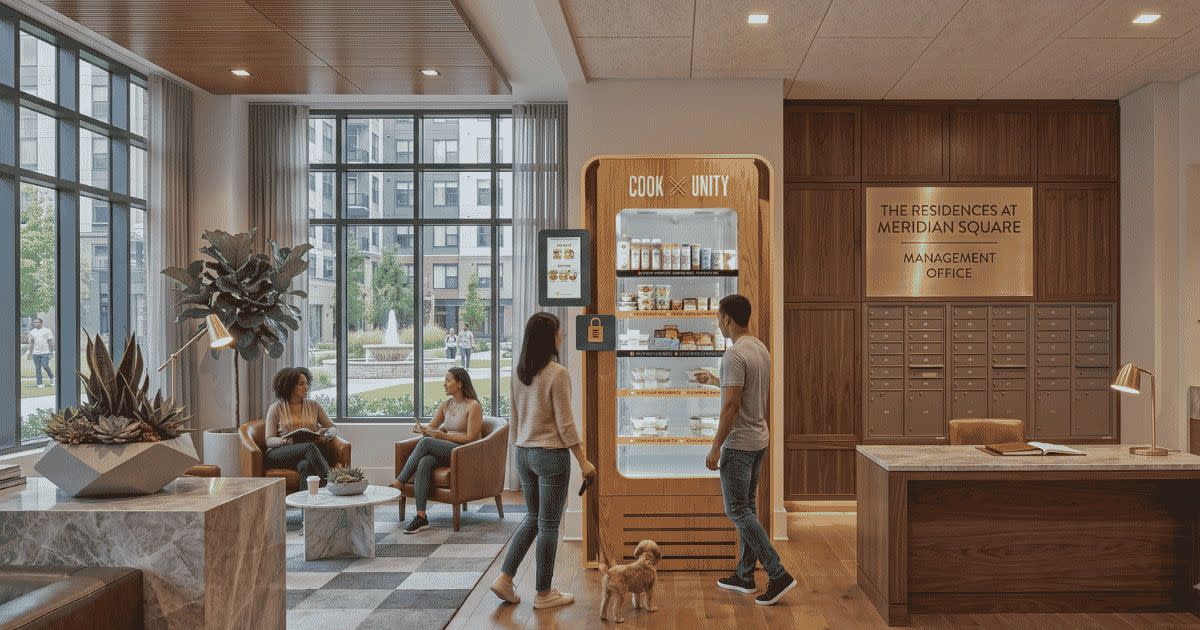
Zero-Lift Food Amenity: What "Fully Managed" Really Means for Your On-Site Team
Every amenity pitch sounds easy until it lands on the property manager's desk. New amenities mean new vendor relationships, new operational processes, new things to monitor, and new complaints to field when something goes wrong. For on-site teams that are already stretched thin, "this will be great for residents" can quickly become "who is handling this?"
That question is exactly what the fully managed smart fridge model is designed to answer. And the answer matters more right now than it ever has.
The Operating Environment On-Site Teams Are Actually Working In
Before getting into what "fully managed" means in practice, it is worth being honest about the context on-site teams are operating in.
According to GlobeSt., multifamily operating expenses rose 28% nationwide in 2024. Labor costs, insurance premiums, and maintenance expenses all increased, and a recent industry survey reported by Luxer One found that rising operational costs, including a 7.1% increase in general expenses, are directly contributing to elevated stress and burnout among property staff.
Meanwhile, Multifamily Executive reports that leasing and administrative staff salaries already represent 21% to 25% of total operating expenses for mid-market operators. In that environment, adding new responsibilities to an on-site team is not just an inconvenience. It is a real cost, measured in staff time, attention, and capacity that gets pulled away from the things that actually move the needle on NOI.
This is the lens through which owners and operators should evaluate any new amenity. Not just "do residents want this?" but "what does this actually require from our team to run well?"

What Most Food Amenities Actually Require From Property Teams
The appeal of adding a food option to a residential building is obvious. The operational reality of most food amenity formats is less appealing.
An on-site café requires a dedicated space, commercial kitchen equipment, health department licensing, and ongoing staff to operate. Even a simple staffed café requires hiring, scheduling, payroll, and coverage for sick days. When the barista calls out, the property manager is fielding resident complaints by 8am.
A catered community meal program sounds low-maintenance until someone has to coordinate with vendors, manage headcounts, handle food allergies, deal with leftovers, and communicate schedule changes to residents on short notice. The administrative overhead adds up quickly.
A community pantry or resident snack station requires someone to restock it, manage inventory, handle expired products, and figure out what to do when the food runs out on a Friday afternoon before a long weekend.
Each of these models puts meaningful operational responsibility on the property team. They require attention, vendor management, and staff time to function reliably. And when they do not function reliably, the building takes the reputational hit regardless of whose fault it was.
What "Fully Managed" Actually Means in Practice
A fully managed smart fridge program works on a fundamentally different model. The provider handles the operations. The property team handles the placement.
Here is what that means in concrete terms for an on-site team:
What the property team does:
Choose where in the building to place the fridge
Coordinate the one-time installation with the provider
Communicate the new amenity to residents at launch
That is it. Those three things happen once, at the beginning of the program. After that, the on-site team's involvement is essentially zero.
What the provider handles on an ongoing basis:
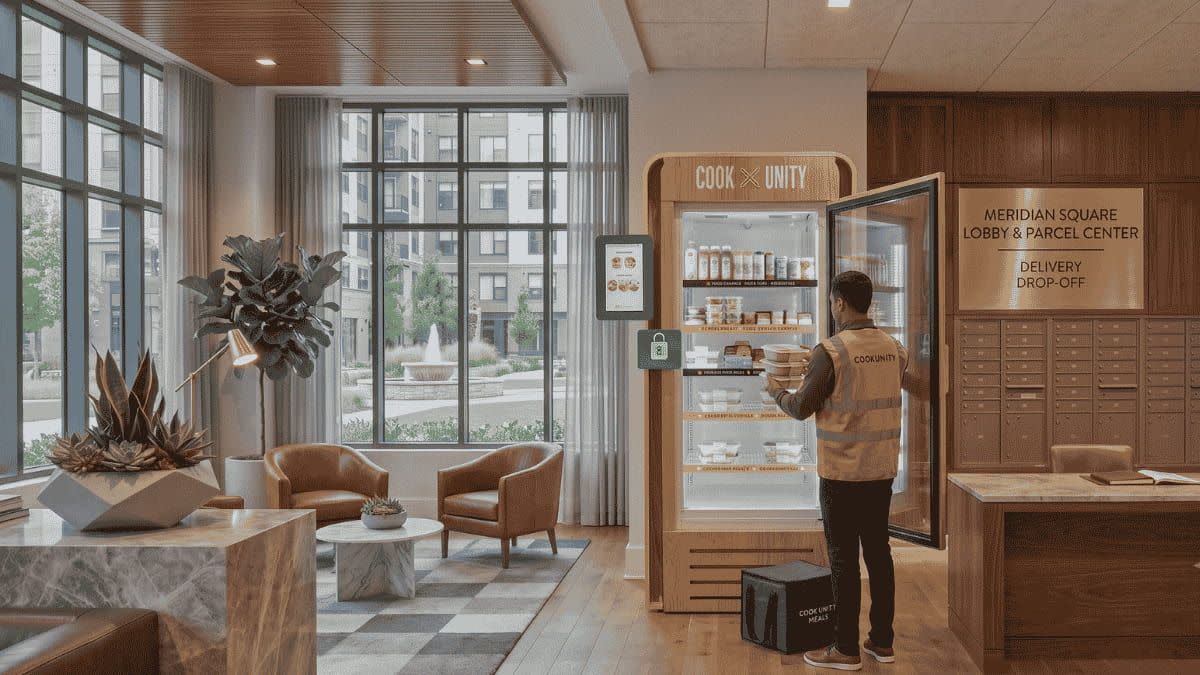
Restocking the fridge on a regular schedule with freshly prepared meals
Rotating the menu so the selection stays fresh and relevant to resident preferences
Monitoring inventory in real time so the fridge does not run empty
Maintaining the equipment and handling any technical issues
Responding to resident questions or concerns about the food, the app, or the checkout experience
Providing usage data and reporting to the property so the building has visibility into how the amenity is performing
The fridge does not need to be supervised. It does not need staff. It does not generate maintenance tickets. It does not require the property team to manage a vendor relationship beyond the initial setup. If something breaks, the provider fixes it. If a resident has a complaint about a meal, the provider handles it.
Why This Model Is Different From "Mostly Managed"
There is an important distinction between fully managed and mostly managed that operators should probe when evaluating smart fridge providers.
Some smart fridge programs shift more responsibility to the property than they initially let on. The restocking schedule might be infrequent enough that the fridge regularly goes empty, which generates resident complaints that land on the property team. The maintenance response time might be slow enough that broken equipment sits for days, again creating a resident experience problem that the building absorbs. The reporting might be limited or hard to access, leaving the property in the dark about whether the amenity is actually being used.
A genuinely fully managed program means the provider has skin in the game. Their revenue depends on residents using the fridge, which means they are incentivized to keep it stocked, maintain it reliably, and ensure the resident experience is good enough to generate repeat use. That alignment of incentives is what makes the model work for property teams.
When evaluating a smart fridge provider, operators should ask specifically:
What is the restocking frequency and how is it determined?
What is the response time for equipment issues and who is the point of contact?
What happens if the fridge runs out of popular items between scheduled restocking visits?
What resident-facing support does the provider handle directly?
What data and reporting does the property receive, and how often?
What does the property team need to do on an ongoing basis?
The answers to those questions reveal whether a program is truly zero-lift or whether the property is quietly absorbing operational risk it was not expecting.
The Footprint Question: What Installation Actually Involves
One of the most common concerns operators have about adding any new amenity is the installation process. Renovations, construction timelines, and infrastructure changes create disruption and cost.
A smart fridge installation involves none of that. A standard unit requires approximately 6 square feet of floor space and a standard electrical outlet. No plumbing. No dedicated utility infrastructure. No permits from the building. No construction downtime.
The fridge can go in a lobby, a mailroom, an amenity floor, or any other common area that gets consistent daily foot traffic. Installation typically takes a matter of hours, not days. After that, the building is running a fully managed food amenity with no ongoing operational involvement from the property team.
For owners and operators thinking about the total cost of adding an amenity, that footprint and installation profile is significant. It means no capital budget for construction, no disruption to residents during buildout, and no extended timeline between the decision to add the amenity and the day residents can actually use it.
CookUnity's Fully Managed Smart Fridge for Residential Buildings
CookUnity is the first meal delivery led by world-class chefs, and the CookUnity Smart Fridge for residential buildings is built on the fully managed model described in this post. CookUnity handles all restocking, menu rotation, equipment maintenance, and resident-facing support. With 130+ chefs across the US and Canada, up to 400+ weekly meals, and 60+ global cuisines and diets, residents get a genuinely high-quality food amenity. The property team gets the leasing story and the resident goodwill without the operational overhead.
For on-site teams that are already managing more than enough, that is not a small thing. It is the difference between an amenity that makes the building better and one that quietly makes the team's job harder.
Get in touch with our team to learn more about bringing a CookUnity Smart Fridge to your property.
Frequently Asked Questions
What does "fully managed" mean for a smart fridge amenity?
A fully managed smart fridge program means the provider handles all ongoing operations: restocking, menu rotation, inventory monitoring, equipment maintenance, and resident-facing support. The property team's involvement is limited to choosing placement and coordinating the one-time installation. After launch, the fridge runs without requiring ongoing attention, staff time, or vendor management from the on-site team.
What does the on-site team actually have to do after a smart fridge is installed?
In a genuinely fully managed program, the on-site team's ongoing responsibilities are essentially zero. The provider monitors inventory, restocks on a regular schedule, maintains the equipment, and handles resident questions or complaints directly. The property team receives usage reporting without having to manage the program operationally.
How long does it take to install a smart fridge in an apartment building?
Installation is typically completed in a matter of hours. A standard smart fridge requires approximately 6 square feet of floor space and a standard electrical outlet. No plumbing, dedicated utility infrastructure, permits, or construction work is required. The fridge can be placed in an existing lobby, mailroom, or amenity floor without any disruption to building operations or residents.
How is a fully managed smart fridge different from other food amenity options?
Most food amenity options, including on-site cafés, catered meal programs, and community pantries, require meaningful ongoing involvement from the property team. Staffing, vendor coordination, inventory management, and complaint handling all fall to the building. A fully managed smart fridge program shifts all of that to the provider, giving the property the benefit of a high-quality food amenity without the operational overhead.
What should operators ask before signing with a smart fridge provider?
Key questions include: What is the restocking frequency and how is it adjusted for demand? What is the response time for equipment issues? What resident-facing support does the provider handle directly? What data and reporting does the property receive? What does the property team need to do on an ongoing basis? The answers reveal whether a program is genuinely zero-lift or whether the property is absorbing more operational responsibility than expected.
How does a fully managed food amenity affect NOI for apartment building owners?
A fully managed food amenity improves NOI through two channels. On the revenue side, a differentiated daily-use amenity supports leasing velocity and renewal rates, reducing vacancy loss and turnover costs. On the expense side, the fully managed model adds no incremental labor cost to the property, unlike food amenity formats that require staffing or ongoing management. The result is an amenity that contributes to NOI rather than compressing it.

Be the first to know about new offers
Multiorder discounts, free items and more.