Back
Managing Food Service Costs in Residential Behavioral Health Programs

What Drives Food Service Costs in Residential Behavioral Health Programs?
Most residential food service budgets break down into four major categories: labor, food purchasing, waste, and infrastructure.
Labor includes hiring, training, scheduling coverage, overtime, and turnover. Purchasing costs fluctuate due to supply chain variability and fragmented procurement processes. Waste results from inaccurate forecasting, inconsistent consumption, and overproduction. Infrastructure includes kitchen build-out, inspections, maintenance, cleaning protocols, and compliance management.
A common mistake is evaluating food cost strictly on a per-meal ingredient basis. The true cost of ownership includes staffing overhead, wasted inventory, equipment maintenance, compliance workload, and the administrative burden placed on clinical or operations staff when issues arise.

Why Labor Is Often the Largest Cost Multiplier
In residential behavioral health programs, labor is frequently the most unpredictable cost variable. Coverage must remain consistent even when census changes. During census dips, teams may be overstaffed. During census spikes, overtime becomes necessary.
Turnover introduces retraining costs and execution inconsistency. If clinical or administrative staff are pulled into food operations during staffing gaps, the true cost increases because high-value care staff are diverted from patient-focused work.
Reducing labor volatility typically requires reducing the amount of labor required to deliver compliant meals, rather than attempting to optimize complex kitchen scheduling structures.
How Food Waste and Forecasting Errors Inflate Spend
Food waste is rarely just a kitchen issue. It is a forecasting and operational planning issue.
Admissions timing, census changes, dietary accommodations, and inconsistent consumption patterns all influence production volume. Overproduction increases waste and cost. Underproduction triggers expensive last-minute purchasing and operational disruption.
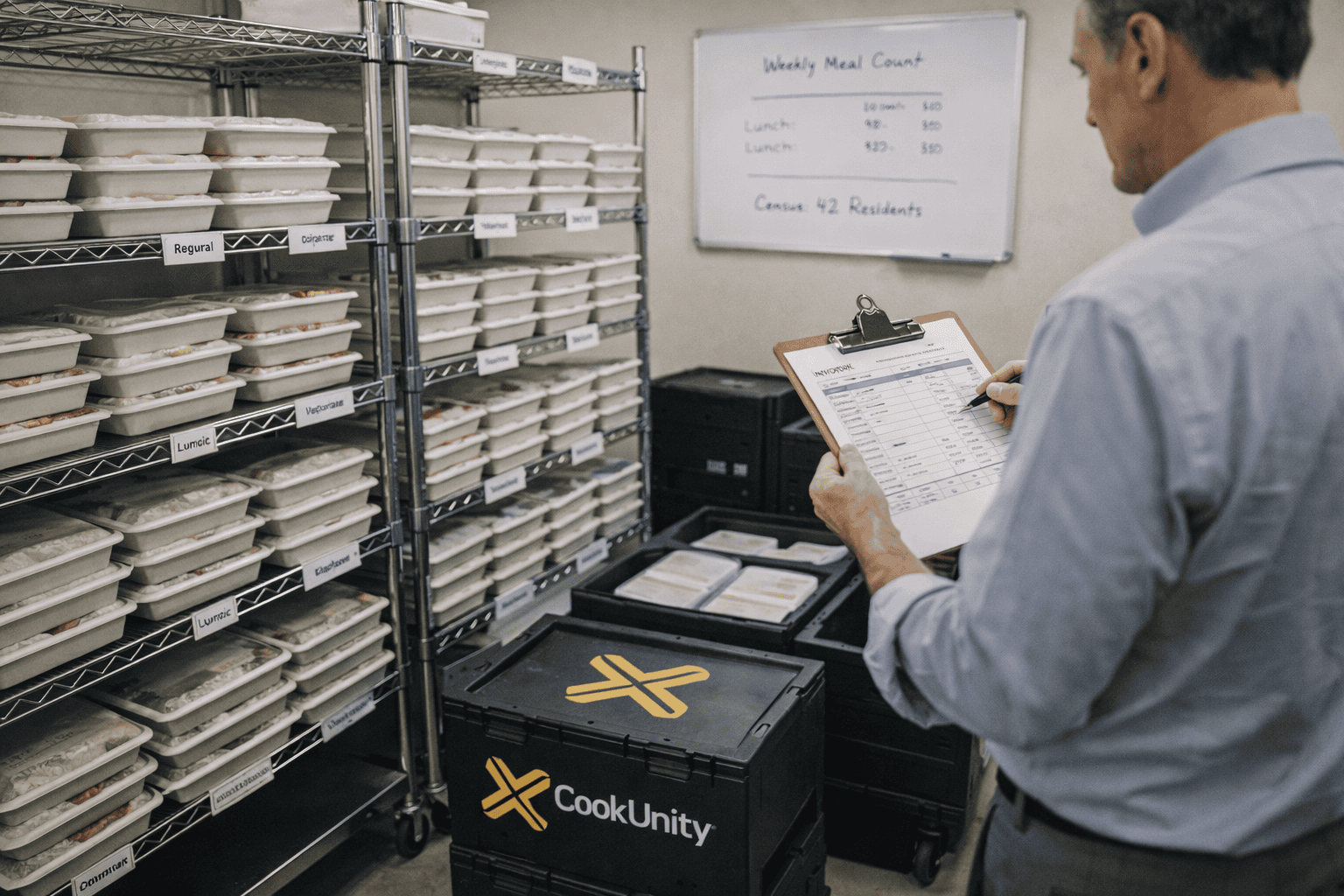
Programs that track census movement, consumption averages, allergy needs, and therapeutic diet requirements reduce waste because they align ordering with actual demand.
Kitchen Infrastructure and Capital Costs
Many operators assume a commercial kitchen is necessary to remain compliant or deliver a high-quality patient experience. However, regulations focus on safety, nutritional adequacy, and documented oversight, not necessarily kitchen ownership.
Kitchen build-outs introduce construction expenses, permitting timelines, inspection delays, equipment maintenance, and ongoing staffing requirements. These costs persist long after launch.
If your organization is opening or expanding, it is critical to separate two questions: How do we provide compliant meals? Do we need to own and operate the cooking infrastructure to do so?
For a detailed breakdown of infrastructure requirements, see our guide on https://www.cookunity.com/blog/residential-treatment-center-kitchen-requirements.
How to Make Food Service Costs More Predictable
Predictability reduces financial stress and operational risk.
Programs improve predictability by standardizing meal planning, implementing structured documentation, ensuring Registered Dietitian oversight, and adopting systems that scale directly with census changes.
When meal volume aligns cleanly with resident count, labor swings decrease, waste declines, and compliance processes become routine rather than reactive.

Where Compliance and Cost Control Intersect
In behavioral health, cost control cannot compromise compliance. The strongest cost-management strategies often strengthen regulatory positioning.
Structured meal planning, allergy protocols, documented oversight, and professional nutrition review reduce risk and prevent costly errors.
If you are evaluating cost models in an accreditation context, our guide on https://www.cookunity.com/blog/carf-food-service-requirements-behavioral-health, explains how oversight and documentation are evaluated during surveys.
Key Takeaways
Food service costs in residential behavioral health programs are driven by labor volatility, purchasing variability, waste from forecasting errors, and ongoing infrastructure overhead.
The most effective cost-control strategies reduce variability, standardize documentation, and align meal volume with census changes.
Predictability matters as much as cost, because unpredictable spending creates operational strain that can ultimately affect patient care delivery.
Frequently Asked Questions
What is the biggest driver of food service costs in residential behavioral health?
Labor is often the largest multiplier because coverage requirements and turnover create volatility. Staffing gaps can also redirect clinical or administrative staff away from care.
How do programs reduce food waste?
Waste decreases when forecasting improves. Tracking census changes, consumption trends, and therapeutic diet needs reduces overproduction and last-minute purchasing.
Do kitchens lower costs long term?
Not necessarily. Kitchen operations add staffing, maintenance, compliance workload, and equipment expenses that increase total cost of ownership.
How can programs budget food service more predictably?
Predictability improves when meal planning, documentation, and ordering systems scale directly with census, reducing labor swings and waste variability.

Be the first to know about new offers
Multiorder discounts, free items and more.