Back
How a Smart Fridge Amenity Helps Lease More Units and Reduce Turnover
How a Smart Fridge Amenity Helps Lease More Units and Reduce Turnover
The multifamily market has entered one of its most competitive periods in recent memory. Supply is elevated, renters have more choices than they have had in years, and the cost of losing a resident, through vacancy, make-ready work, marketing, and administrative time, keeps climbing.
In that environment, the amenity package a building offers is no longer just a marketing talking point. It is an operational lever. The right amenities reduce the time it takes to lease a unit, give prospects a concrete reason to choose one building over another, and keep residents in place when renewal conversations come around.
A smart fridge is one of the few amenities that pulls all three of those levers at once.
The Supply Context Owners and Operators Are Working Through
Understanding why amenities matter more right now requires understanding what the multifamily market looks like for owners.
According to the National Apartment Association's Apartment Market Pulse, demand for apartments in Q2 2025 was strong, with annual absorption reaching nearly 800,000 units, a more than twofold increase year-over-year. But completions have been declining for two consecutive quarters, and the competitive pressure from the recent supply cycle has left many markets with residents who have more options and operators competing harder for every lease.
In that environment, differentiation matters. Two buildings with similar unit sizes, similar locations, and similar rents are not actually equal if one offers a meaningfully better daily living experience. Amenities are one of the most visible and tangible ways to communicate that difference to a prospect standing in a leasing office.

How Amenities Influence Leasing Velocity
Leasing velocity, the speed at which available units convert to signed leases, is one of the most important operational metrics for multifamily owners and operators. Slow leasing velocity means longer vacancy periods, revenue gaps, and compounding pressure if multiple units turn at the same time.
Research from Rentana's multifamily leasing analysis found that amenity packages consistently influence how quickly units lease. Units with certain features lease faster than otherwise similar apartments, and operators who analyze which amenities drive leasing momentum can use those insights to inform pricing strategy, marketing positioning, and renovation priorities.
The implication for owners is straightforward. An amenity that is genuinely differentiated, one that a prospect cannot find at the building next door, shortens the decision window. It gives the leasing team something specific and compelling to point to, and it gives the prospect a concrete reason to stop comparing and sign.
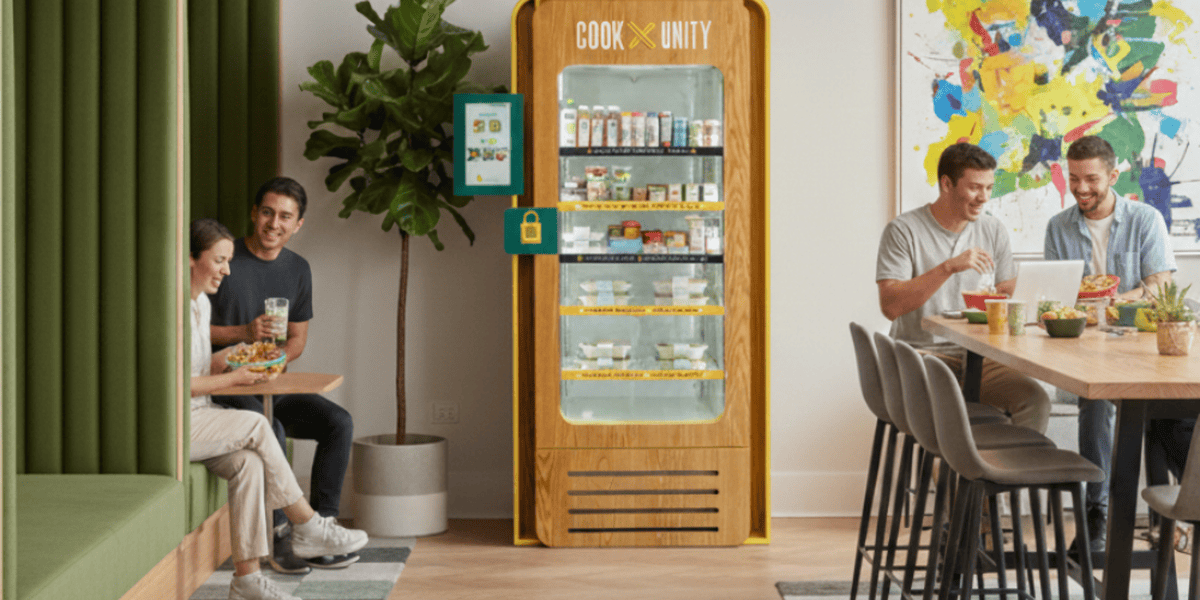
A gym, a rooftop, and a coworking lounge are expected at most Class A buildings. They generate positive sentiment but rarely create urgency. A smart fridge stocked with fresh meals from award-winning chefs, available 24/7 in the lobby, is something a prospect is unlikely to have seen before. It is a differentiator in the truest sense: something that one building has and most do not.
The Retention Math That Makes Amenities a Financial Priority
The financial case for retention-focused amenities is straightforward once the numbers are on the table.
Zego's 2024 Resident Experience Management Report, published through the National Apartment Association, found that the cost of resident turnover averages $4,000 per unit. That number includes lost rent during vacancy, make-ready costs, marketing spend, and administrative work. For a 200-unit building running at typical turnover rates, reducing annual turnover by even five units saves $20,000 in direct costs per year, before accounting for the value of avoided concessions and faster lease-up.
RealPage data from late 2024 shows that more than 54% of renters in market-rate apartments are now renewing their leases, a 120 basis point increase from the prior year. The trend reflects both the cost of moving and a broader shift toward retention-focused operations across the industry. Operators who are investing in the resident experience, specifically in amenities that residents use and value daily, are seeing the results in renewal rates.
The logic of daily-use amenities is that they build loyalty through habit rather than through sentiment alone. A resident who uses the building's smart fridge for breakfast before a commute and dinner after a late meeting has built the building into their daily routine. When renewal comes, leaving means giving up something they rely on. That is a different kind of retention than a resident who occasionally uses the rooftop.
Why Food Specifically Is the Daily-Use Amenity Most Buildings Are Missing
Most amenity packages address fitness, work, and social space. None of them address food, which is the one need every resident has multiple times every single day.
According to Purdue University's Consumer Food Insights Report, nearly half of Americans who use food ordering apps do so at least once a week. And according to Zippia's food delivery research, the average American spends $70 on takeout per week. In most multifamily buildings, that spending leaves the property entirely and goes to third-party delivery platforms.
A smart fridge captures a portion of that daily food spend and keeps it inside the building's ecosystem. More importantly, it gives residents a reason to interact with the building's common areas every day rather than just on their way in and out. That daily touchpoint is what converts a building from a place residents live to a community they feel connected to, and connected residents renew.
What a Smart Fridge Looks Like as an Operational Investment
For owners evaluating amenity investments on a return basis, the smart fridge model has several advantages over traditional capital amenity projects.
The footprint is minimal. A standard unit takes up approximately 6 square feet and runs on a standard electrical outlet, requiring no renovation, no dedicated plumbing, and no construction downtime.
The operational burden on the property is low. Restocking, menu rotation, maintenance, and resident-facing support are handled by the provider. The property team chooses placement and coordinates installation, then steps back. This is a fundamentally different model from an amenity like a café or a fitness center expansion, where the ongoing operational cost is significant.
The resident-facing experience is high quality. CookUnity is the first meal delivery led by world-class chefs, and the CookUnity Smart Fridge gives residents access to fresh, never frozen meals from 130+ chefs across the US and Canada spanning 60+ global cuisines and diets, with a rotating menu of up to 400+ weekly meals. This is not a vending machine upgrade. It is a genuine culinary offering that residents will talk about with prospective tenants and mention in reviews.
For owners thinking about amenity investments in terms of leasing velocity, renewal rates, and NOI impact, the smart fridge is a relatively low-cost intervention with daily resident touchpoints, measurable goodwill, and a differentiation story that holds up in a competitive market.
CookUnity's Smart Fridge for Residential Buildings
CookUnity's Smart Fridge for residential buildings is designed specifically for the multifamily market. CookUnity manages all restocking, maintenance, and resident support, so the property team gets the benefit of a premium daily-use amenity without the overhead of running one.
For owners and operators looking to strengthen their leasing story, improve renewal rates, and add a differentiated amenity to an existing package, a smart fridge is one of the most capital-efficient investments available in the current market.
Get in touch with our team to learn more about bringing a CookUnity Smart Fridge to your property.

What a Smart Fridge Looks Like as an Operational Investment
For owners evaluating amenity investments on a return basis, the smart fridge model has several advantages over traditional capital amenity projects.
The footprint is minimal. A standard unit takes up approximately 6 square feet and runs on a standard electrical outlet, requiring no renovation, no dedicated plumbing, and no construction downtime.
The operational burden on the property is low. Restocking, menu rotation, maintenance, and resident-facing support are handled by the provider. The property team chooses placement and coordinates installation, then steps back. This is a fundamentally different model from an amenity like a café or a fitness center expansion, where the ongoing operational cost is significant.
The resident-facing experience is high quality. CookUnity is the first meal delivery led by world-class chefs, and the CookUnity Smart Fridge gives residents access to fresh, never frozen meals from 130+ chefs across the US and Canada spanning 60+ global cuisines and diets, with a rotating menu of up to 400+ weekly meals. This is not a vending machine upgrade. It is a genuine culinary offering that residents will talk about with prospective tenants and mention in reviews.
For owners thinking about amenity investments in terms of leasing velocity, renewal rates, and NOI impact, the smart fridge is a relatively low-cost intervention with daily resident touchpoints, measurable goodwill, and a differentiation story that holds up in a competitive market.
CookUnity's Smart Fridge for Residential Buildings
CookUnity's Smart Fridge for residential buildings is designed specifically for the multifamily market. CookUnity manages all restocking, maintenance, and resident support, so the property team gets the benefit of a premium daily-use amenity without the overhead of running one.
For owners and operators looking to strengthen their leasing story, improve renewal rates, and add a differentiated amenity to an existing package, a smart fridge is one of the most capital-efficient investments available in the current market.
Get in touch with our team to learn more about bringing a CookUnity Smart Fridge to your property.

Frequently Asked Questions
How does a smart fridge amenity help lease more units?
A smart fridge is a genuine differentiator in a market where most buildings offer the same core amenity package. Prospects who tour a building with a smart fridge in the lobby encounter something they have not seen at other properties, which gives the leasing team a compelling and specific selling point. Research on leasing velocity consistently shows that amenity packages influence how quickly units convert to signed leases, and uniquely differentiated amenities shorten the decision window for prospects who are comparing multiple options.
What is the ROI of a smart fridge for apartment building owners?
The financial case runs through both leasing velocity and resident retention. On the retention side, resident turnover averages $4,000 per unit in direct costs according to Zego's research. An amenity that meaningfully improves renewal rates produces measurable NOI impact at scale. On the leasing side, a differentiated amenity that shortens days on market reduces vacancy loss and the need for concessions. The smart fridge also operates at low cost to the property, since the provider handles restocking, maintenance, and resident support, making the net investment relatively small compared to traditional capital amenity projects.
How does a smart fridge reduce resident turnover?
Residents who use the building's food amenity as part of their daily routine build the building into their lives in a way that occasional amenity users do not. When renewal comes, leaving means giving up a daily convenience they rely on. This kind of habit-based loyalty is more durable than sentiment-based loyalty and is harder for a competing property to replicate with concessions alone. Daily-use amenities create switching costs that protect renewal rates even when other buildings offer move-in incentives.
How does a smart fridge compare to other amenity investments for multifamily owners?
A smart fridge has a significantly lower capital and operational cost than amenities like fitness center expansions, on-site cafés, or coworking build-outs. The footprint is roughly 6 square feet, it runs on a standard electrical outlet, and the provider handles all operations. Yet it delivers daily resident touchpoints that most other amenities do not, because food is a daily need rather than an occasional one. For owners evaluating amenity investments on a cost-per-impact basis, the smart fridge compares favorably to most alternatives.
Does adding a smart fridge require renovations or construction?
No. A standard smart fridge unit requires approximately 6 square feet of floor space and a standard electrical outlet. No plumbing, dedicated utility infrastructure, or construction work is required. It can be placed in an existing lobby, mailroom, amenity floor, or any common area that gets consistent daily resident traffic without disruption to building operations.
What makes the CookUnity Smart Fridge different from a standard vending machine upgrade?
CookUnity is the first meal delivery led by world-class chefs. The smart fridge is stocked with fresh, never frozen meals from 130+ chefs across the US and Canada spanning 60+ global cuisines and diets, with rotating menus of up to 400+ weekly meals in the largest markets. This is not a vending machine with better snacks. It is a full-quality food amenity that residents will use for real meals, talk about with prospective tenants, and mention in property reviews, which is exactly the kind of organic differentiation that supports leasing velocity and renewal rates.

Be the first to know about new offers
Multiorder discounts, free items and more.