Back
Smart Fridge Economics: Amenity-Grade Food Without Building a Kitchen
Smart Fridge Economics: Amenity-Grade Food Without Building a Kitchen
The question most owners and operators ask after hearing the smart fridge pitch is a reasonable one: what does this actually cost, and how does it compare to other ways of offering food in a building?
It is a fair question, and the answer changes significantly depending on what you are comparing it to. Against a full kitchen buildout or an on-site café, the smart fridge is not just cheaper. It is a different category of investment entirely. Against a vending machine, it costs more to install but delivers meaningfully more value. Understanding where the smart fridge sits in that range, and what the economics actually look like, is what this post is about.
The True Cost of Building a Kitchen in a Residential Building
For owners who want to offer residents a genuine food experience, the most ambitious option is a dedicated food and beverage operation: an on-site café, a staffed kitchen, or a prepared meal station with commercial equipment.
The capital cost of that approach is substantial. According to Modular Culinaire's 2026 commercial kitchen construction guide, commercial kitchen construction typically costs $250 to $500 per square foot for a full buildout, and that figure excludes equipment purchases, which can add another $40,000 to $200,000 on top of construction costs. A 1,000 square foot kitchen, which is on the smaller end for a functional food operation, carries a construction cost alone of $250,000 to $400,000 before a single piece of equipment is purchased.
Beyond the construction cost, commercial kitchen infrastructure requires:
Dedicated electrical systems capable of handling commercial-grade equipment loads
Commercial plumbing including multiple sinks, floor drains, and grease interceptors
Commercial ventilation and exhaust hood systems
Health department permits and ongoing compliance inspections
Fire suppression systems integrated with cooking equipment
And that is before accounting for the ongoing cost of staffing, food procurement, waste management, and the operational complexity of running a food service program. Traditional commercial kitchen construction also takes 9 to 18 months from design to completion, meaning owners absorb carrying costs throughout a lengthy buildout process before a single resident can use the amenity.
For most residential buildings, a full kitchen buildout is not a realistic option. The capital cost, timeline, and operational complexity are simply not proportionate to what a residential food amenity needs to accomplish.
The Economics of Simpler Food Amenity Formats
Below a full kitchen buildout, owners have a few lighter-weight options, each with its own economic profile.
An on-site café or staffed food counter reduces the kitchen infrastructure requirement but still demands a dedicated space, commercial equipment, health department licensing, and ongoing staffing. Labor costs alone for a café that operates during reasonable hours typically run $60,000 to $120,000 per year in salary and benefits for even a minimal team. Add equipment, supplies, and inventory management, and the ongoing cost of a simple café operation is significant even before accounting for the buildout.
A catered meal program avoids the staffing model but requires vendor management, coordination overhead, and a dedicated service area. It also only delivers value on the days the catering runs, which means residents have no food option the rest of the time. The per-event cost and administrative burden tend to be higher than they initially appear.
A community pantry or snack station has minimal capital cost but generates low value: packaged snacks that residents do not need a building to provide, and ongoing restocking that still falls to someone on the property team.
A traditional vending machine has effectively no capital cost to the property and requires no ongoing involvement, but it delivers a poor resident experience and generates little goodwill. The product is low quality, the experience is dated, and it does nothing to differentiate the building.
Where the Smart Fridge Sits in This Range
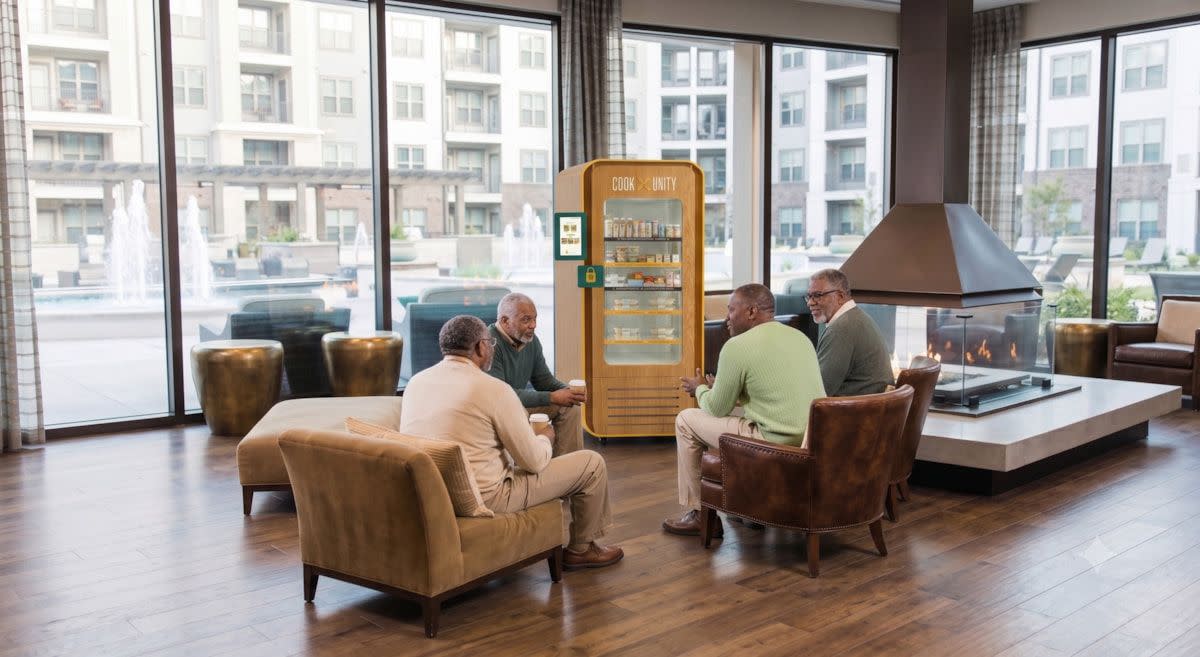
A smart fridge program occupies a unique position in this landscape. It delivers resident value that is closer to a café than to a vending machine, but at a cost structure that is closer to a vending machine than to a café.
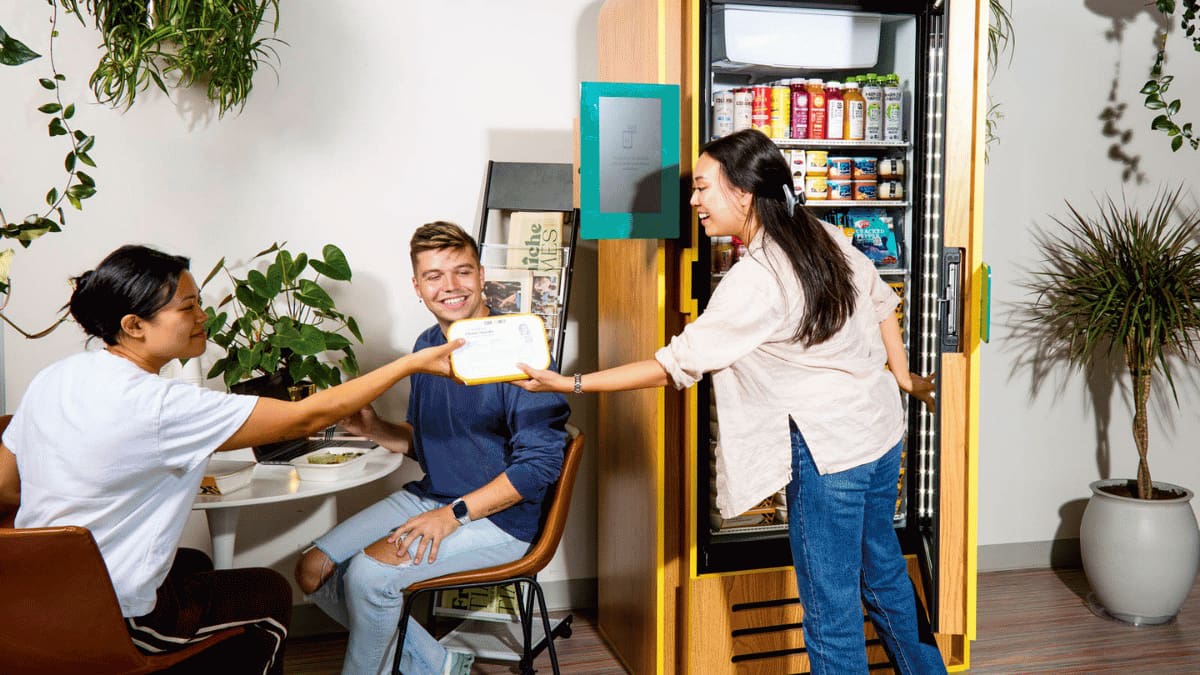
The capital cost of installation is minimal. A standard smart fridge unit requires approximately 6 square feet of floor space and a standard electrical outlet. There is no dedicated plumbing, no ventilation system, no grease interceptor, no health department permit from the building, and no construction timeline. Installation typically happens in hours, not months.
The ongoing operational cost to the property is essentially zero. The provider handles restocking, menu rotation, equipment maintenance, and resident-facing support. The property team does not need to hire staff, manage inventory, or coordinate vendors on an ongoing basis. This is the core economic advantage of the fully managed model: the cost structure looks like a vending machine, but the resident experience looks like a restaurant.
For owners thinking about this in terms of cost per amenity outcome, the comparison is stark:
A full kitchen buildout costs $250,000 to $500,000+ in capital before equipment, takes 9 to 18 months to complete, and requires ongoing staffing to operate
An on-site café costs $60,000 to $120,000 per year in labor alone and requires dedicated space and equipment
A smart fridge costs a fraction of either, requires no construction, and is operational within days of the decision to add it
How to Think About the Return
For owners who evaluate amenity investments against NOI impact, the smart fridge case has two components: the cost side and the return side.
On the cost side, the fully managed model means there is no meaningful ongoing operational expense to the property. The provider's economics are driven by resident meal purchases, which means CookUnity has a direct incentive to keep the fridge stocked, maintain it reliably, and ensure the food quality is high enough to generate consistent repeat use.
On the return side, the smart fridge delivers value through two channels that directly affect NOI:
Leasing velocity. A differentiated amenity that prospects have not seen elsewhere shortens the decision window and gives leasing teams a specific, compelling story to tell. Research on multifamily leasing consistently shows that amenity packages influence how quickly units convert to signed leases. A smart fridge stocked with meals from award-winning chefs, offering more variety than any other prepared meal subscription, is a genuinely unusual offering that stands out in a leasing tour.
Resident retention. Zego's 2024 Resident Experience Management Report, published through the National Apartment Association, found that resident turnover costs an average of $4,000 per unit. An amenity that residents use every day builds the kind of habit-based loyalty that makes renewal decisions easier. A resident who relies on the building's smart fridge as part of their daily routine has a concrete reason to stay that a competing property cannot easily replicate with a move-in concession.
The math is relatively straightforward. If a fully managed smart fridge with minimal property-side cost reduces annual turnover by even a handful of units in a 200-unit building, the direct cost savings in avoided vacancy, make-ready, and marketing expenses exceed the investment many times over.
What to Evaluate When Comparing Food Amenity Options
For owners running a cost-benefit comparison on food amenity options, these are the dimensions worth evaluating systematically:
Capital cost. What does it cost to get the amenity up and running? This includes construction, equipment, permits, and any infrastructure modifications.
Timeline to operation. How long between the investment decision and the day residents can use the amenity?
Ongoing operational cost. What does the property need to spend every month or year to keep the amenity running? Labor, supplies, vendor management, waste handling.
Resident experience quality. How does the amenity perform against resident expectations? Does it generate goodwill, or does it generate complaints?
Daily use frequency. How often do residents actually engage with the amenity? An amenity that residents use daily builds loyalty in ways that occasional amenities cannot.
Operational burden on the property team. What does the on-site team need to do to keep the amenity functioning? Every hour of staff time has a cost.
Evaluated across those dimensions, the smart fridge model is competitive on every axis. The capital cost is low, the timeline is fast, the ongoing operational cost to the property is minimal, the resident experience is high quality, daily use frequency is high because food is a daily need, and the operational burden on the property team is essentially zero.
CookUnity's Smart Fridge for Residential Buildings
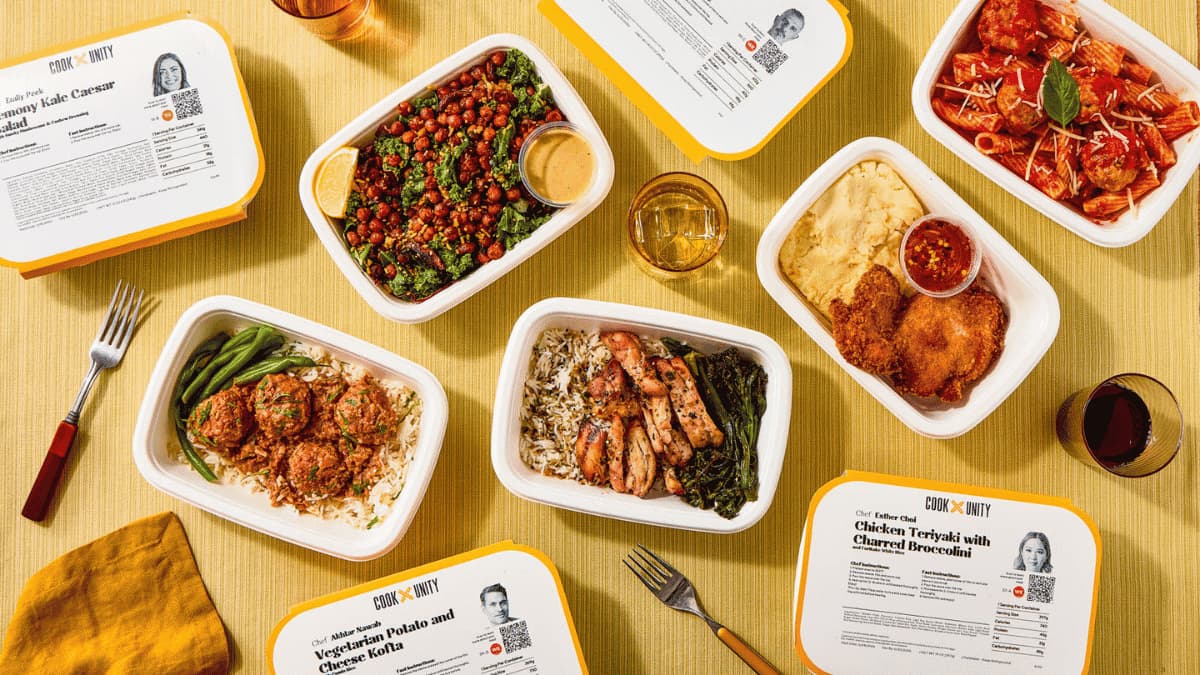
CookUnity is the first meal delivery led by world-class chefs, and the CookUnity Smart Fridge for residential buildings delivers that quality directly to building common areas. With 130+ chefs across the US and Canada, up to 400+ weekly meals, and 60+ global cuisines and diets, residents get a genuinely differentiated food experience. CookUnity manages all restocking, maintenance, and resident support, so the property team gets the benefit without the overhead.
For owners evaluating food amenity economics, the smart fridge model offers something that most amenity categories cannot: amenity-grade resident value at a fraction of the cost of the alternatives.
Get in touch with our team to learn more about bringing a CookUnity Smart Fridge to your property.
Frequently Asked Questions
How much does it cost to add a smart fridge to an apartment building?
The capital cost of adding a smart fridge is minimal compared to other food amenity formats. A standard unit requires approximately 6 square feet of floor space and a standard electrical outlet, with no dedicated plumbing, ventilation systems, or construction work required. Installation typically happens within days of the decision to proceed. For comparison, a commercial kitchen buildout starts at $250,000 to $400,000 for construction alone, before equipment, and takes 9 to 18 months to complete.
How does a smart fridge compare economically to a building café or staffed food station?
A fully managed smart fridge program eliminates the two largest cost drivers of a building café: capital construction cost and ongoing labor. An on-site café requires a dedicated space, commercial equipment, health department licensing, and staffing that typically runs $60,000 to $120,000 per year in labor alone. A smart fridge requires none of those inputs. The provider handles all operations, so the property's ongoing cost is essentially zero while residents receive a comparable quality food experience.
What is the ROI timeline for a smart fridge amenity?
Because the capital cost is low and the operational cost to the property is minimal, the payback period for a smart fridge is short relative to most amenity investments. The return comes primarily through two channels: improved leasing velocity, which reduces vacancy loss and the need for concessions, and improved resident retention, which reduces turnover costs that average $4,000 per unit. For a building where the smart fridge contributes to retaining even a few additional residents per year, the cost savings exceed the investment quickly.
Does a smart fridge require any permits or health department approvals from the building?
No. Because the smart fridge is a self-contained, provider-operated unit rather than a building-operated food service, the property does not need to obtain food service permits or submit to health department inspections for the food program. The provider manages all compliance on their end. The building's responsibility is limited to providing a standard electrical outlet and floor space.
How does the smart fridge model handle food quality and freshness without a kitchen on site?
CookUnity operates 7 kitchen locations across the US where meals are freshly prepared by 130+ chefs across 60+ global cuisines and diets. Meals are delivered to building fridges fresh, never frozen, on a regular restocking schedule. The provider monitors inventory in real time and adjusts restocking frequency based on demand to minimize the time between preparation and consumption. Residents receive restaurant-quality meals without the building needing to maintain any food preparation infrastructure on site.
What happens if the smart fridge breaks down or needs maintenance?
Equipment maintenance is entirely the provider's responsibility in a fully managed smart fridge program. The provider monitors equipment performance, responds to technical issues, and handles repairs without involving the property team. For owners evaluating the true cost of a food amenity, this is a meaningful distinction from formats where equipment breakdown falls to the building's maintenance team or creates resident experience problems that the property has to manage.

Be the first to know about new offers
Multiorder discounts, free items and more.