Back
Smart Fridge vs. Delivery Apps: Why In-Building Meals Win on Convenience and Cost
##The Real Cost of Food Delivery Apps — and Why In-Building Meals Are Winning
Opening a delivery app feels effortless. A few taps, a restaurant selection, and dinner is theoretically on its way. But by the time a DoorDash or Uber Eats order is checked out, the math has changed considerably from what the menu price suggested.
That gap between what a meal costs on the app and what it actually costs when the driver rings the buzzer is one of the most underappreciated arguments for a smart fridge in a residential building. And when you stack the full cost of delivery against the experience of walking downstairs and grabbing a fresh meal in under five minutes, the comparison shifts decisively.
What Food Delivery Apps Actually Cost Residents
The sticker price on a delivery app is not the price residents pay. It is the starting point for a fee structure that adds meaningful cost before the order is confirmed.
A 2026 breakdown from Plottdata's analysis of DoorDash fees found that a typical order carries a delivery fee, a service fee of 6 to 12% of the subtotal, applicable taxes, and a tip of 15 to 20% that goes to the driver. On a $20 meal, that structure adds $7 to $12 before the order is placed. According to LatestCost's 2026 food delivery pricing guide, a mid-range order with a $22 subtotal routinely totals $30 to $34 once all fees and tip are applied.
Texas Christian University's analysis of delivery app costs found that a $15 meal purchased in person can become $25 or more after delivery fees, service charges, and tip. That is a 60% premium on the same food, paid for the privilege of having it brought to a building the resident is already standing in.
And according to Zippia's food delivery research, the average American spends $70 per week on takeout. Over the course of a year, that is more than $3,600 in food spending, a significant portion of which goes directly to platform fees, service charges, and tips rather than to the food itself.
What Residents Are Also Paying in Time
Cost is only one dimension of the delivery app experience. Time is the other.
The convenience promise of delivery apps is undermined by a structural problem: restaurants prepare food for pickup, not for delivery timing. The average delivery window for a major platform in a dense urban market is 30 to 45 minutes under normal conditions, and longer during peak hours when demand is highest and driver availability is stretched.
For a resident who gets home from work at 7pm and opens a delivery app, that means waiting until 7:45 or later to eat. The order may arrive cold. The packaging may not have held up. And unlike a restaurant meal eaten on-site, there is no recourse if the order arrives wrong other than a support chat.
A smart fridge in the building lobby operates on a fundamentally different timeline. A resident who uses the fridge is eating within five minutes of deciding they are hungry. No wait. No delivery window. No uncertainty about whether the food will arrive in good condition. The meal is there when they want it, at the price displayed in the app, with nothing added.
The Full Comparison: Smart Fridge vs. Delivery App
For residents evaluating the two options side by side, the differences compound quickly:
Price: A delivery app order adds 40 to 60% to the menu price through fees and tip before accounting for any menu markup the restaurant applies to offset its own platform commission. A smart fridge meal is priced at the point of sale with no additional fees.
Wait time: A delivery app order takes 30 to 45 minutes on average. A smart fridge order takes the time it takes to walk to the lobby and back.
Food quality: Delivery app meals travel in packaging designed to retain heat for 10 to 15 minutes. After 30 to 45 minutes in transit, quality varies significantly depending on the restaurant, the driver, and the distance. Smart fridge meals are fresh, stored at proper temperature, and heated at the point of consumption.
Availability: Delivery apps have limited hours at many restaurants and minimum order requirements that prevent single-meal orders without fees. A smart fridge is available 24 hours a day, 7 days a week, with no minimum.
Reliability: A delivery order can be lost, delayed, or arrive incorrect. A smart fridge is stocked on a regular schedule, monitored in real time, and available when residents need it.
Why This Matters for Property Managers and Building Owners
The delivery app comparison is not just relevant to residents. It is directly relevant to the business case for a smart fridge as a building amenity.
According to Purdue University's Consumer Food Insights Report, nearly half of Americans who use food ordering apps do so at least once a week. In a 200-unit apartment building where a significant share of residents are ordering delivery multiple times per week, a substantial amount of food spending is leaving the building every night through third-party apps.
A smart fridge captures a portion of that spending and keeps it in the building ecosystem. But more importantly, it gives residents a better option than what they are currently using. When the in-building food option is faster, cheaper, and more reliable than the alternative, residents use it. And residents who build the fridge into their daily routine are residents who have a concrete, practical reason to stay in the building when renewal conversations come around.
The smart fridge is not competing with cooking at home. It is competing with DoorDash. And on every measurable dimension, price, speed, reliability, and availability, it wins.
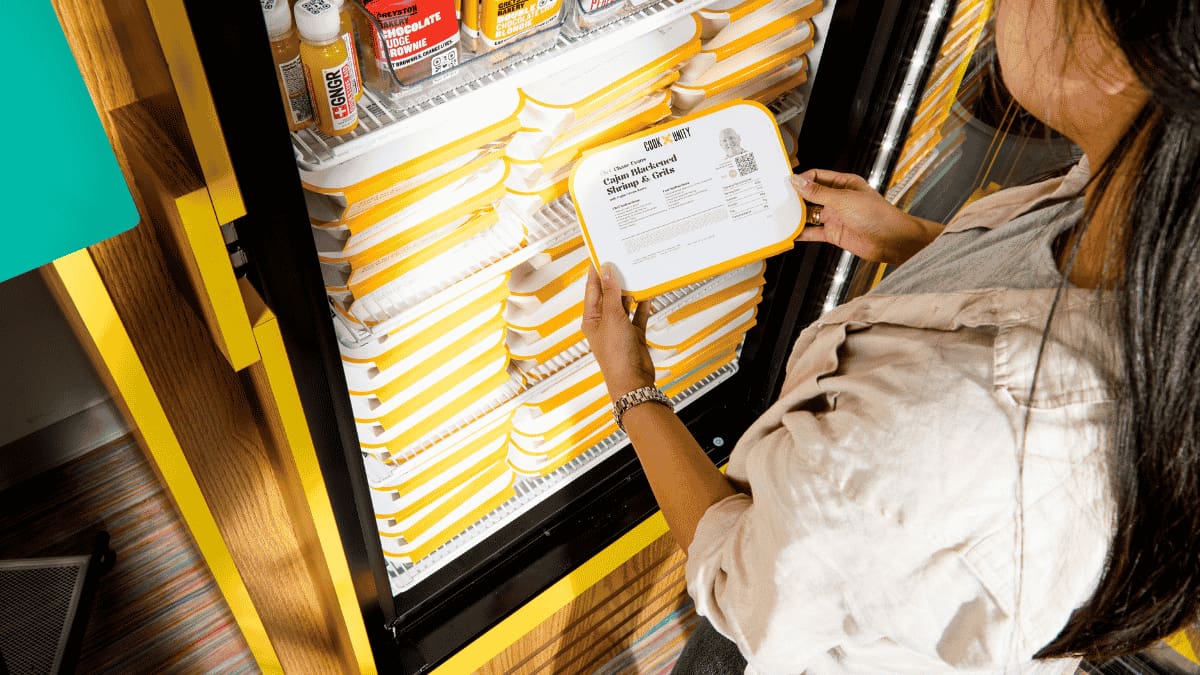
CookUnity's Smart Fridge for Residential Buildings
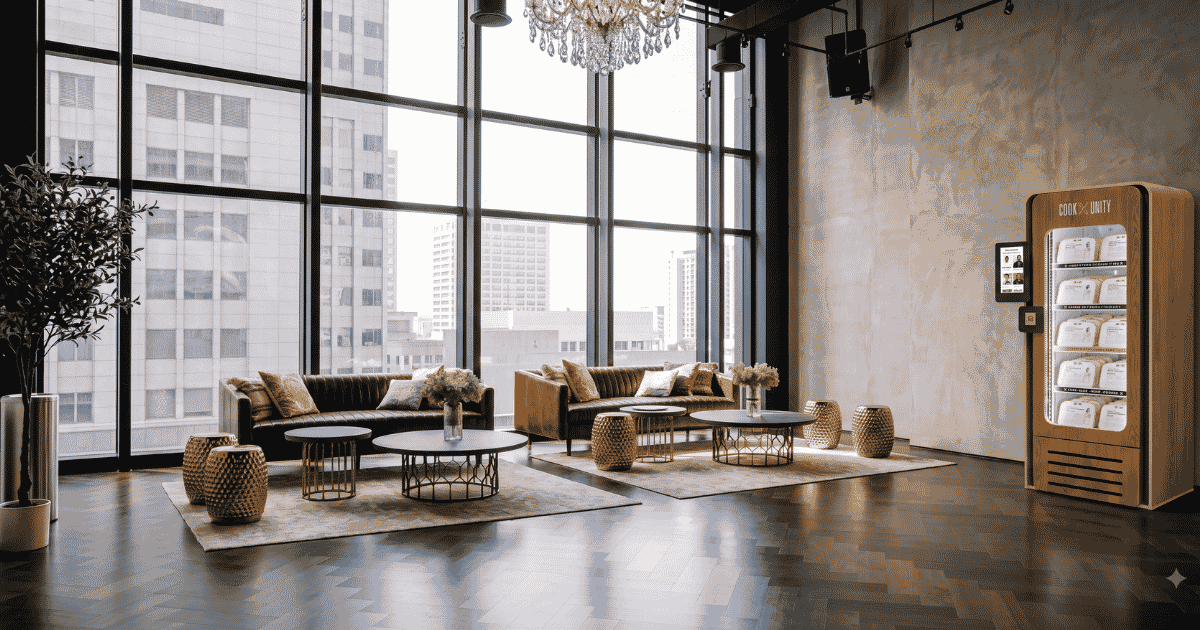
CookUnity is the first meal delivery led by world-class chefs, and the CookUnity Smart Fridge for residential buildings brings fresh, never frozen meals from 130+ chefs across the US and Canada directly into apartment building lobbies and common areas. With a rotating menu of up to 400+ weekly meals spanning 60+ global cuisines and diets, and delivery available across most of the US, CookUnity gives residents access to restaurant-quality meals at the price displayed in the app, with no delivery fee, no service charge, and no tip required.
CookUnity handles all restocking, maintenance, and resident support. The property team gets the benefit of a high-quality daily-use amenity without any operational overhead.
For property managers looking to give residents a genuinely better option than opening a delivery app every night, a smart fridge is the most direct answer available.
Get in touch with our team to learn more about bringing a CookUnity Smart Fridge to your property.
Frequently Asked Questions
Is a smart fridge cheaper than ordering food delivery?
Yes, in most cases significantly so. Delivery app orders add delivery fees, service fees of 6 to 12%, and tips of 15 to 20% to the menu price, routinely adding $7 to $12 to a single order. A $15 meal ordered through a delivery app can easily cost $25 or more by checkout. A smart fridge meal is priced at the point of sale with no additional fees, making the true cost considerably lower for the same quality of food.
How long does it take to get a meal from a smart fridge vs. a delivery app?
A smart fridge meal is available in the time it takes to walk to the building lobby and back, typically two to five minutes. A delivery app order in a dense urban market averages 30 to 45 minutes under normal conditions, and longer during peak hours. For residents who want to eat quickly without planning ahead, the time advantage of an in-building smart fridge is significant.
Are smart fridge meals available 24/7?
Yes. A smart fridge is available around the clock with no minimum order, no delivery window, and no dependency on restaurant hours. Delivery apps have limited coverage late at night and early in the morning, and many restaurants close before or during peak late-night demand windows. A smart fridge gives residents a reliable food option at any hour.
What happens if the smart fridge runs out of meals?
A fully managed smart fridge program includes real-time inventory monitoring and regular restocking on a set schedule. CookUnity monitors inventory and adjusts restocking frequency based on usage patterns so that the fridge stays stocked with the meals residents buy most. If unexpected demand depletes inventory between restocking visits, the provider is responsible for addressing it, not the property team.
How does the food quality of a smart fridge compare to delivery apps?
Smart fridge meals are fresh, stored at proper temperature, and heated at the point of consumption by the resident. Delivery app meals spend 30 to 45 minutes in transit in packaging that is designed to retain heat for a fraction of that time. Food quality on delivery apps varies significantly based on restaurant, driver, and distance. CookUnity's smart fridge meals are prepared by award-winning chefs, delivered fresh and never frozen, and available to residents at peak quality rather than after a delivery window.
Why are delivery apps more expensive than they appear?
Delivery apps generate revenue through multiple fee layers that are not always transparent at the point of browsing. Service fees of 6 to 12% are added at checkout. Delivery fees vary by distance and demand. Tips of 15 to 20% are expected. And many restaurants mark up their delivery menu prices by 10 to 30% to offset the commission they pay to the platform. Together these charges routinely add 40 to 60% to the visible menu price before an order is confirmed.

Be the first to know about new offers
Multiorder discounts, free items and more.