Back
BackSmart Fridge vs. Traditional Vending: What Residents Actually Use
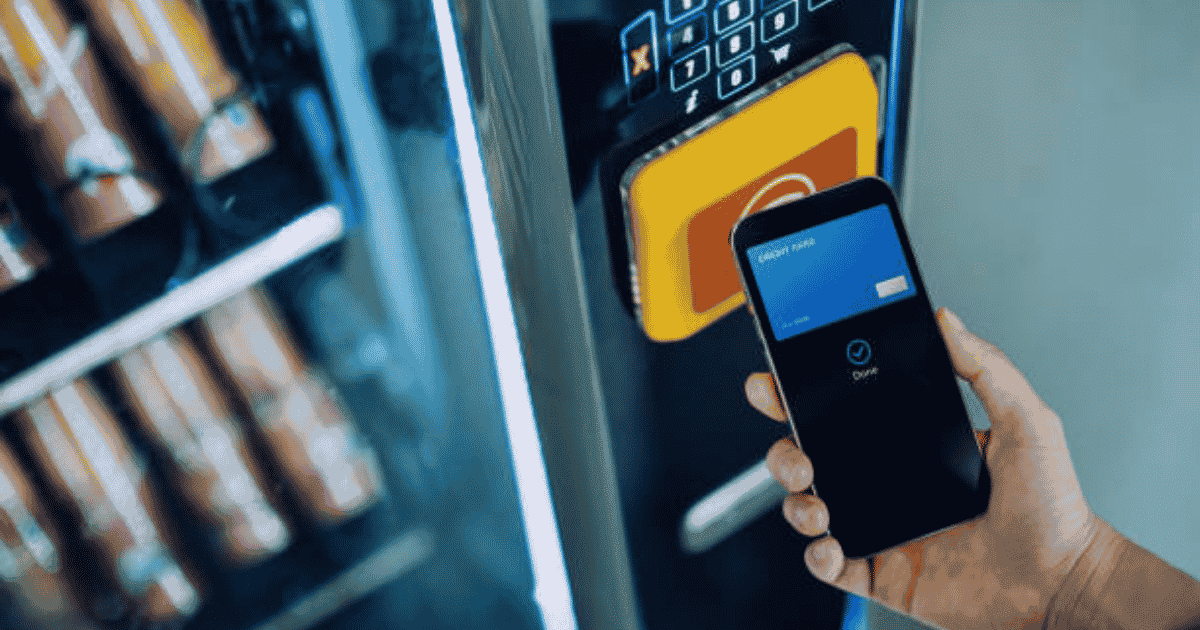
The New Resident Perk: 24/7 Chef-Made Meals in Your Lobby
How a Smart Fridge in the Lobby Becomes Your Most Powerful Retention Tool
The competition for residents in the multifamily market has never been more intense. According to RealPage, apartment completions are rising to the highest levels since the 1980s, putting significant pressure on operators to differentiate their communities and hold onto the residents they already have.
In that environment, amenities are no longer just nice to have. They are one of the most tangible ways a building communicates its value to residents who have more options than ever before. And one amenity is starting to stand out from the rest: 24/7 access to fresh, chef-made meals available directly in the building lobby.
Why Retention Is the Most Important Number in Multifamily Right Now
Before getting into the amenity itself, it is worth understanding the business context that makes it relevant.
Zego's 2024 Resident Experience Management Report, published through the National Apartment Association, found that 59% of residents plan to renew their lease in the coming year, and that the cost of resident turnover now averages $4,000 per unit. That turnover cost includes lost rent during vacancy, make-ready expenses, marketing, and administrative work. For a building with 200 units, even a modest improvement in renewal rates translates directly into tens of thousands of dollars in avoided costs per year.
The same research found that amenities and resident experience are among the most controllable factors influencing renewal decisions. Life changes and buying a home are outside a property manager's control. The quality of the living experience is not.
Zego's 2026 report adds a useful data point: 31% of renters say they would be much more likely to renew if their community offered a renter rewards program, and renters begin reconsidering renewal at an average rent increase of just 8%. That is a narrow margin. Buildings that have built genuine goodwill through daily touchpoints are in a much stronger position to absorb a modest rent increase without triggering a move-out.
An amenity that residents interact with every day, and genuinely enjoy, is exactly the kind of goodwill-builder that moves renewal rates.
What 24/7 Chef-Made Meals in the Lobby Actually Means
A smart fridge in a building lobby is a self-service, app-connected refrigerator stocked with fresh, ready-to-heat meals prepared by award-winning chefs. Residents browse available meals on their phone, select what they want, and retrieve it when the fridge unlocks. Payment happens automatically through the app. No staff, no wait, no delivery fee.
What makes it different from a standard vending machine or a stocked pantry is the quality of what is inside. The best smart fridge programs stock meals prepared by award-winning chefs across a wide range of cuisines, with rotating menus that refresh regularly. Meals are fresh, never frozen. Once heated, the food is recognizably restaurant-quality: real culinary skill, real ingredients, real variety.
The 24/7 availability is what makes it genuinely useful as a resident perk. A delivery app can theoretically get food to a resident at any hour, but it comes with wait times, fees, and the uncertainty of whether the food will arrive in good condition. A smart fridge in the lobby is always there, always stocked, and available in the time it takes to walk downstairs and back.
For residents who order food delivery multiple times a week, which according to Purdue University's Consumer Food Insights Report describes nearly half of American delivery app users, this is a genuine daily convenience. It does not replace cooking at home. It competes directly with delivery apps and wins on speed and simplicity almost every time.
Why This Amenity Is Different From Most
Most amenities solve a problem that residents encounter occasionally. A gym addresses the need to exercise, which most residents engage with a few times a week at most. A rooftop serves the need for social space, which is seasonal and event-driven. A coworking lounge works for residents who want a change of scenery during the workday.
Food is different because it is a daily need with multiple occasions:
Breakfast before a commute
Lunch during a work-from-home day
Dinner after a late meeting
A snack at 10pm when delivery feels like too much effort
A smart fridge in the lobby addresses all of these occasions without requiring residents to plan ahead or leave the building.
That frequency of use is what distinguishes a smart fridge from most other amenities. An amenity that becomes part of a resident's daily routine is an amenity that builds loyalty. Residents who rely on the building's food option as part of how they live are residents who think twice before moving somewhere that does not have it.
It is also a story worth telling in leasing conversations. A gym and a pool are expected at this tier of the market. A smart fridge stocked with diverse meals from award-winning chefs, offering more variety than any other prepared meal subscription, is something a leasing agent can describe with genuine enthusiasm because it is genuinely unusual.
The Operational Reality for Property Managers
Adding a 24/7 food amenity to a building sounds operationally complex, but a smart fridge operated by an outside provider is designed to minimize the burden on the property team.
Here is what the property team does not have to manage:
Restocking and inventory tracking
Menu rotation and meal quality
Resident-facing support and complaints
Health department permitting for food service
Food waste disposal
Property managers choose the placement, coordinate the initial installation, and then largely step back. The footprint is roughly 6 square feet and runs on a standard electrical outlet, which means it can be placed in a lobby, a mail room, an amenity floor, or anywhere else that gets consistent daily foot traffic. It does not require renovation or dedicated utility infrastructure.
For buildings that are adding new amenities or refreshing an existing package, the smart fridge represents a relatively low-friction way to introduce something residents will use every day and talk about with other residents.
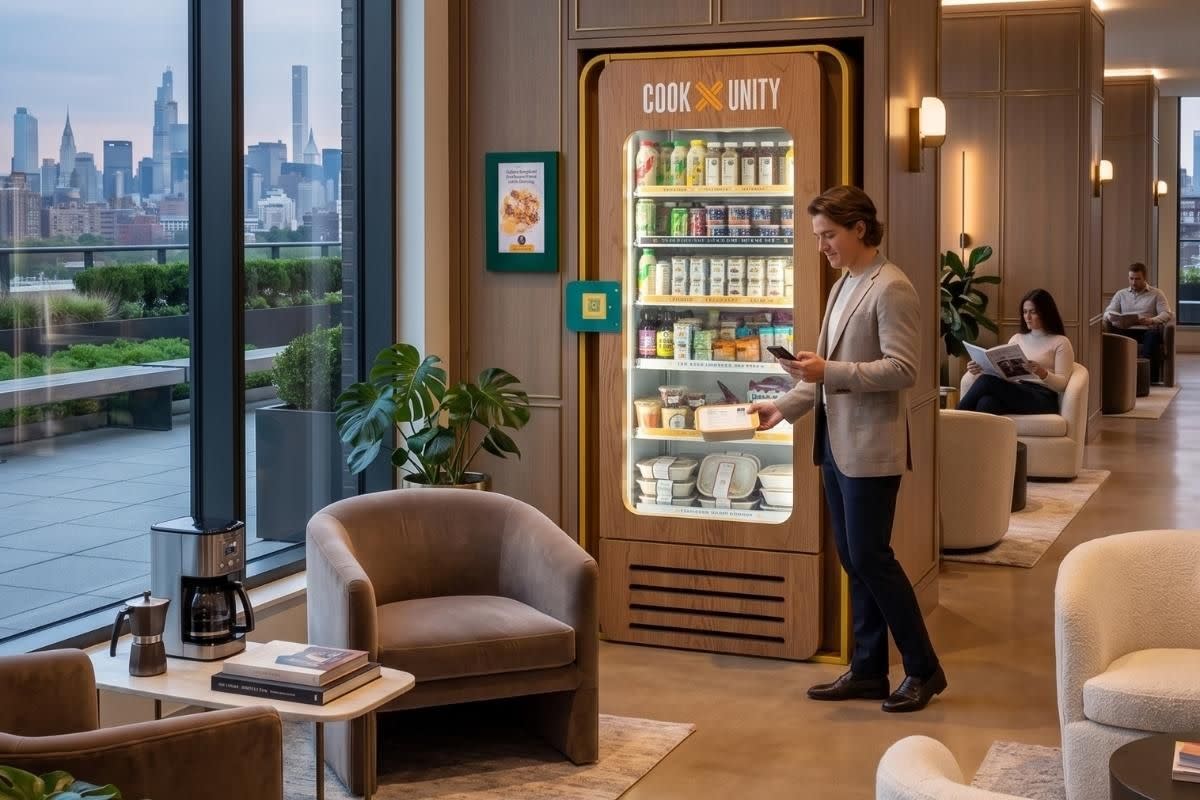
CookUnity's Smart Fridge for Residential Buildings
CookUnity is the first meal delivery led by world-class chefs, and the CookUnity Smart Fridge for residential buildings brings that quality directly to building lobbies and common areas. With 130+ chefs across the US and Canada, up to 400+ weekly meals, and delivery available across most of the US, CookUnity gives residents access to fresh, never frozen meals spanning 60+ global cuisines and diets. CookUnity manages restocking, maintenance, and resident support so the property team does not have to.
For property managers looking to add a daily-use amenity that genuinely moves the needle on resident satisfaction and renewal rates, a smart fridge is one of the most direct investments available.
Get in touch with our team to learn more about bringing a CookUnity Smart Fridge to your property.
Frequently Asked Questions
How does a smart fridge in the lobby help with resident retention?
A smart fridge addresses food, which is a daily need rather than an occasional one. Amenities that residents interact with every day build loyalty and goodwill in ways that seasonal or event-driven amenities cannot. Research from Zego found that resident turnover costs an average of $4,000 per unit, and that amenities are among the most controllable factors in renewal decisions. An amenity that becomes part of a resident's daily routine gives them a concrete reason to stay when renewal time comes.
What is the ROI of adding a smart fridge to an apartment building?
The direct financial case comes through retention. Zego's research found that 31% of renters would be much more likely to renew if their community offered a renter rewards program, and that renters begin reconsidering renewal at an average rent increase of just 8%. For a building with 200 units, reducing turnover by even a handful of units per year saves tens of thousands of dollars in vacancy costs, make-ready expenses, and marketing. A daily-use amenity that builds genuine goodwill is one of the most cost-effective ways to move renewal rates.
What types of meals are available in a smart fridge amenity?
The best smart fridge programs stock meals prepared by award-winning chefs across a wide range of cuisines, with menus that rotate regularly. Meals are fresh, never frozen, and ready to heat in a few minutes. Residents can typically filter by cuisine type, dietary preference, and chef through the app. CookUnity's smart fridge offers access to meals from 130+ chefs across the US and Canada spanning 60+ global cuisines and diets, with up to 400+ weekly meals available in the largest markets.
Is a smart fridge available 24/7 in apartment buildings?
Yes. Unlike an on-site café or catered meal program, a smart fridge is available around the clock with no staff required. Residents can access meals any time of day or night, whether that is before an early commute, during a late work session, or after an evening out. The app-based purchase process works at any hour without requiring anyone to be on-site.
How does a smart fridge differ from other food amenities like a café or catered meals?
A smart fridge is available 24/7 with no property staff required, no health department permitting from the building, and no food waste for the property team to manage. An on-site café requires staff, equipment, licensing, and ongoing management, and is only open during limited hours. Catered meals require coordination, are not available on demand, and generate waste when turnout is unpredictable. A smart fridge provides a consistently available, high-quality food option with almost no operational burden on the property.
What does it cost a property manager to add a smart fridge to a building?
Costs vary by provider and program structure. Many smart fridge programs are offered to residential buildings at no upfront cost to the property, with the provider generating revenue through resident meal purchases. Property managers should ask prospective providers about the pricing model, what is included in the arrangement, who covers maintenance and restocking, and what data and reporting the building receives on utilization and resident engagement.

Be the first to know about new offers
Multiorder discounts, free items and more.