Back
How Should HR Teams Explain HSA/FSA Meal Eligibility to Employees?
Tell employees what they can do with their benefits: if they qualify, they can use HSA or FSA funds toward the eligible portion of chef-made, medically tailored meals from CookUnity. That gives employees who need a particular diet a way to get dinner delivered and put pre-tax dollars toward part of the cost.
Share CookUnity’s HSA/FSA page so employees can complete a private health questionnaire through Truemed. An independent licensed clinician determines whether they qualify for a Letter of Medical Necessity (LMN). Approved employees can see which meals qualify and what each card pays. Their benefits administrator can answer questions about their plan.
Key takeaways
Lead with the option employees can explore: using HSA or FSA funds for part of a medically tailored CookUnity meal if they qualify.
Explain what each card pays. Benefits funds can cover the eligible amount above ordinary food costs. The employee pays the rest with a personal card.
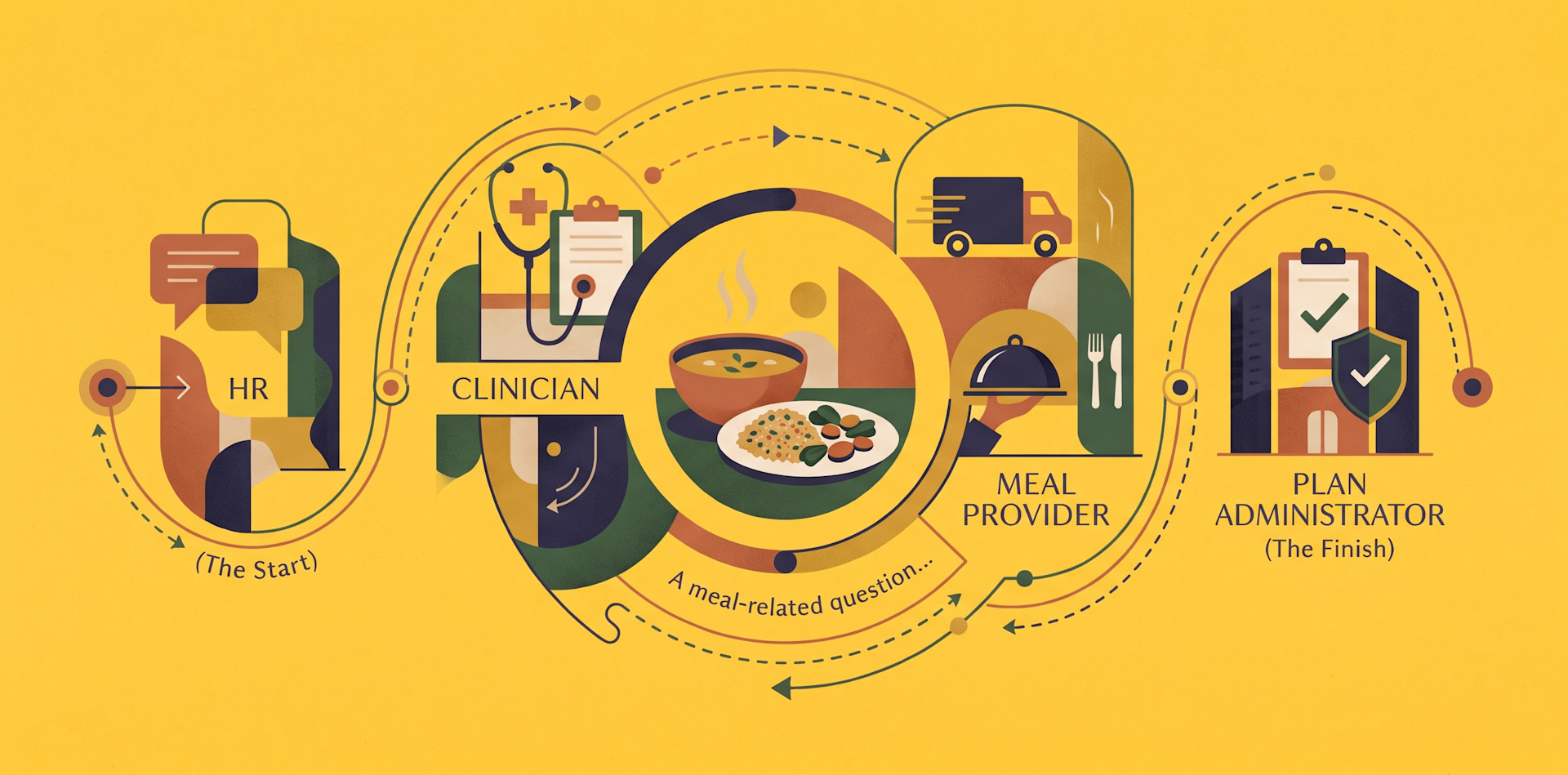
Keep HR's role separate from the roles of the clinician, meal provider, and plan administrator.
Give employees a short checklist, approved links, and a clear place to take personal questions.
Avoid broad statements such as "meals are HSA/FSA eligible" or "your HSA will cover this."
1. What should HR say first?
Start with a sentence employees can act on: “If you need meals tailored to a medical condition, you can check whether your HSA or FSA can help pay for chef-made meals from CookUnity.” Then explain that a physician must substantiate the need, the food must meet the IRS requirements, and only the amount above the cost of comparable ordinary food can qualify.
Employees who want more detail can read CookUnity's guide to whether food can be purchased with an HSA.
Use language that distinguishes three ideas employees often combine:
Card acceptance: A payment system may accept an HSA or FSA card.
Medical-expense eligibility: The purchase must fit the federal rules for qualified medical expenses.
Plan handling: The employee's administrator may require documentation and decides how a claim is processed under the plan.
A card transaction is not an eligibility decision. The employee still needs to follow the rules for the account and keep any records the administrator requires.
2. How should HR explain the IRS rule?
HR should summarize the IRS rule without interpreting an employee's diagnosis, meal selection, or documentation. According to the IRS nutrition and wellness FAQs, food or beverages can be treated as a medical expense only when all three conditions are met: the item does not satisfy normal nutritional needs, it alleviates or treats an illness, and a physician substantiates the need.
The IRS also limits the potential medical expense to the amount by which the special food costs more than a product that satisfies normal nutritional needs. That means an eligible purchase may be only partly payable or reimbursable with HSA or FSA funds. An employee should not assume that a qualifying document makes the full grocery bill or meal order eligible.
HR can explain what a Letter of Medical Necessity for food is and why an administrator may request one. A letter does not make every meal eligible. The expense must still meet the other conditions and the plan's process.
Use the most recent IRS publications available when the message is sent. IRS Publication 502 explains medical and dental expenses, while Publication 969 covers HSAs and other tax-favored health plans. Avoid adding annual contribution limits, FSA carryover figures, or deadlines unless the communication needs them and the team has verified the current plan year.
3. What should the employee message include?
Give employees a place to check eligibility, explain the part of the meal price their benefits may cover, and tell them where to take personal questions. Use this checklist for an intranet listing, open enrollment email or benefits flyer.
Include | Suggested employee-facing language | Why it belongs |
Meal benefit | If you qualify through Truemed, you can use HSA or FSA funds toward the eligible portion of chef-made CookUnity meals | Gives employees a concrete option to explore |
Limited exception | Part of a food purchase may qualify only when it meets the IRS requirements for a medical expense and the need is substantiated by a physician | Explains the exception without approving a claim |
Cost limit | Even when food qualifies, only the amount above the cost of ordinary food may be eligible | Sets expectations about split payment or partial reimbursement |
Documentation | Ask your plan administrator what records it requires before you buy or submit a claim | Directs employees to the party that handles the account |
Reliable sources | Review the IRS nutrition and wellness FAQs and the current plan documents | Gives employees a primary source and plan-specific rules |
Privacy boundary | Do not send medical details to HR unless your plan's established process specifically requires it | Keeps personal questions in the proper channel |
Here is a ready-to-use version:
Sample employee copy: Could your HSA or FSA help pay for dinner? If you need meals tailored to a medical condition, you may be able to use your benefits toward chef-made meals from CookUnity, delivered fresh and ready to heat.
Check your eligibility through CookUnity and Truemed. Fill out a private health questionnaire for a licensed clinician to review. If you qualify, you’ll receive a Letter of Medical Necessity and can see which meals match your approval. Your HSA or FSA card pays the eligible portion, and your personal card covers ordinary food costs and other ineligible charges. You’ll see the split at checkout. For questions about your account or documentation, contact your benefits administrator.
4. Where should employees take account-specific questions?
HR should publish a responsibility map so employees know where to ask each question and HR does not receive health information it does not need.
Question | Best contact | HR's role |
What does the IRS generally allow? | IRS guidance or a qualified tax professional | Link to current primary sources and avoid personal tax conclusions. |
Does my health need support clinician documentation? | A licensed clinician or the clinician-review service used by the vendor | Explain the process, not the clinical decision. |
Which menu items match an approval? | The meal provider's ordering experience or support team | Point to the provider's eligibility labels and support channel. |
Will my plan accept this claim or card charge? | The HSA or FSA plan administrator | Provide the administrator's contact details and plan documents. |
What happens if a charge is declined? | The plan administrator for the card and the vendor for the order | Keep payment and order questions with the correct party. |
HR should not collect diagnosis details to decide whether a meal qualifies. The benefits communication can direct employees to the established administrator or clinician-review process and remind them to keep the records required for their account. IRS Publication 969 says HSA holders must retain records showing that distributions were used for qualified medical expenses and were not already reimbursed or claimed as an itemized deduction.
Care-management teams can use the same division of responsibility. Their communication should describe the process, send account questions to the person's administrator, and avoid implying that enrollment in a care program makes food eligible.

How CookUnity fits
CookUnity gives HR and care-management teams a concrete destination to share with employees who want to explore prepared meals and HSA/FSA payment. The CookUnity HSA/FSA ordering page explains that qualified customers complete a health questionnaire hosted through Truemed, receive an independent clinician review, and see eligible options in a separate ordering experience. Submitting the questionnaire does not guarantee approval.
The checkout uses an HSA or FSA card for the eligible portion and a personal card for ordinary food costs and other non-eligible charges. Employees can review the payment breakdown before confirming an order. Not every person or meal qualifies, and category selection alone does not establish eligibility.
For benefits teams that want a second employee-facing resource, the CookUnity HSA/FSA information page covers the ordering steps and common questions. For organization-sponsored meal programs, pricing is per meal and scoped with the CookUnity team.
FAQ
Can HR tell an employee that a meal is HSA or FSA eligible?
HR should explain the general rules and the plan's process, not decide whether an individual meal or employee qualifies. Eligibility can depend on the person's circumstances, clinician documentation, the eligible portion of the purchase, and plan rules. Direct the employee to the plan administrator for account-specific guidance.
Does a Letter of Medical Necessity make the entire meal cost eligible?
No. A letter supports the physician-substantiation part of the IRS test, but it does not turn ordinary food costs into a medical expense. IRS guidance limits the potential medical expense to the amount by which the special food costs more than food that satisfies normal nutritional needs.
Is an approved HSA or FSA card charge proof that the meal qualifies?
No. Card acceptance shows that the payment was processed, not that the expense meets every IRS and plan requirement. Employees should follow their plan's documentation rules and keep records supporting the eligible amount.
What should HR say if an employee asks about CookUnity?
Explain that CookUnity provides a separate HSA/FSA ordering experience for qualified customers, with an independent clinician review and a split between a benefits card and a personal card. Do not promise approval or full payment. Send employees to the CookUnity page and their plan administrator for individual questions.
Can care-management teams share the same guidance?
Yes. Care-management teams can share the general IRS framework and the available ordering process. They should avoid deciding whether a participant's meal is eligible and route account questions to the participant's HSA or FSA administrator. Participation in a care-management program does not establish meal eligibility.
See if your meals qualify for HSA/FSA checkout
Give employees the rule first, then a clear path to verify their own circumstances. Qualified customers can see if their meals qualify for HSA/FSA checkout through CookUnity's separate ordering experience. Eligibility and the eligible portion depend on individual review and plan rules.

Be the first to know about new offers
Multiorder discounts, free items and more.