Back
The Night Shift Problem: Solved With 24/7 Smart Fridge Access
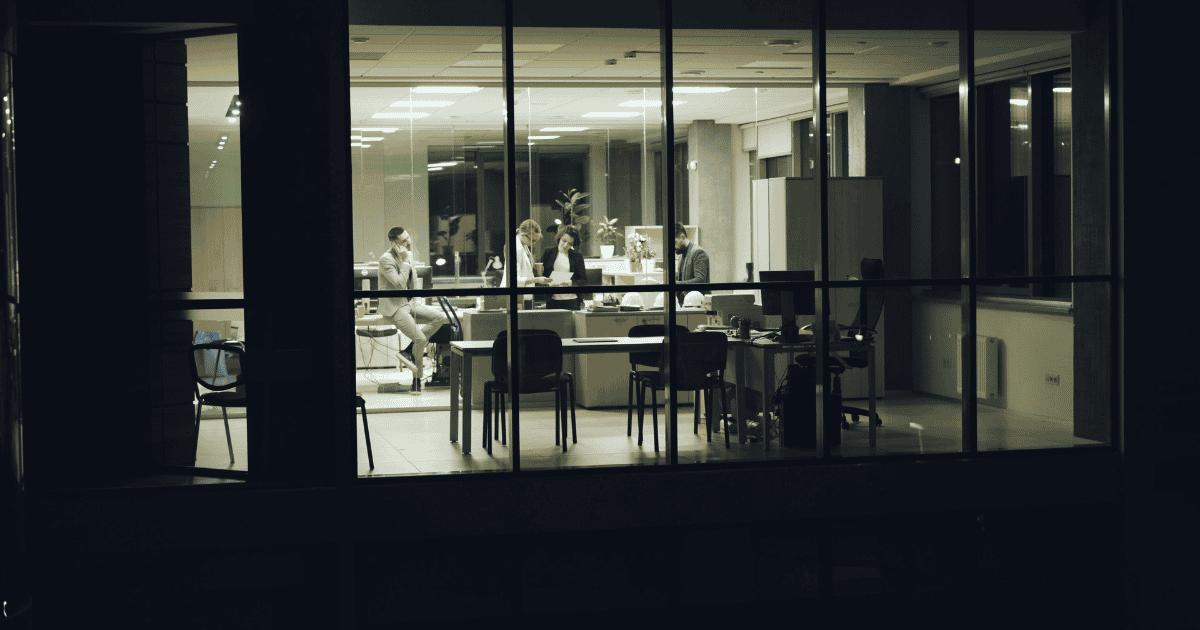
At 2am, the hotel lobby needs staffing, the data center floor needs monitoring, and the factory line keeps running. But the cafeteria closed at 8pm. The vending machine in the break room has chips and candy bars. The nearest fast food option is a 20-minute drive.
This is the night shift food problem. It is not a minor inconvenience. It is a daily reality for the estimated 15 to 20 percent of the US workforce that works outside standard daytime hours, and it has measurable consequences for employee health, energy, and performance that HR and operations leaders increasingly cannot afford to ignore.
The good news is that it is also a solvable problem, and the solution does not require building a kitchen or hiring additional food service staff.
What the Research Says About Shift Workers and Food
The connection between shift work and poor nutrition is well-established in the clinical literature, and recent research has clarified just how significant the gap is.
A 2026 peer-reviewed study published in the Journal of Human Nutrition and Dietetics by researchers at King's College London examined nutritional health and wellbeing in food manufacturing shift workers and found that access to quality food during shifts was consistently identified as one of the primary barriers to healthy eating. Shift workers reported relying on vending machines, fast food, or skipping meals entirely during late shifts, not because they did not want to eat better, but because better options simply were not available when they needed them.
A separate study published in Scientific Reports in August 2025 examining healthcare shift workers found significant challenges in maintaining healthy dietary behaviors across all shift types, with night shift workers showing the greatest nutritional gaps. The study concluded that worksite food environment improvements were among the most practical and impactful interventions employers could implement.
Research published in BMC Public Health in March 2026 found that the availability of healthy food options at the worksite directly influenced dietary quality among shift workers, and that improving the institutional food environment was a more effective lever than individual-level nutrition education alone.
The consistent finding across the literature is that shift workers want to eat better. The barrier is environmental, not motivational. When the food environment changes, behavior follows.
Why the Standard Solutions Fall Short
HR leaders and operations managers at hospitality companies, manufacturing facilities, data centers, and other 24/7 organizations have typically addressed the night shift food problem with one of several approaches. Each has real limitations.
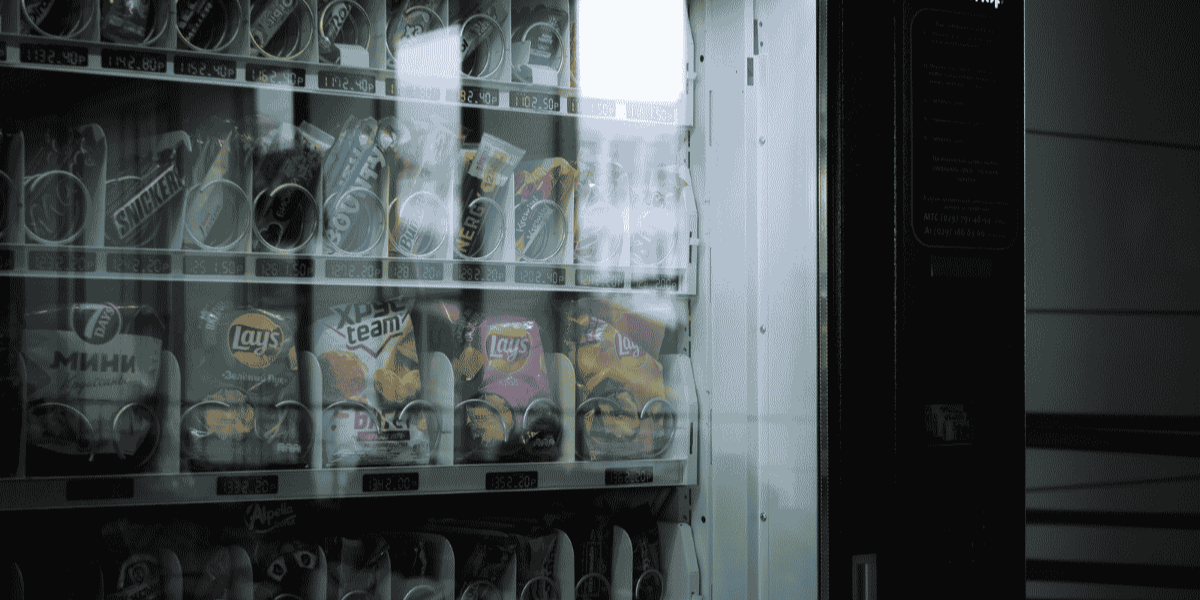
Vending machines are the most common solution and the most inadequate one. They are available around the clock, require no staff, and take up minimal space. But the product inside is shelf-stable, high in sodium and sugar, and nutritionally empty. A bag of chips from a vending machine does not fuel a person through a 12-hour overnight shift. It is a band-aid, and employees know it.
Catered meals work well for specific shifts when timing is predictable, but they are logistically challenging across multiple shift schedules and generate significant waste when headcounts vary. They also require coordination overhead from the operations or HR team that adds up quickly.
Delivery apps are available around the clock in theory, but in practice, late-night coverage is thin, delivery windows are long, and the cost for employees ordering individually adds up fast. And for facilities in suburban or industrial areas, delivery coverage may not exist at all during overnight hours.
On-site cafeterias solve the problem comprehensively but at significant cost, both in infrastructure and in staffing. A staffed cafeteria running overnight adds labor costs, kitchen management complexity, and health code compliance overhead that most facilities are not equipped to absorb.
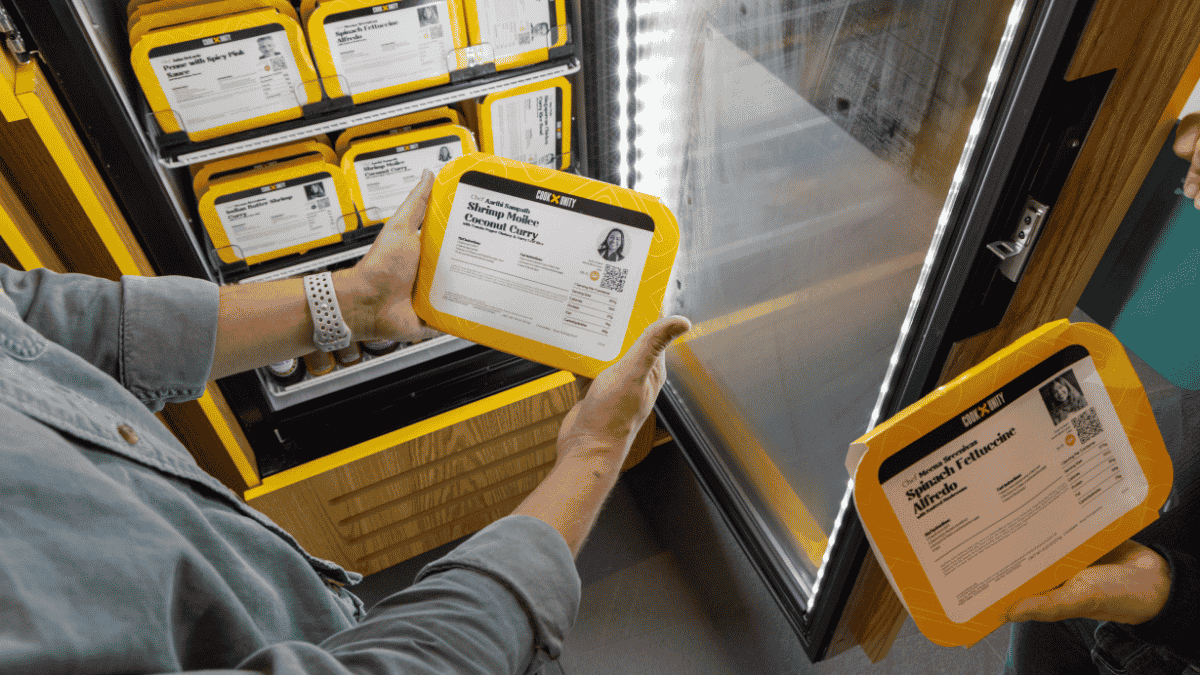
A fully managed smart fridge is different from all of these. It is available around the clock like a vending machine, but stocked with fresh, chef-prepared meals rather than packaged snacks. It requires no additional staff. It eliminates the delivery dependency and the catering coordination. And it does not require building or maintaining a kitchen.
What "Available Around the Clock" Actually Means in Practice
The phrase "24/7 access" is easy to say and often understated in impact. For shift workers, the availability window matters enormously.
A hospitality employee finishing a late check-in shift at 1am has a 30-minute break window. A factory worker on a 6am start needs something before the cafeteria opens. A data center technician monitoring systems overnight has exactly the break time they are allotted, and if there is nothing to eat in the building, they either skip the meal or lose time leaving to find one.
CookUnity's hospitality and workplace smart fridge case study found that more than 25% of all meal purchases from in-facility smart fridges occur after 6pm, after traditional food service has ended. That is not a small edge case. It represents a quarter of total usage happening in exactly the window where most food options disappear.
The same case study found that employees save 30 minutes per shift by accessing meals on-site rather than clocking out for an offsite lunch break. For a facility running multiple shifts across 365 days, that adds up to meaningful productivity and coverage improvements over the course of a year.
One employee at a hospitality client captured the problem plainly: "I really like the variety of healthy items because there is literally nothing around our hotel that I can go to within my break time." — Head of Spa, Hotel Barriere
The Business Case for HR and Operations Leaders
The night shift food problem is not just a wellness issue. It is a retention, productivity, and cost issue, and that is the framing that matters most for HR leaders evaluating solutions.
Retention: In industries with high turnover like hospitality and manufacturing, employee benefits and working conditions are a meaningful factor in whether people stay. Amenities and daily-use benefits are among the most controllable factors influencing whether employees stay in their environment. Employees who have reliable access to good food during their shifts have one more concrete reason to stay.
Productivity: Research consistently connects nutrition to cognitive performance, energy levels, and error rates. An employee who skips a meal during an overnight shift because there was nothing available is not performing at the same level as one who ate well. For industries where attention to detail matters, including data centers, manufacturing quality control, and hospitality guest experience, that performance gap has real operational implications.
Cost savings: CookUnity's case study data found that smart fridge programs save hospitality clients an average of $33,000 per year in food service staff costs, and between $80,000 and $300,000 annually in kitchen infrastructure costs. The operational model puts all restocking, maintenance, and food service responsibility on the provider, so the HR or facilities team is not managing a new operational function.
What to Look for in a Smart Fridge Program for Shift-Heavy Workplaces
Not all smart fridge programs are built for the demands of a 24/7 workplace. HR and operations leaders evaluating options should ask:
1. Is restocking aligned with shift schedules? A fridge that is restocked once a day at noon serves the day shift well and the night shift poorly. Look for programs with data-driven restocking that responds to actual usage patterns across all shift windows. 2. What is the food quality? Meals should be fresh, not frozen or shelf-stable. The point of a smart fridge over a vending machine is the quality of what is inside. 3. What is the menu variety? A rotating menu that spans global cuisines, dietary preferences, and nutritional needs serves a diverse workforce better than a fixed selection that generates meal fatigue within weeks. 4. What does the employer pay vs. the employee? Programs vary significantly on subsidy structures. Some employers fully fund the program, others offer partial subsidies, and others let employees purchase individually. Flexibility matters for organizations with variable workforce compositions. 5. What is the operational burden on the HR or facilities team? The right program runs without ongoing involvement from the employer's team. Restocking, maintenance, inventory management, and employee support should all sit on the provider's side.
CookUnity's Smart Fridge for Shift-Heavy Workplaces
CookUnity is the first meal delivery led by world-class chefs, and CookUnity's Office Smart Fridge is designed specifically for workplaces that run around the clock. The fridge is stocked using real-time data analytics that optimize inventory based on actual purchasing patterns, so the selection reflects what employees on every shift actually want to eat rather than what was popular during the day shift.
With meals from 130+ chefs across the US and Canada spanning 60+ global cuisines and diets, and a rotating menu of up to 400+ weekly meals, CookUnity gives employees at every hour of the day access to fresh, never frozen, restaurant-quality food. The program includes employer subsidy options, allergen and ingredient transparency through the app, and full operational management by CookUnity so the HR team does not have to manage a food service function.
As one HR manager at an 11 Howard client put it: "The food options are so much healthier and better than all the delivery we used to get."
For hospitality companies, data centers, manufacturing facilities, and any organization where the work never stops, the night shift food problem has a practical, scalable solution that does not require building a kitchen or hiring additional staff.
Get in touch with our team to learn more about bringing a CookUnity Smart Fridge to your facility.
Frequently Asked Questions
Why is food access a particular challenge for shift workers?
Shift workers face a structural food environment problem. Most workplace food services, including cafeterias, catering programs, and on-site restaurants, operate during standard business hours. Employees working late, overnight, or early morning shifts find those options closed or unavailable during their actual working hours. Research from King's College London published in 2026 identified limited access to quality food during shifts as a primary barrier to healthy eating among shift work employees, with most workers reporting reliance on vending machines, fast food, or meal skipping during non-standard shift windows.
What makes a smart fridge better than a vending machine for overnight shift workers?
A vending machine stocks shelf-stable, packaged snacks designed for long shelf life rather than nutritional quality. A smart fridge stocks fresh, chef-prepared meals that are replenished regularly based on actual usage data. For shift workers who need a real meal during a break window, the quality difference is significant. CookUnity's case study data found that over 25% of all smart fridge purchases in hospitality workplaces occur after 6pm, confirming that employees actively use the option when it offers something worth eating.
How does a smart fridge program reduce costs for employers?
CookUnity's hospitality and workplace case study found that smart fridge programs save clients an average of $33,000 per year in food service staff costs, and between $80,000 and $300,000 annually in kitchen infrastructure costs. The fully managed model places restocking, maintenance, inventory management, and employee support on the provider, so there is no new operational burden on the HR or facilities team. Employees also save approximately 30 minutes per shift by accessing meals on-site rather than leaving for an offsite option.
Can employers subsidize smart fridge meals for their employees?
Yes. CookUnity's smart fridge program supports a range of employer subsidy structures, from fully funded programs where the employer covers all meal costs to partial subsidy models where employees contribute a portion of the purchase price. Subsidy flexibility allows organizations to tailor the benefit to their workforce composition and budget while ensuring that food access is not dependent solely on individual employee income during shifts.
Is a smart fridge practical for facilities in suburban or industrial locations?
Yes. A smart fridge is particularly valuable in locations where delivery coverage is limited or unreliable, which describes many manufacturing facilities, data centers, and industrial campuses. The on-site food option eliminates the delivery dependency entirely. A standard smart fridge requires approximately 6 square feet of floor space and a standard electrical outlet, with no dedicated plumbing or kitchen infrastructure required, making it practical for break rooms, lobbies, or common areas in virtually any facility.
What shift schedules does a smart fridge support?
A well-managed smart fridge program supports all shift schedules simultaneously. CookUnity uses real-time data analytics to track purchasing patterns across all hours and adjusts restocking schedules to ensure that the fridge is well-stocked during every shift window, not just during peak daytime hours. This is the operational difference between a smart fridge and a catered meal program, which is typically tied to a specific delivery window that serves some shifts well and others poorly.

Be the first to know about new offers
Multiorder discounts, free items and more.