Back
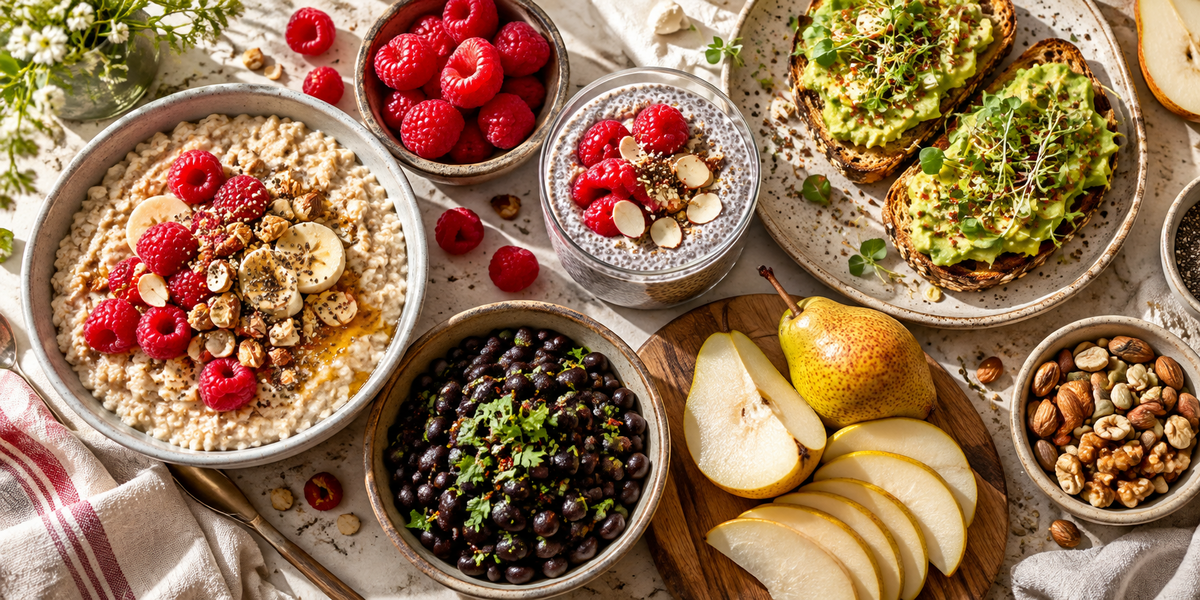
A high fiber breakfast can start with a bowl of oats, but it does not have to end there. Berries, pears, chia, flax, beans, avocado, whole grains, nuts, and vegetables all bring fiber to the table, often with more color and texture than a beige bowl can manage alone.
Fiber supports digestive function and can add staying power to a meal. Increase it gradually, though. A sudden leap from little fiber to a bran-heavy breakfast can make the morning memorable for the wrong reasons.
Key takeaways
The FDA Daily Value for fiber is 28 grams for a 2,000-calorie diet; individual needs vary.
Mix sources across the day instead of forcing the full target into breakfast.
Increase fiber gradually and drink enough fluid.
Use the CookUnity Fiber-Preferred menu to filter current meals with 7 grams or more of fiber per serving.
What fiber does
Dietary fiber is the part of plant foods that the body does not fully digest. Different fibers behave differently: some form gels, some add bulk, and many become food for gut microbes. Whole plant foods usually bring a mix.
Fiber can slow digestion and add volume, which may help a meal feel more substantial. It also supports regular bowel movements. People with digestive conditions may need tailored amounts or types, so symptoms are a reason to consult a clinician, not to keep adding spoonfuls of bran.
10 high-fiber breakfast ideas
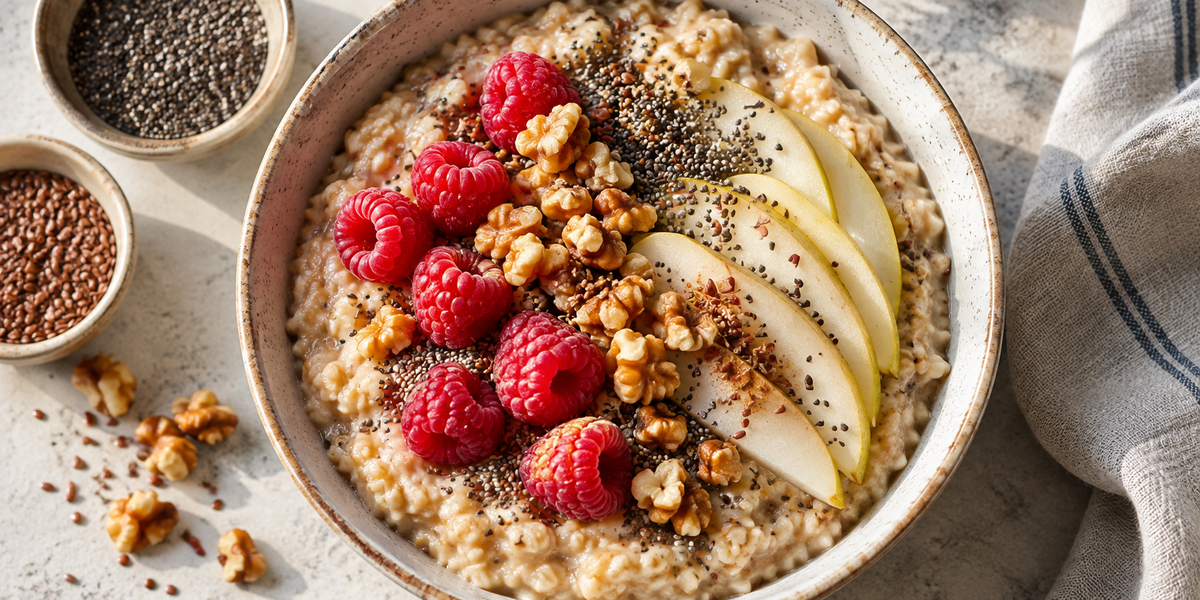
1. Oats with berries, chia, and walnuts
Cook rolled or steel-cut oats, then top with raspberries or blackberries, chia seeds, and walnuts. Keep portions comfortable and let the toppings share the work.
2. Pear and yogurt bowl
Dice a pear with the skin on and add it to plain yogurt with ground flaxseed and pistachios. The yogurt contributes protein while the fruit, seeds, and nuts bring fiber.
3. Black bean breakfast tacos
Fill corn tortillas with black beans, eggs, cabbage, avocado, and salsa. Beans do serious fiber work and turn a small taco into breakfast with weight behind it.
4. Savory quinoa bowl
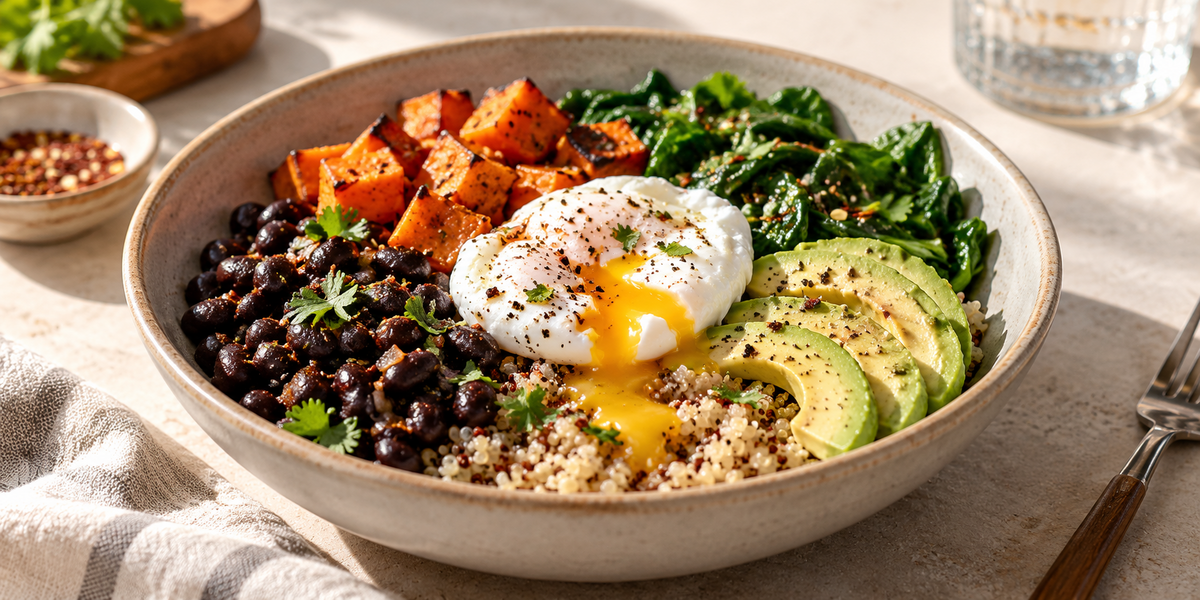
Layer quinoa with black beans, roasted sweet potato, spinach, avocado, and an egg. Cook the grains and vegetables ahead, then assemble and heat in the morning.
5. Chia pudding with fruit
Soak chia in milk overnight, stirring once after 10 minutes to prevent clumps. Top with berries or kiwi. Pair with yogurt or soy yogurt if the bowl needs more protein.
6. Avocado and white bean toast
Mash avocado with white beans, lemon, and pepper, then spread it on whole-grain toast. Tomatoes or radishes add freshness and crunch.
7. Lentil breakfast hash
Warm cooked lentils with roasted potatoes, kale, and spices. Top with an egg or a spoon of yogurt. Lentils at breakfast sound unusual only until the first good forkful.
8. Bran cereal with a softer landing
Choose a cereal with meaningful fiber and modest added sugar, then add milk, berries, and nuts. Read the serving size; some compact cereals pack more fiber than your stomach wants in one ambitious bowl.
9. Apple-cinnamon baked oatmeal
Bake oats with diced apple, milk, eggs, cinnamon, and flax. Slice and refrigerate portions for several mornings. Add plain yogurt when serving.
10. Vegetable frittata with whole-grain toast
Pack a frittata with broccoli, spinach, mushrooms, and onions. The vegetables contribute fiber, while whole-grain toast or beans make the amount more meaningful.
How to read a fiber label
The Nutrition Facts panel lists grams of dietary fiber and percent Daily Value. The FDA considers 5% Daily Value or less low and 20% or more high. Compare similar products by serving size, because a tiny serving can make a percentage look more generous than the bowl you will eat.
Whole foods do not always carry labels. Beans, berries, pears, avocado, oats, and seeds remain useful even when no package announces their virtues.
Increase fiber without upsetting your stomach
Add one serving at a time over several days. Drink fluid throughout the day. Cooked vegetables, oats, and canned beans rinsed under water may feel easier for some people than large raw salads or dry bran.
If bloating, pain, constipation, or diarrhea persists, speak with a clinician. More fiber is not the answer to every digestive symptom, and certain conditions require a different approach.
A practical weekly setup
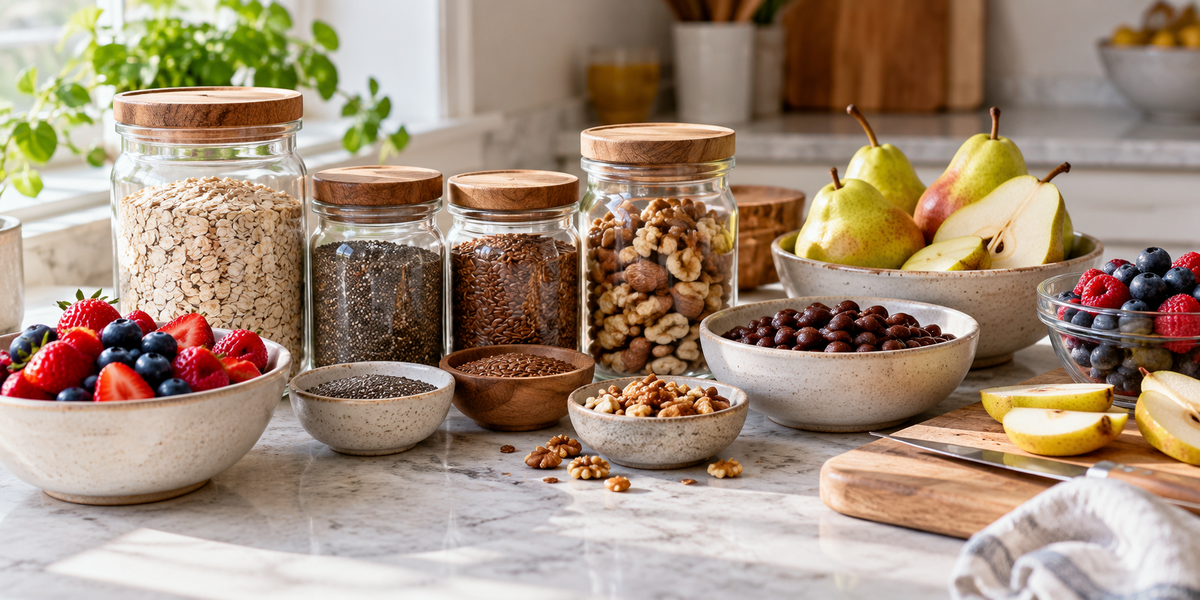
Cook oats or quinoa, rinse a can of beans, wash berries, and portion chia, flax, and nuts. Store the crunchy pieces separately. This creates sweet and savory paths without 5 matching breakfasts.
Soluble and insoluble fiber
Soluble fiber absorbs water and can form a gel. Oats, beans, chia, apples, and citrus provide it. Insoluble fiber adds bulk and is found in foods such as wheat bran, vegetables, and many whole grains. Most plant foods contain a mix, so breakfast does not need a chemistry assignment.
Variety is the practical answer. Rotate oats, beans, berries, pears, greens, avocado, nuts, and seeds rather than depending on one fortified product.
A 3-day fiber-forward breakfast map
Day 1 can be oats with raspberries, chia, and walnuts. Day 2 can be black bean breakfast tacos with cabbage and avocado. Day 3 can be yogurt with pear and flax beside whole-grain toast.
Each day distributes fiber across several ingredients. Add portions gradually if your current intake is modest, and let the rest of lunch and dinner carry part of the daily target.
When a fiber supplement is different
A supplement may be useful under clinical guidance, but it does not bring the full mix of nutrients and textures found in fruit, vegetables, beans, and whole grains. Some fiber products also affect medication timing. Ask a pharmacist or clinician if you use one regularly.
Use convenience foods with intention
Frozen berries, canned beans, microwaveable plain grains, and unsweetened oatmeal cups can shorten prep while keeping fiber in the meal. Rinse canned beans if you want to remove some surface sodium. Choose frozen fruit without added syrup.
Breakfast bars and bottled smoothies vary widely. Read the fiber amount, serving size, and added sugars instead of trusting a fruit illustration on the wrapper. A bar with 2 grams of fiber does not become fiber-forward because oats appear in the name.
Make texture work for you
Fiber-rich breakfasts can lean soft. Add toasted nuts to oats, cabbage to bean tacos, pumpkin seeds to yogurt, or crisp vegetables to a savory bowl. Texture makes repeated ingredients feel less repetitive and can slow the pace of eating.
Where CookUnity fits
Start with CookUnity breakfast meals, then review fiber and serving information on each dish. The High Fiber menu collects meals with at least 7 grams of fiber per serving. Current options change by week and location.
Frequently asked questions
What is a good source of fiber at breakfast?
Oats, berries, pears, beans, chia, flax, avocado, bran cereal, and whole-grain bread are useful sources. Combining 2 or 3 makes it easier to build a substantial breakfast.
Is oatmeal high in fiber?
Oatmeal contributes fiber, especially beta-glucan, but the amount depends on the portion. Berries, chia, flax, nuts, or pear can increase the bowl’s total.
Can too much fiber cause bloating?
Yes, especially when intake rises quickly. Increase it gradually and maintain fluid intake. Persistent symptoms deserve individual clinical advice.
Does blending fruit remove fiber?
Blending retains most of the fiber because the whole fruit stays in the drink. Juicing removes much of the fiber-rich pulp.

Be the first to know about new offers
Multiorder discounts, free items and more.