Back
15 High-Fiber, Low-Carb Foods That Make Hitting Your Fiber Goal Easier
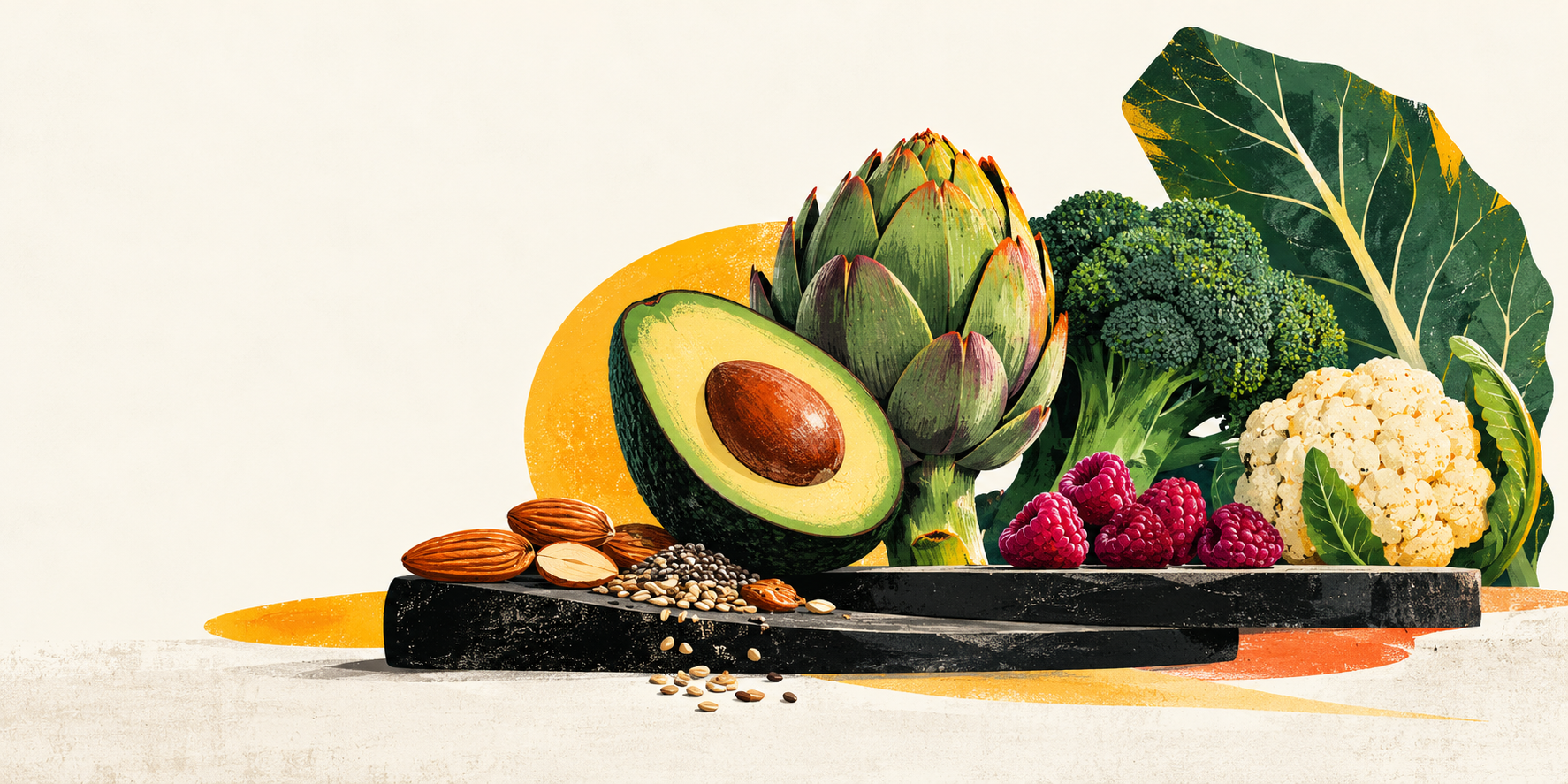
Low carb high fiber foods solve a familiar menu problem: many of the foods best known for fiber, including beans, whole grains, and some fruits, also carry more carbohydrate than a low-carb eater may want in one serving. The useful choices tend to come from seeds, avocado, berries, nuts, and non-starchy vegetables.
This guide compares 15 foods using common serving sizes, then shows how to turn those numbers into meals and snacks. The table lists total carbohydrate because that is what appears on a Nutrition Facts label. It also shows estimated net carbohydrate, calculated as total carbohydrate minus dietary fiber.
Key takeaways
• Chia seeds provide about 9.8 grams of fiber and 2.2 grams of calculated net carbs in a 2-tablespoon serving.
• Avocado, cauliflower, flaxseed, pecans, and unsweetened coconut each provide fiber with fewer than 3 grams of calculated net carbs in the servings used here.
• Serving size changes the comparison. A cup of berries and an ounce of nuts are both realistic portions, though they are not equal by weight.
• The FDA Daily Value for fiber is 28 grams on a 2,000-calorie diet. Individual needs vary by age, sex, energy intake, and medical history.
• Increase fiber gradually and drink enough fluid for your needs. A sudden jump can bring bloating or digestive discomfort.
Why fiber can get harder to find on a low-carb diet
Low-carb eating often removes or sharply reduces bread, cereal, pasta, rice, beans, and higher-carb fruit. Those foods may have contributed a meaningful share of fiber before the change. If the empty space gets filled mostly with meat, cheese, eggs, and added fats, fiber can fall fast because those foods contain little or none.
The answer is a more deliberate plant strategy. Choose foods that earn their place with measurable fiber, then distribute them across the day. A spoonful of seeds at breakfast, vegetables at lunch and dinner, and a measured portion of nuts or berries can do more than one heroic bowl of greens.
Total carbs, fiber, and net carbs
Total carbohydrate includes fiber, sugars, and starches. Dietary fiber is the portion of carbohydrate that the body does not fully digest. Many low-carb eaters calculate net carbs by subtracting fiber from total carbohydrate. Packaged foods may also contain sugar alcohols, which require more careful label reading.
For a fuller explanation, see CookUnity's guide to understanding net carbs. The calculation in this article is intentionally narrow: total carbohydrate minus dietary fiber.
The most fiber for fewer net carbs
Chia seeds stand out in this set because most of their carbohydrate comes from fiber. Flaxseed, avocado, unsweetened coconut, pecans, and cauliflower also have favorable fiber-to-net-carb ratios in the listed portions. Artichokes and berries provide more net carbohydrate, though they contribute a larger amount of fiber per serving.
No single ratio decides whether a food belongs in your diet. Taste, portion size, preparation, digestive tolerance, and the rest of the meal matter too.
15 high-fiber, low-carb foods ranked by fiber per serving
The foods below are ranked by grams of fiber in the stated serving, not by fiber per 100 grams. Values are rounded to one decimal, so the displayed net-carb figure may differ by 0.1 gram from subtraction using rounded numbers.
Rank and food | Serving | Fiber g | Total carbs g | Est net carbs g | Easy use |
|---|---|---|---|---|---|
1 Chia seeds | 2 tbsp 28 g | 9.8 | 11.9 | 2.2 | Stir into yogurt or make chia pudding |
2 Raspberries | 1 cup 123 g | 8.0 | 14.7 | 6.7 | Add to yogurt or eat with nuts |
3 Blackberries | 1 cup 144 g | 7.6 | 13.8 | 6.2 | Pack chilled for a snack |
4 Collard greens cooked | 1 cup 190 g | 7.6 | 10.6 | 3.0 | Serve beside chicken or fish |
5 Artichoke cooked | 1 medium 120 g | 6.9 | 13.5 | 6.6 | Use in salads or as a warm side |
6 Avocado | 1 half about 100 g | 6.7 | 8.5 | 1.8 | Slice onto eggs bowls or salads |
7 Broccoli cooked | 1 cup 156 g | 5.1 | 11.2 | 6.1 | Roast or steam as a dinner side |
8 Unsweetened dried coconut | 1 oz 28 g | 4.6 | 6.7 | 2.1 | Sprinkle over yogurt or chia pudding |
9 Brussels sprouts cooked | 1 cup 156 g | 4.1 | 11.1 | 7.0 | Roast with olive oil and herbs |
10 Green beans cooked | 1 cup 125 g | 4.0 | 10.0 | 6.0 | Toss with lemon and almonds |
11 Ground flaxseed | 2 tbsp 14 g | 3.8 | 4.0 | 0.2 | Mix into yogurt or a shake |
12 Almonds | 1 oz 28 g | 3.5 | 6.1 | 2.6 | Portion into a small container |
13 Cauliflower cooked | 1 cup 124 g | 2.9 | 5.1 | 2.2 | Mash roast or pulse into rice |
14 Pecans | 1 oz 28 g | 2.7 | 3.9 | 1.2 | Pair with berries or cheese |
15 Pumpkin seed kernels | 1 oz 28 g | 1.8 | 4.2 | 2.4 | Scatter over salads or vegetables |
Data note: Nutrient values are based on comparable generic foods in USDA FoodData Central and common USDA household measures. Net carbs are an editorial calculation. Food variety, preparation, water loss, brand, and the amount you serve can change the numbers. Check the package label for branded foods.
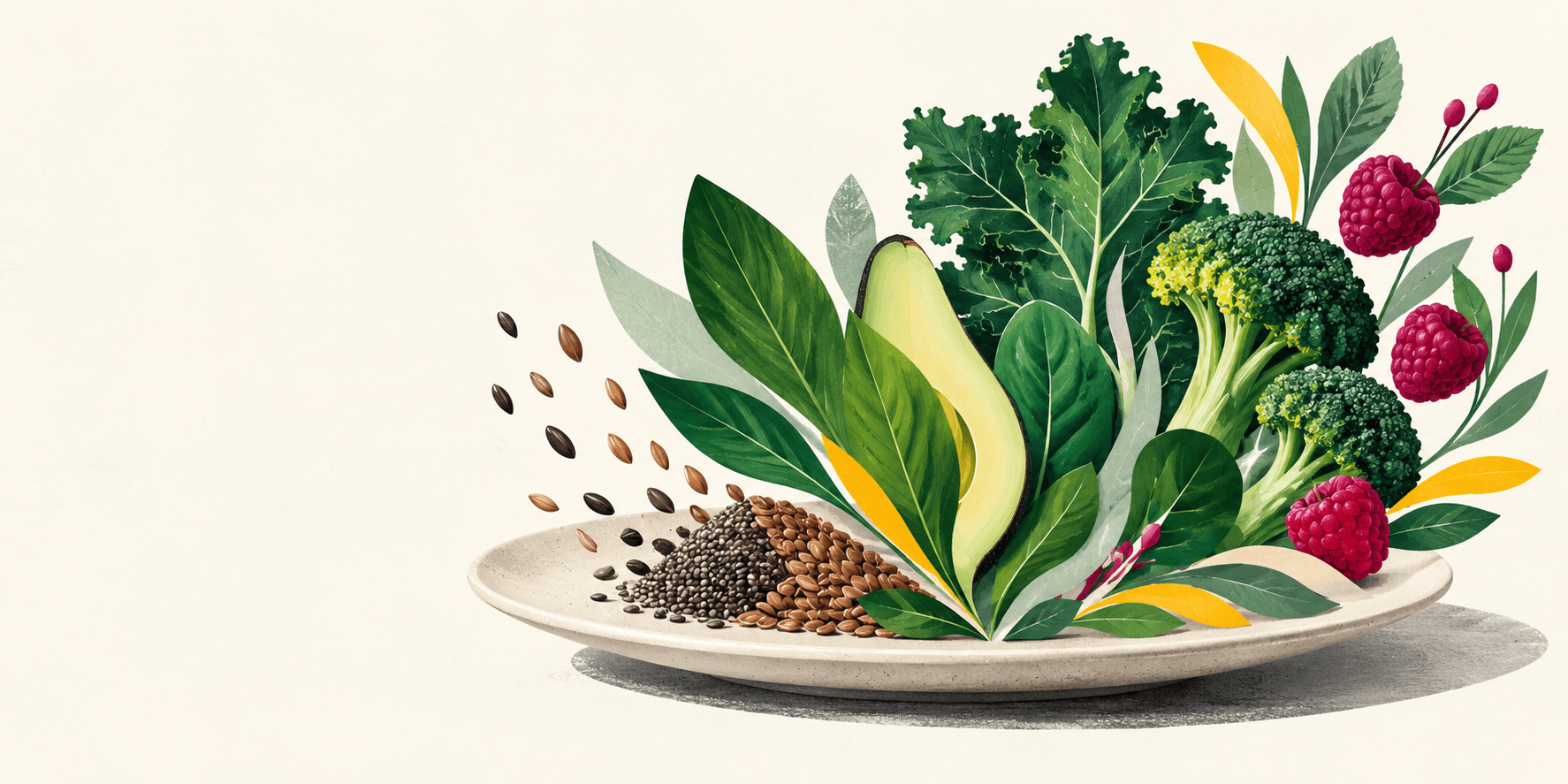
1 to 5 Seeds berries and vegetables with the most fiber per serving
Chia leads because a small portion carries close to 10 grams of fiber. Raspberries and blackberries follow with 7.6 to 8 grams per cup, though each cup also brings more net carbohydrate than a serving of chia. Cooked collards and a medium artichoke land in the same fiber neighborhood and work as substantial vegetable sides.
These options are most useful when the serving matches your appetite and carb budget. Half a cup of raspberries provides roughly half the values shown for a full cup. An artichoke may need a simple dip or a protein alongside it to become a meal component.
6 to 10 Avocado and vegetables with meaningful fiber
Half an avocado contributes about 6.7 grams of fiber with 1.8 grams of calculated net carbs. It also adds richness to eggs, salads, and bowls without another pan on the stove. Broccoli, Brussels sprouts, and green beans give dinner more volume and texture. Unsweetened dried coconut is compact, so measure it before pouring.
11 to 15 Nuts seeds and practical pantry options
Ground flaxseed, almonds, pecans, and pumpkin seeds are easy to store and portion. Flaxseed disappears into yogurt or a smoothie, while nuts and pumpkin seeds add crunch to salads. Cooked cauliflower can replace a higher-carb side, though its fiber contribution is more modest than broccoli or collards in the servings shown.
High-fiber, low-carb vegetables for everyday meals
Cooked collards offer the most fiber among the vegetables in this table, followed by artichoke and broccoli. Avocado is botanically a fruit, though it behaves like a vegetable in savory meals and has one of the lowest net-carb counts here. Cauliflower provides fewer grams of fiber, yet its low net-carb count makes it easy to use in a larger meal.
How to compare vegetables by serving
Start with the amount you will eat. A cup of cooked greens is compact because heat removes volume. A cup of raw leafy greens weighs much less and contributes less fiber. Frozen vegetables can be equally practical; compare plain varieties without sauces, then measure the portion after cooking if that matches the database entry or label.
Texture helps with repetition. Roast broccoli until the edges brown, braise collards until tender, or shave raw Brussels sprouts for a crisp salad. The nutrition goal stays the same while dinner avoids becoming a rotation of steamed florets.
Low-preparation high-fiber low-carb snacks
The easiest snacks combine a measured fiber source with something you already keep cold or shelf-stable. Try 1 ounce of almonds, half a cup of raspberries with plain Greek yogurt, celery with mashed avocado, or a small chia pudding prepared the night before.
Options for work travel and busy afternoons
Pack nuts and seeds in single portions because eating from a large bag makes the carb and calorie count hard to estimate. Berries travel best in a firm container. Single-serve plain yogurt can hold chia or ground flaxseed, though its carbohydrate content still belongs in your daily total.
For mornings, pair these ideas with CookUnity's high-fiber breakfast ideas once the final destination is confirmed.
Building lunches and dinners with more fiber
A practical plate starts with a protein, adds one or two fiber-containing plants, then finishes with a sauce or fat that makes the combination worth eating again. Grilled salmon with roasted broccoli and avocado works. So does chicken with collards and a spoonful of pumpkin seeds over the vegetables.
A protein vegetable and fiber formula
Use this sequence when planning a meal:
Choose a protein such as fish, chicken, eggs, tofu, or tempeh.
Add at least one measured vegetable from the table.
Add a compact fiber booster when needed, such as chia, flaxseed, avocado, nuts, or seeds.
Check sauces, breading, and sides for carbohydrates that are easy to miss.
The formula also fits a low-carb meal plan. It keeps the focus on the whole plate rather than forcing one ingredient to carry the day's fiber target.
Adding fiber to prepared meals
Read the full nutrition panel before choosing a prepared meal. The total carbohydrate and fiber values help you see how the dish fits the rest of your day. A meal with roasted vegetables may need no changes. A lower-fiber entree can take sliced avocado, a spoonful of ground flaxseed in a side sauce, or a quick salad with pumpkin seeds.
CookUnity's high-fiber meal delivery collection displays fiber and other nutrition details for qualifying meals. Availability and recipes vary by ZIP code, so use the current meal card as the source for each dish.
Common mistakes with fiber and carbohydrate tracking
Most mistakes come from mismatched portions or numbers pulled from different preparations. Raw and cooked vegetables can have different weights per cup. Sweetened coconut does not match unsweetened coconut. A flavored nut mix may carry sugar that plain nuts do not.
Confusing net carbs with total carbs
Net carbs are calculated, while total carbohydrate is a regulated label value. If you track net carbs, use a consistent method and keep total carbohydrate visible. People managing diabetes, gastrointestinal disease, or another medical condition should use the method recommended by their clinician.
Increasing fiber too quickly
A large overnight increase can cause gas, bloating, or cramping. NIDDK advises adding fiber a little at a time and drinking enough liquids to help it work. Spread additions across several days, especially with chia, flaxseed, or a fiber supplement.
Assuming every whole grain or legume is low carb
Whole grains and legumes can contribute useful fiber. They also contain more total carbohydrate per serving than most foods in this list. They may fit a moderate low-carb pattern, though they require different portions than cauliflower, avocado, or seeds. Check the numbers rather than relying on a food's reputation.
Frequently asked questions about high-fiber low-carb foods
What foods are highest in fiber but lowest in carbs
Chia seeds, ground flaxseed, avocado, unsweetened coconut, pecans, and cauliflower offer strong fiber-to-net-carb ratios in the servings used here. Chia provides about 9.8 grams of fiber and 2.2 grams of calculated net carbs per 2 tablespoons. Avocado provides about 6.7 grams of fiber and 1.8 grams of net carbs per 100 grams.
How can I get 25 grams of fiber a day while eating low carb
Distribute fiber across meals instead of trying to find it at dinner. Two tablespoons of chia, half a cup of raspberries, half an avocado, 1 cup of cooked cauliflower, and 1 ounce of almonds total about 26.9 grams of fiber and 12.2 grams of calculated net carbs. Other foods in the day add to the carb total.
Which low-carb vegetables have the most fiber
In the portions shown here, 1 cup of cooked collards provides about 7.6 grams of fiber, a medium cooked artichoke provides 6.9 grams, and 1 cup of cooked broccoli provides 5.1 grams. Brussels sprouts, green beans, and cauliflower add 2.9 to 4.1 grams per cooked cup.
Can high-fiber low-carb foods support weight management
Fiber-containing foods can add volume and may help a meal feel more filling, though no single ingredient guarantees weight loss. Total energy intake, protein, sleep, activity, medications, and medical history can all affect weight. Build a varied eating pattern and seek individual guidance when weight management is tied to a health condition.
How can I eat more fiber without cooking extra meals
Use additions that need no stove: chia or ground flaxseed in yogurt, avocado on a prepared entree, berries beside breakfast, and measured nuts over a salad. For dinner, choose prepared meals that display fiber on the nutrition panel and already include vegetables, beans, or whole grains that fit your carb range.

Be the first to know about new offers
Multiorder discounts, free items and more.