Back
How to Get 25 Grams of Fiber a Day Without Complicated Meal Prep
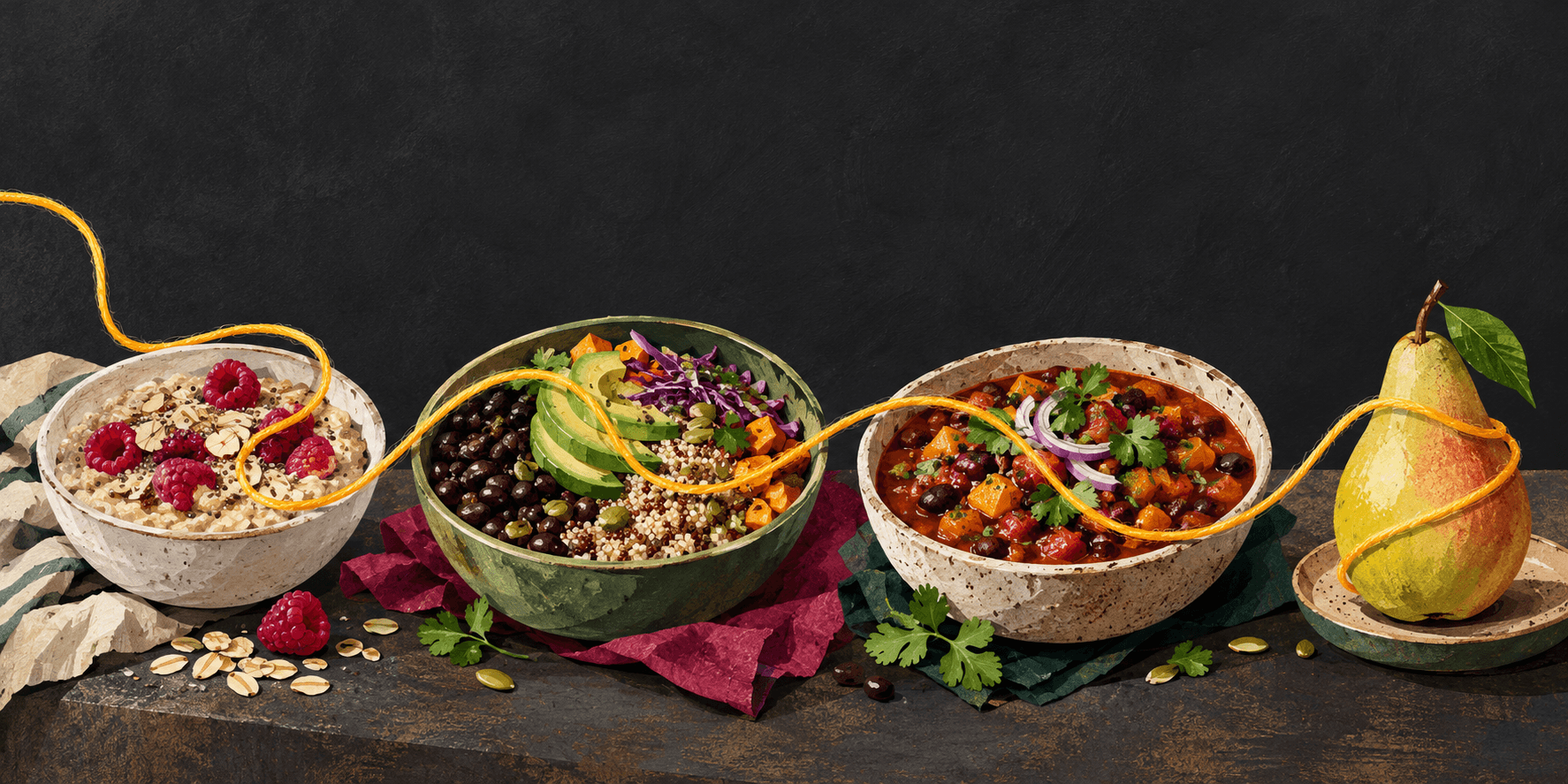
To get 25 grams of fiber a day, spread the job across meals: aim for about 7 grams at breakfast, 8 at lunch, 7 at dinner, and 3 in a snack. A bowl of oatmeal with raspberries, a lentil or black-bean lunch, vegetables and a whole grain at dinner, and a pear can take you past 25 grams without turning every meal into a spreadsheet.
The math does not have to land on the same split each day. Portions, brands, recipes, and produce vary, so use package labels and meal nutrition panels for the final count. If a clinician has given you a different target, follow that guidance.
Key takeaways
Build each meal around one dependable fiber source instead of trying to catch up at dinner.
Beans, lentils, berries, pears, whole grains, nuts, and seeds add meaningful fiber in ordinary portions.
CookUnity's High Fiber collection currently includes meals with at least 7 grams of fiber per serving, with nutrition details available for each dish.
Increase fiber a little at a time and drink enough liquids for your needs.
What Does 25 Grams of Fiber Look Like in a Day?
Twenty-five grams can fit into four familiar eating moments. Here is a conservative example that clears the target:
Meal | What to eat | Estimated fiber |
Breakfast | Oatmeal or plain yogurt topped with 1 cup raspberries | 8 g |
Lunch | One current CookUnity High Fiber meal, such as Taco Bowl with Black Beans and Quinoa | At least 7 g |
Dinner | One current CookUnity High Fiber meal, such as Beef & Black Bean Chili | At least 7 g |
Snack | 1 medium pear | 5.5 g |
Daily total | At least 27.5 g |
The raspberry and pear estimates come from federal food-source tables. The meal figure uses the qualifying floor for CookUnity's current High Fiber collection. Check the nutrition panel for the exact dish available in your ZIP code before ordering.
Why 25 grams is a useful planning target
Twenty-five grams is a common daily goal, but fiber needs are not identical for everyone. The FDA's Daily Value for dietary fiber is 28 grams on a 2,000-calorie diet. The National Institute of Diabetes and Digestive and Kidney Diseases gives an adult range of 22 to 34 grams per day depending on age and sex.
Use 25 grams as a practical meal-planning target. A registered dietitian or clinician can help set a personal target if you have digestive symptoms, dietary restrictions, or a medical condition.
Fiber counts are estimates until you read the label
An apple's size changes its fiber count. Two breads labeled “whole wheat” can have different amounts per slice. Prepared recipes also change when ingredients or portions change.
For packaged foods, compare the grams of dietary fiber per serving on the Nutrition Facts label. For CookUnity meals, use the meal card, individual meal page, package label, or nutrition panel shown for your local menu.
How to Get 25 Grams of Fiber Across Breakfast, Lunch, and Dinner
A 7-8-7-3 framework makes the target easier to see: about 7 grams at breakfast, 8 at lunch, 7 at dinner, and 3 in a snack. Move the numbers around to suit your appetite. A 4-10-8-3 day works, too.
High-fiber breakfasts that require minimal preparation
Breakfast gets easier when one ingredient carries most of the fiber count. You don't need a complicated recipe or a long morning routine to get started.
Berries: One cup of raspberries supplies about 8 grams of fiber. Add them to oatmeal or plain yogurt.
Oats plus fruit: Use the package label for the oats, then add half a cup of raspberries for about 4 more grams. For a ready-made alternative, try CookUnity's Blueberry-Chia Vegan Overnight Oats, made with rolled oats, chia seeds, and blueberries.
Chia pudding: Make it the night before and count the fiber from the chia label. Or skip the preparation with CookUnity's Cacao Chia Pudding, which combines chia seeds, coconut milk, cacao, and berries.
Whole-grain toast: Compare labels because fiber varies by brand. Top with avocado or serve with a pear.
Frozen berries count, require no chopping, and wait patiently for the morning you oversleep. And when even overnight preparation feels like too much work, chef-prepared breakfasts make it easier to maintain a consistent routine.
Easy high-fiber lunches
Beans and lentils do a great deal of work in a compact serving. Federal dietary guidance lists half a cup of cooked lentils at about 7.8 grams of fiber. Turn that into lunch with soup, a grain bowl, or a salad topped with lentils.
Other easy lunch anchors include black beans, chickpeas, edamame, or a whole grain paired with vegetables. For canned beans, drain and rinse them, then add them to leftovers, bagged salad, or a microwaveable grain pouch.
If you'd rather skip the chopping and assembly, CookUnity offers prepared meals built around many of these ingredients. The Taco Bowl with Black Beans and Quinoa combines beans, quinoa, vegetables, and avocado, while the Climate-Friendly Chickpea & Quinoa Bowl brings together chickpeas, quinoa, and vegetables in one convenient meal.
Both are examples of how fiber-containing ingredients can fit into lunch without having to plan, cook, and portion everything yourself. Check each meal's nutrition information to see how much it contributes toward your daily 25-gram goal.
Easy high-fiber dinners
Start with the part of dinner that contains fiber. Meat, poultry, fish, eggs, and most dairy foods contain little or no dietary fiber on their own. Beans, vegetables, fruit, whole grains, nuts, and seeds supply it.
A dinner can reach about 7 grams through a bean-based chili, lentil curry, grain bowl, or a generous vegetable side paired with a whole grain. Keep the protein you enjoy and give the plants enough room to register on the nutrition panel.
For nights when cooking isn't on the agenda, CookUnity's Southwest Turkey and Black Bean Chili pairs shredded turkey with black beans, tomatoes, and peppers. It demonstrates how a protein-centered dinner can incorporate fiber-containing ingredients without requiring a separate meal-prep session.
Snacks that close a small gap
Use the snack to cover the last few grams.
A medium pear contains about 5.5 grams.
A medium apple with its skin contains about 4.8 grams.
Half a cup of raspberries contains about 4 grams.
Nuts, seeds, roasted chickpeas, and whole-grain crackers can help; check the serving on the label.
The Easiest Ways to Get More Fiber in Your Diet
The fastest route is repetition. Pick a few foods with known counts and keep them in regular rotation.
Keep one fiber anchor at every meal
A fiber anchor is the ingredient you can count on: berries at breakfast, beans at lunch, or vegetables and a whole grain at dinner. Once the anchor is in place, the rest of the meal can change without losing the day's structure.
Give beans and lentils a standing invitation
Cook a batch, use canned versions, or choose prepared dishes that include them. Black beans can move from tacos to grain bowls. Lentils work in soups, curries, and salads. Chickpeas can be spooned over greens or roasted for a snack.
Compare labels within the same aisle
Bread, cereal, wraps, snack bars, and crackers can look similar while carrying different fiber counts. Compare equal serving sizes. The FDA considers 20% of the Daily Value or more per serving high in a nutrient; for fiber, that is at least 5.6 grams based on the 28-gram Daily Value.
Keep freezer and pantry backups
Frozen berries, frozen vegetables, canned beans, lentil soup, microwaveable whole grains, nuts, and seeds cover the days when fresh produce has left the chat. Choose products you will eat, then record their usual serving counts once so you do not have to relearn the label every Tuesday.
How to Reach Your Fiber Goal Without Meal Prepping
Meal prep asks for planning, shopping, cooking, portioning, storage, and cleanup before the week has even started. You can shorten that chain.
Use a three-part shopping list
Shop for one no-cook breakfast base, two portable snacks, and the ingredients for any meals you plan to cook. Fill the remaining lunches and dinners with prepared options that show dietary fiber on the nutrition panel.
Let nutrition panels do the arithmetic
Write down the fiber count for foods you repeat. If breakfast is usually 7 grams and your snack is 4, you know lunch and dinner need to cover about 14 grams together. That is faster than tracking every ingredient from zero each day.
Make high-fiber eating easier with CookUnity
CookUnity's High-Fiber Meal Delivery page groups dishes that currently provide at least 7 grams of fiber per serving. Customers can review nutrition information before choosing, then heat the meal instead of shopping for separate vegetables, legumes, and grains.
Menus rotate and availability varies by location. Use the High Fiber filter, enter your ZIP code, and check the current meal's fiber number. Pair it with the High Protein filter when both numbers matter to your routine.
A 25-gram daily meal builder with CookUnity
This builder uses two named dishes listed in CookUnity's High Fiber collection at the time of drafting. The 7-gram meal figures use conservative qualifying minimums because recipes can change.
1. Breakfast: 1 cup raspberries over oatmeal or plain yogurt, about 8 grams.
2. Lunch: Taco Bowl with Black Beans and Quinoa by Chef Andres Mendez, at least 7 grams while it remains in the High Fiber collection.
3. Snack: 1 medium pear, about 5.5 grams.
4. Dinner: Beef & Black Bean Chili by Chef James Grody, at least 7 grams while it remains in the High Fiber collection.
Estimated total: at least 27.5 grams. Confirm each meal's current nutrition panel in your market before publication and ordering.
Skip the meal planning. Keep the fiber goals.
Getting enough fiber doesn't have to involve building a weekly meal plan from scratch. CookUnity offers chef-prepared meals with nutrition information that makes it easier to find dishes that fit your daily fiber target.
How to Increase Your Fiber Intake Without Bloating
A large overnight increase may feel uncomfortable for some people. NIDDK recommends adding fiber a little at a time so the body can adjust.
Increase one eating moment at a time
Add berries to breakfast for several days. Then add a bean-based lunch or a higher-fiber dinner. This approach makes it easier to notice how your body responds and which foods suit you.
Drink enough liquids for your needs
NIDDK advises drinking water and other liquids to help fiber work better. Your needs depend on factors such as body size, activity, environment, and medical history. Ask a clinician if you have been told to restrict fluids.
Adjust the food or portion when needed
Different fiber sources may feel different. If a full cup of beans is a rough opening act, try a smaller portion and build from there. Speak with a clinician if symptoms persist, feel severe, or concern you.
A Simple 25g Daily Fiber Checklist
Use this template with the foods and meals you already like.
☐ Breakfast includes 6 to 8 grams from fruit, whole grains, nuts, or seeds.
☐ Lunch includes 7 to 9 grams from beans, lentils, vegetables, or a verified prepared meal.
☐ Dinner includes 6 to 8 grams from vegetables, legumes, or whole grains.
☐ A snack supplies the remaining 3 to 5 grams.
☐ Fiber counts come from the current label or nutrition panel.
☐ Any major increase happens gradually, with liquids appropriate for your needs.
Two quick variations
Cook once: Make a pot of lentil soup for several lunches. Use CookUnity for dinners, then keep berries and pears ready for breakfast and snacks.
Cook nothing: Choose a labeled oatmeal cup or whole-grain breakfast with fruit, two CookUnity High Fiber meals, and a pear. Check each label and meal panel because products and recipes vary.
Frequently Asked Questions
What foods can I eat to get 25 grams of fiber a day?
Choose foods such as beans, lentils, berries, pears, apples with the skin, vegetables, whole grains, nuts, and seeds. One cup of raspberries, two meals with at least 7 grams each, and a medium pear provide at least 27.5 grams using current published estimates and collection criteria.
What does 25 grams of fiber look like in one day?
It can look like oatmeal with raspberries for breakfast, a black-bean or lentil lunch, a dinner with vegetables and a whole grain, and a pear for a snack. The exact total depends on portions and recipes, so check labels for the final count.
Can I get 25 grams of fiber without cooking?
Yes. Combine no-cook foods such as berries, pears, nuts, seeds, canned beans, and whole-grain products with prepared meals that list fiber. CookUnity's current High Fiber collection identifies meals with at least 7 grams per serving.
How many grams of fiber should I eat at each meal?
There is no required meal-by-meal split. For a 25-gram planning target, try about 7 grams at breakfast, 8 at lunch, 7 at dinner, and 3 in a snack. Shift the numbers to fit your appetite and schedule.
What's the easiest way to increase fiber intake without bloating?
Increase fiber a little at a time. Drink enough liquids for your individual needs, and reduce the portion or try a different fiber source if a food causes discomfort. Speak with a clinician about persistent or severe symptoms.

Be the first to know about new offers
Multiorder discounts, free items and more.