Back
Meal prep vs prepared meals: cost, nutrition, and what you actually keep doing
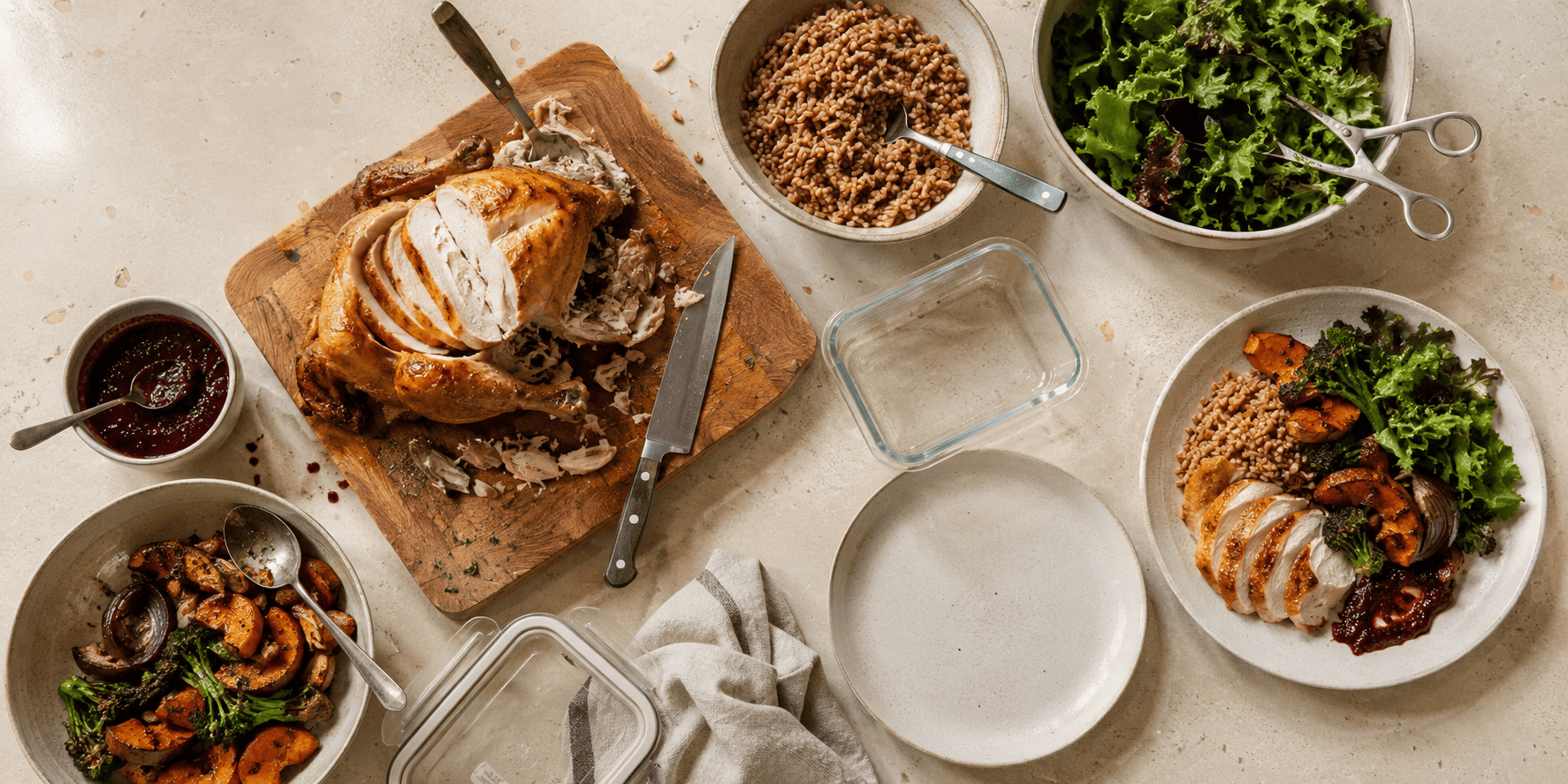
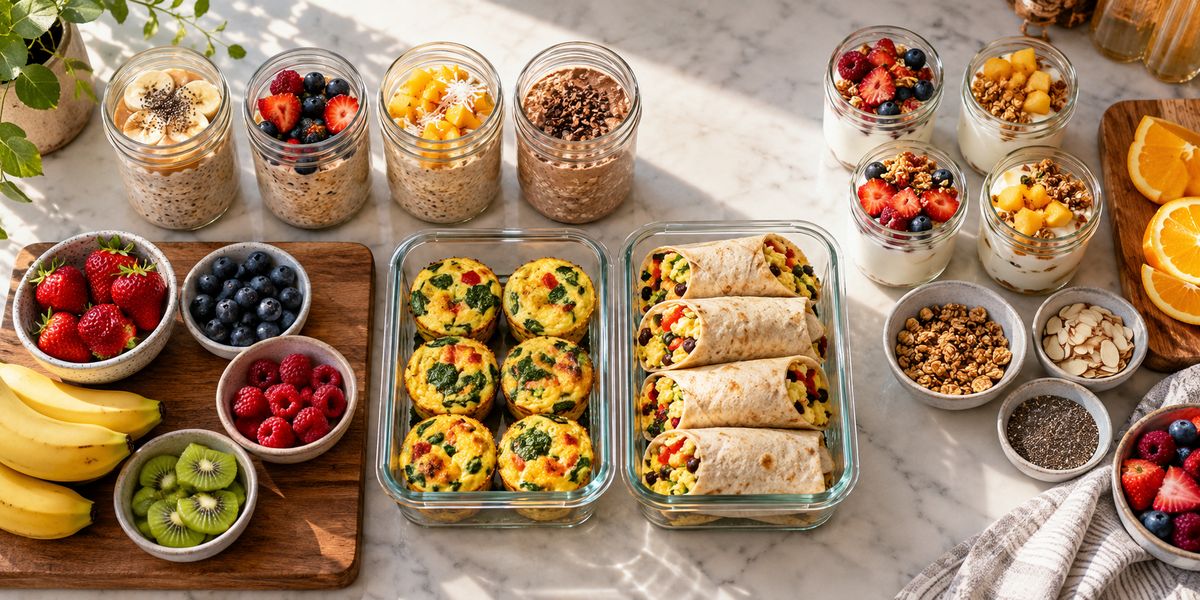
Meal prep vs prepared meals sounds like a choice between cooking everything yourself and never cooking again. Almost nobody lives at either end.
Most people run a mix. Chicken and rice on Sunday. Bulk grains and frozen vegetables. A rotisserie chicken, a salad kit, and a prepared side on Tuesday. Complete meals when the week goes sideways.
What separates these approaches is not the price on the receipt. It's how much planning, prep, cleanup, waste, repetition, and decision-making is left over after the food is in the house. That's the comparison worth running, because the cheapest routine only wins if you keep doing it.
The four ways people avoid cooking from scratch
Almost all convenience eating falls into four buckets.
1. Cooking and meal prepping from scratch
Choose recipes, shop, cook several servings at once, portion them, store them.
Maximum control over ingredients and portions. Maximum upfront time.
2. Buying ingredients in bulk
Bulk lowers cost per serving on things you use constantly: meat, grains, frozen vegetables, pantry staples.
Bulk ingredients are still ingredients. You need storage, a plan for using all of it, and enough weeknights to cook before things turn.
3. Assembling meals from grocery-store prepared foods
The middle ground most people already occupy. Rotisserie chicken, deli entrées, salad kits, soups, cooked grains, prepared vegetable sides, sushi, frozen entrées, prepared food trays.
The cooking is handled. The deciding, portioning, and leftover management is not.
4. Ordering complete prepared meals
The protein, sides, sauce, and portion arrive as one meal.
Most of the planning and all of the preparation is gone, and switching what you eat from one night to the next costs nothing.
Why rotisserie chicken became the default meal-prep shortcut
Rotisserie chicken meal prep is popular for an obvious reason. Buying raw chicken means seasoning it, handling it safely, cooking it, checking temperature, and cleaning the pan. Buying it cooked means starting at the part you wanted to get to.
Grocery stores now sell a whole shelf of the same idea:
Rotisserie chicken and other cooked proteins
Deli entrées
Prepared vegetable sides
Cooked rice and grains
Salad kits
Soups
Sushi trays
Family-size pasta and casserole trays
Frozen entrées
Ready-to-heat meal kits
Every one of these solves the cooking problem. None of them solves the meal problem.
A rotisserie chicken answers "what protein am I having." It leaves you with: what vegetable, do I need rice, how much of this is one serving, what sauce, and what am I doing with the rest tomorrow. That's five decisions you carried home with the chicken.
Meal prep vs prepared meals: the comparison
Factor | Scratch meal prep | Bulk groceries | Grocery prepared foods | Complete prepared meals |
|---|---|---|---|---|
Upfront food cost | Often low | Potentially lowest per serving | Moderate | Generally higher |
Meal planning | High | High | Moderate | Low |
Grocery shopping | Required | Required | Required | Not required for those meals |
Cooking | High | High | Low to moderate | Minimal |
Meal assembly | Required | Required | Usually required | Already assembled |
Cleanup | High | High | Low to moderate | Minimal |
Portioning | You control it | You control it | Often shared or unclear | Individual portion |
Nutrition tracking | Requires calculation | Requires calculation | Varies | Published per meal |
Variety | Depends on prep effort | Depends on prep effort | Moderate | Changes meal to meal |
Food-waste risk | Moderate | Can be high | Moderate | Lower per meal |
Effort to sustain | High | High | Moderate | Low |
No universal winner in that table. Someone who likes cooking and has Sunday afternoon free should meal prep. Someone who hates deciding what to eat is buying something else entirely.
Is buying groceries in bulk actually cheaper
Asking "is meal prepping cheaper?" gets you a yes on ingredient cost. Home cooking beats prepared food and delivery on a per-serving basis, and it isn't close.
Ingredient cost and the cost of your eating routine are different numbers.
Bulk shopping saves money when you use most of what you buy, have the freezer space, cook consistently, don't get sick of the meals, and don't replace planned dinners with takeout. Miss on any of those and the math moves.
A large package of chicken has an excellent cost per pound right up until a third of it goes in the bin. Same for oversized produce, herbs bought for one recipe, and the specialty sauce you used twice.
Then there's the classic: $80 of groceries on Sunday, followed by three takeout orders because there wasn't time to cook them. That's meal prep food waste, and it never shows up in a per-serving comparison.
Are rotisserie chickens and prepared food trays healthy
They can be. "Prepared" doesn't mean unhealthy, and "homemade" doesn't mean balanced.
What matters is which foods you pick, how much you eat, and what's on the plate with them. A rotisserie chicken with roasted vegetables and a fiber-rich side is a different meal from fried deli chicken with a creamy pasta salad, and both came from the same counter.
Four things to look at:
Sodium. Prepared meats, soups, sauces, and deli sides can carry a lot of it.
Sauces and added fats. Glazes, dressings, and cheese sauces move the numbers substantially.
Portion size. A family-size tray does not tell you how much of it is your dinner.
Sides. Buying a protein is not the same as building a meal.
So grocery prepared meals vs meal delivery is not a healthy-versus-unhealthy question. Either works, depending on what you put in the cart.
When a convenient meal still needs too much work
Convenience runs on a spectrum.
A cooked chicken is easier than roasting one. Cooked rice is easier than making a pot. Washed greens are easier than a whole head of lettuce.
Stack those three shortcuts and you have still planned three purchases, carried them home, decided portions, assembled meals, filled several containers, and inherited a leftovers problem.
The friction in eating well is never one big task. It's dozens of small decisions, repeated weekly.
What protein am I buying. What goes with it. Do I already have vegetables. Is this package three servings or five. What happens to the leftovers. How much of that tray did I actually eat.
A complete individual meal deletes all six at once. The protein, sides, sauce, and portion are already one thing, so there's no assembly and no tray to redistribute across four days.
For anyone already paying a premium at the grocery store to skip the cooking, complete meals are the same trade, further along: paying to remove more of the work between buying food and eating dinner.

You already pay to skip the cooking
Complete meals from award-winning chefs. Protein, sides, sauce, and portion arrive together, so nothing is left to assemble at 8 p.m.
→ See this week's menu
Variety, and why repetition ends meal prep
Bulk buying rewards repetition. Roast six chicken breasts on Sunday and chicken is showing up four times that week. Buy a family-size lasagna and you're eating lasagna until Thursday.
Leftovers are fine. Leftovers are also the single most common reason people quit meal prepping.
Complete individual meals change what it costs to vary the week. Monday Mediterranean, Tuesday Latin American, Wednesday something out of Southeast Asia, without buying three sets of ingredients or cooking three recipes.
That's the part of the meal prep vs meal delivery decision people underweight. You're not only comparing cooking time. You're comparing what variety costs.
Nutrition tracking, and the rotisserie chicken problem
A rotisserie chicken is simple until you try to log it.
Breast or thigh. Skin on or off. How many ounces landed on your plate. How much dressing went on the salad. What fraction of the shared side you ate. Every one of those is an estimate, and the estimates compound.
Family-size prepared food trays have the same issue. Nutrition information may exist, but you're still calculating your portion and adding up several items.
Individually portioned meals collapse that into one number, because the nutrition refers to the meal you're eating rather than the components you combined. If you track calories, protein, carbs, or fat, fewer estimates means a log that actually matches what happened.
The same logic applies to eating well without tracking anything. Fewer decisions at 8 p.m., when you're tired and hungry and the takeout app is right there, is the whole game.
What it costs when you count the whole week
Sticker price is an incomplete comparison. The full one looks more like this.
Scratch meal prep: groceries + transportation + storage + food waste + prep time + cleanup time
Grocery shortcuts: prepared protein + sides + sauces + supplemental groceries + transportation + leftovers or waste + assembly time
Complete prepared meals: price of the meal + any delivery cost
Time has no universal dollar value. Neither does not having to decide. Both have real value when they determine whether the routine survives the week.
Take a simple example. A $6 home-prepped meal that consistently gets eaten is unbeatable. But $80 of groceries that ends in unused produce plus $40 of takeout is a system that looked cheaper and wasn't.
That's the useful way to think about prepared meals vs cooking. Compare what you actually spent and ate, not the theoretical cost of a week you executed perfectly.
When each option is best
Traditional meal prep, if you enjoy cooking, want full ingredient control, have the time to plan, and are optimizing for food cost.
Bulk grocery shopping, if you cook often, have storage, know what you reliably use, and don't mind building several meals from the same ingredients.
Grocery prepared foods, if you want to cut cooking but don't mind shopping, assembling, portioning shared food, and eating leftovers.
Complete prepared meals, if time, fewer decisions, no assembly, clear portions, and week-to-week variety matter more than the lowest possible cost per serving.
Most people should use more than one. Meal prep is a tactic, not a personality.
Where CookUnity lands
On CookUnity vs meal prepping, the difference is how much recurring work has already been done.
Meals arrive chilled and ready to heat, which takes food prep and most of the cleanup out of the week. Instead of buying a protein and then hunting for sides, you're choosing finished meals, which removes the shopping, the assembly, the portioning, and the leftover management in one move.
The chef-led model is what makes the rotation work. You're picking across different chefs, cuisines, and techniques rather than reheating one bulk recipe until Friday.
So, is CookUnity worth it? Not if raw ingredient cost is the only thing you're optimizing. It won't beat scratch cooking there and it isn't trying to. The comparison changes if what you're buying is time, variety, simpler portions, fewer grocery trips, no assembly, and less dependence on last-minute takeout.
On whether it's a better nutritional choice than a rotisserie chicken: that depends entirely on which meal and which portion. A rotisserie chicken can absolutely be part of a balanced dinner. The practical difference is that a complete portioned meal has already made the protein, side, portion, and sauce decisions, and publishes the nutrition for the result, so what you're evaluating is one finished dish instead of four separate choices.
Compare it against the week you actually had
Individually portioned meals from award-winning chefs, full nutrition published, delivered ready to heat. Rotate cuisines without buying three sets of groceries.
→ Browse this week's menu
From award-winning chefs. Restaurant-quality, every meal.
Frequently asked questions about meal prep vs prepared meals
Is buying a rotisserie chicken cheaper than prepared meal delivery
On upfront cost per serving, usually yes. The full meal cost also includes vegetables, a starch, sauces, the trip to the store, and whatever goes unused. Meal delivery costs more and removes more of the planning and assembly.
Are grocery-store prepared meals healthy
Some are. It depends on the specific food, the serving size, the sodium, the sauces, the cooking method, and what you eat alongside it. Checking the nutrition information and thinking about the complete meal beats assuming all prepared food is one thing.
Is meal prepping healthier than ordering prepared meals
Either supports eating well. Home prep gives you more control over ingredients, method, and portions. Complete prepared meals make portions, nutrition tracking, variety, and consistency easier when time is short.
Is CookUnity a better choice than buying a rotisserie chicken
Depends on the meal and the portion. A rotisserie chicken can be part of a balanced dinner. CookUnity simplifies the process because you're choosing a complete meal instead of separately deciding on a protein, a portion, a side, and a sauce.
Why are prepared meals easier to maintain than weekly meal prep
They remove the recurring tasks: recipe planning, grocery shopping, cooking, portioning, assembly, and most of the cleanup. Fewer repeated decisions is what makes a habit survive a bad week.

Be the first to know about new offers
Multiorder discounts, free items and more.