Back
What meat has the most protein? A practical guide to high-protein choices
Turkey breast, narrowly. About 26 grams per 3-ounce cooked serving with roughly 2 grams of fat, which is the best protein-per-calorie trade on the list.
Chicken breast is a step behind. So is tuna. So are several cuts of lean beef. The gaps between the top five are small enough that they stop mattering after about a week of cooking.
What keeps mattering is the cut, the cooking method, and whether you can eat the thing six times without starting to dread it. Here's the comparison, then what to do about the rest of the plate.
High-protein meats compared
A 3-ounce cooked serving is the useful reference point. Exact numbers move with the cut, the trim, the species, and how it was cooked.
Meat or seafood | Cooked serving | Protein | Calories | Fat | Best use |
|---|---|---|---|---|---|
Turkey breast, skinless | 3 oz | 26 g | 125 | 2 g | The highest protein-to-calorie ratio here |
Chicken breast, skinless | 3 oz | 26 g | 140 | 3 g | The everyday default, for good reason |
Tuna | 3 oz | 24 to 26 g | 110 to 130 | 1 to 2 g | Very lean seafood protein |
Lean beef | 3 oz | 24 to 26 g | 170 to 190 | 7 to 10 g | Flavor and iron |
Pork tenderloin | 3 oz | 22 to 24 g | 125 to 145 | 3 to 4 g | Closer to poultry than people expect |
Bison | 3 oz | 21 to 24 g | 120 to 150 | 2 to 6 g | Lean red-meat alternative |
Salmon | 3 oz | 21 to 22 g | 175 | 10 g | Protein plus omega-3 fats |
Shrimp | 3 oz | 20 g | 85 to 100 | 1 to 2 g | The fewest calories per gram of protein |
Eight foods, six grams of spread. That's the point of the table. Searching for the highest protein meat and stopping there tells you almost nothing, because what separates these options is calories and fat, not protein.
Which meat has the most protein per calorie
Protein per serving and protein per calorie are different questions with different answers.
Take two 3-ounce servings that both deliver 25 grams of protein. If one carries more fat, it carries more calories, because fat supplies 9 calories per gram against protein's 4. Same protein, different total.
That math puts skinless turkey breast and chicken breast at the top, with tuna and shrimp close behind. Shrimp is the outlier: 20 grams of protein for under 100 calories.
Higher-fat choices are not the losers here. Salmon carries more fat and more calories than white fish and supplies omega-3 fatty acids that tuna and chicken do not. Which one belongs on your plate depends on the rest of your week.
For most people, rotating four or five of these beats hunting for the single leanest high-protein meat and eating it at every meal.
What "lean" actually means
The word gets used loosely in food writing. It has a definition.
USDA labeling standards define lean meat as a serving containing less than 10 grams of total fat, 4.5 grams or less of saturated fat, and less than 95 milligrams of cholesterol per 100 grams. Extra lean is a stricter tier below that.
Worth knowing when you're standing at the counter comparing two cuts of beef that look nearly identical. Ground beef labeled 93/7 and ground beef labeled 80/20 deliver similar protein per ounce and very different calorie totals.
Which red meat has the most protein
Plenty of options if you prefer red meat.
Lean beef delivers roughly 24 to 26 grams per 3-ounce cooked serving depending on the cut. Choosing a leaner cut gets you nearly the same protein with less total and saturated fat.
Bison runs comparable and is often leaner, depending on the cut and how it's raised.
Pork tenderloin is technically red meat and behaves like poultry on the numbers. Trimmed, its protein-to-calorie ratio sits closer to chicken breast than to a pork chop.
Lamb supplies substantial protein, though most commonly sold cuts carry more fat than chicken breast, turkey breast, or lean beef.
On chicken vs beef protein, the honest answer is that equal cooked portions land close to each other. Chicken breast's advantage is what comes with the protein, not how much of it there is.
Does cooking change protein content
Cooking makes the comparison confusing, because meat loses water.
Start with 4 ounces of raw chicken. After cooking it may weigh closer to 3. The protein didn't multiply; the water left, which concentrates the protein by weight.
That's why meat with the most protein per 100g looks so much more impressive when the nutrition data refers to cooked meat. Compare raw to raw, cooked to cooked, and the numbers behave.
Cooking method changes the rest of the meal's profile too. A roasted lean cut and the same cut breaded, fried, and finished in butter share a protein number and nothing else.
If you track macros, check whether your nutrition entry refers to the food raw or cooked. It's the most common source of a log that doesn't match the scale.
Why high-protein eating turns into the same three meals
The pattern is familiar. Buy chicken breasts. Cook a tray of them Sunday. Rice, broccoli, repeat until Thursday, when you order Thai.
Chicken earns its place: lean, easy to track, sold everywhere, hard to ruin. The problem shows up around meal five.
Choosing a high-protein meat is one decision. You still have to cook it without drying it out, build sides, and add enough flavor that you look forward to the plate instead of clearing it.
Bulk buying has its own failure mode. Cheaper per pound only holds if you eat all of it. Plans change, the tray sits, and the last two portions get thrown out along with the savings.
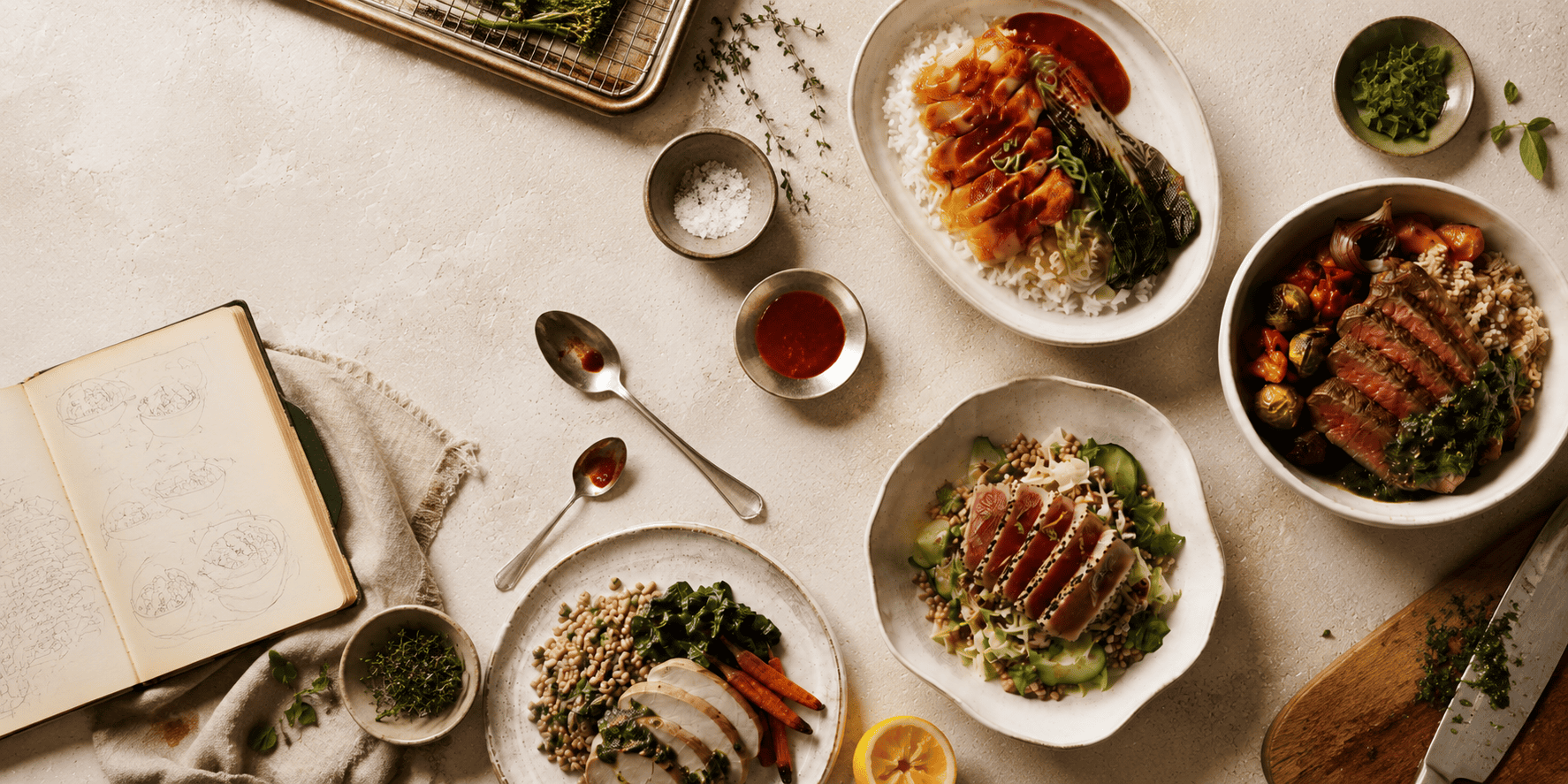
Nothing about protein requires the food to be plain. A protein-forward plate can be a gochujang-glazed thigh, a Mediterranean sheet pan, a Yucatecan braise, a curry over rice. The protein target does not care what cuisine delivers it.

The seventh chicken breast is where it falls apart
Meals from award-winning chefs across cuisines, each one individually portioned with its protein, calories, carbs, and fat published. Change the flavor without losing the number.
→ See this week's menu
How to build a complete high-protein meal
Finding the meat with the biggest number does not produce a meal.
Start with a protein source you'll actually eat. Chicken, turkey, lean beef, pork, seafood, or a non-meat option like tofu, beans, lentils, eggs, or dairy.
Add vegetables for nutrients, texture, and the flavor a plate needs. Roasted greens, mushrooms, peppers, carrots, squash, a real salad.
Add a fiber-rich carbohydrate scaled to your needs. Beans, lentils, whole grains, potatoes.
Add fat, either built into the food (salmon) or added (olive oil, avocado, nuts, seeds, a sauce with something in it).
Then deal with flavor, which is the part that decides whether you eat this again next week. Herbs, spices, marinades, acid, a sauce someone thought about. That's the difference between a meal that meets your macros and a meal you'd order.
The target isn't maximum protein per bite. It's enough protein inside an eating pattern that survives contact with a normal week.
Where prepared meals change the math
Eating more protein doesn't have to mean buying raw meat in bulk, cooking six portions at once, and eating the same plate until Friday.
CookUnity meals come from award-winning chefs across different cuisines, proteins, techniques, and sauces, which makes variety the default instead of a project. The nutrition for each meal is published, so you can compare protein, calories, carbohydrates, and fat before you choose rather than estimating after you eat.
The individual portioning removes the rest of the friction. No raw protein to break down, no tray to finish before it turns, no separate decision about a vegetable and a starch and a sauce for every meal.
For anyone weighing high-protein meal delivery, that combination of a visible number and an actual rotation is the argument.
Protein you don't have to weigh
Individually portioned meals from award-winning chefs, full nutrition published on every dish, ready in minutes. Pick Thursday's dinner without rerunning the math.
→ Browse this week's menu
From award-winning chefs. Restaurant-quality, every meal.
Frequently asked questions about high-protein meats
What meat has the most protein
Turkey breast and chicken breast lead at roughly 26 grams per 3-ounce cooked serving, with tuna and lean beef close behind. The cut, the serving size, and the cooking method move the number more than the animal does.
Which meat has the most protein per calorie
Skinless turkey breast and chicken breast, because they carry very little fat. Shrimp and tuna are comparable, with shrimp delivering about 20 grams of protein under 100 calories.
Do you have to eat chicken every day on a high-protein diet
No. Turkey, beef, pork, fish, seafood, eggs, dairy, beans, lentils, tofu, and tempeh all get you there. Rotating them gets you a wider range of nutrients and a better chance of sticking with it.
Is fish as high in protein as meat
Yes. Tuna, salmon, shrimp, and most white fish land in the same range as poultry and red meat at equivalent portions.
What should a balanced high-protein meal include
A protein source, vegetables, a fiber-rich carbohydrate, and enough fat to make it satisfying. Then something that gives it flavor, which is the part that decides whether you eat it again.

Be the first to know about new offers
Multiorder discounts, free items and more.