Back
What is carne asada? A guide to Mexico's most iconic grilled beef
Few dishes have crossed more borders, lit up more backyard grills, and started more passionate arguments about the "right" way to make them than carne asada. This is your guide to understanding, cooking, and eating Mexico's most celebrated grilled beef.
Key takeaways:
Carne asada means "grilled meat" in Spanish and refers to marinated beef, cooked over high heat, sliced thin, and served in tacos, burritos, or as a standalone dish.
Skirt steak is the traditional cut, but flank steak and sirloin flap are excellent alternatives depending on your preferred texture and budget.
A great marinade balances citrus acid, garlic, cumin, and fresh cilantro, and marinating time matters more than most people think. This Mayo Clinic recipe¹ recommends marinating for four hours or overnight to boost flavor.
Chef-crafted carne asada from CookUnity delivers the same bold, authentic flavor without the prep, grilling, or cleanup.
Choosing the best cut of meat for carne asada
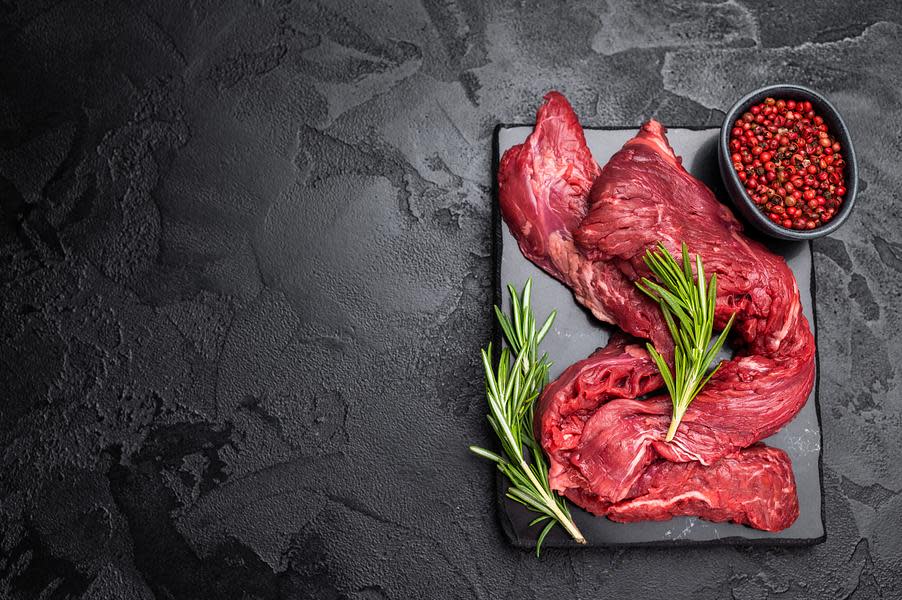
So, what is carne asada? It translates to "grilled meat" in Spanish, but in practice it means marinated beef, grilled over high heat, sliced thin, and served in tacos, burritos, or alongside rice and beans. It's a cornerstone of Mexican cuisine, and what separates a forgettable version from one that makes you close your eyes mid-bite starts with the cut you choose.
Cut | Texture | Flavor | Best for |
|---|---|---|---|
Skirt steak | Thin, loose grain | Rich, deeply beefy | Tacos, fajitas |
Flank steak | Lean, tight grain | Mild, slightly sweet | Burritos, bowls |
Sirloin flap (bavette) | Tender, marbled | Balanced, juicy | Grilling, slicing thin |
Skirt steak² is the traditional pick. Its loose muscle fibers absorb marinade like a sponge, and the high fat content delivers unmistakable richness. Look for outside skirt steak when you can find it, as it's thicker and more forgiving on the grill.
Flank steak³ is leaner and more uniform, which makes it easier to cook evenly. Its tighter grain produces clean slices, perfect for burritos and bowls. The trade-off is milder flavor, so a punchy marinade is essential.
Sirloin flap, sometimes labeled bavette, offers a beautiful middle ground with more marbling than flank and more tenderness than skirt. Chuck steak, known as diezmillo in Mexican butchery, is a budget-friendly option that rewards longer marinating times.
Curious about chef-crafted steak dishes delivered fresh to your door? Explore our steak meals made by award-winning chefs.
Carne asada marinade and seasoning essentials
The marinade is where carne asada gets its soul. A great one tenderizes the meat, caramelizes on the grill, and creates that contrast between charred edges and juicy, pink centers.
Every carne asada recipe starts with a handful of core ingredients:
Citrus juice (lime and orange): The acid tenderizes the beef and adds bright, tangy flavor that cuts through the richness.
Oil: Avocado or vegetable oil helps the marinade coat evenly and prevents sticking on the grill.
Fresh garlic: Minced or crushed, it delivers savory depth that deepens over high heat.
Soy sauce or Worcestershire: A splash adds umami⁴, that hard-to-name savoriness that makes everything taste more like itself.
Fresh cilantro: Optional but traditional, bringing a bright, herbaceous note that ties the whole marinade together.
The right carne asada seasoning transforms good into unforgettable. Cumin⁵ is the backbone, bringing earthy warmth that pairs naturally with grilled beef. Layer in chili powder for gentle heat, dried Mexican oregano for floral depth, and generous black pepper. Some cooks add smoked paprika for extra complexity or a splash of beer for malty sweetness.
The "secret ingredient" many Mexican cooks swear by? Fresh orange juice mixed with lime. The orange adds subtle sweetness that balances acidity and creates deeper caramelization on the grill.
For skirt steak, a shorter marinating time tends to work best. Because of its tighter grain, flank steak often benefits from a longer marinating time. Avoid marinating for too long, as citrus-heavy marinades can make the surface turn mushy.
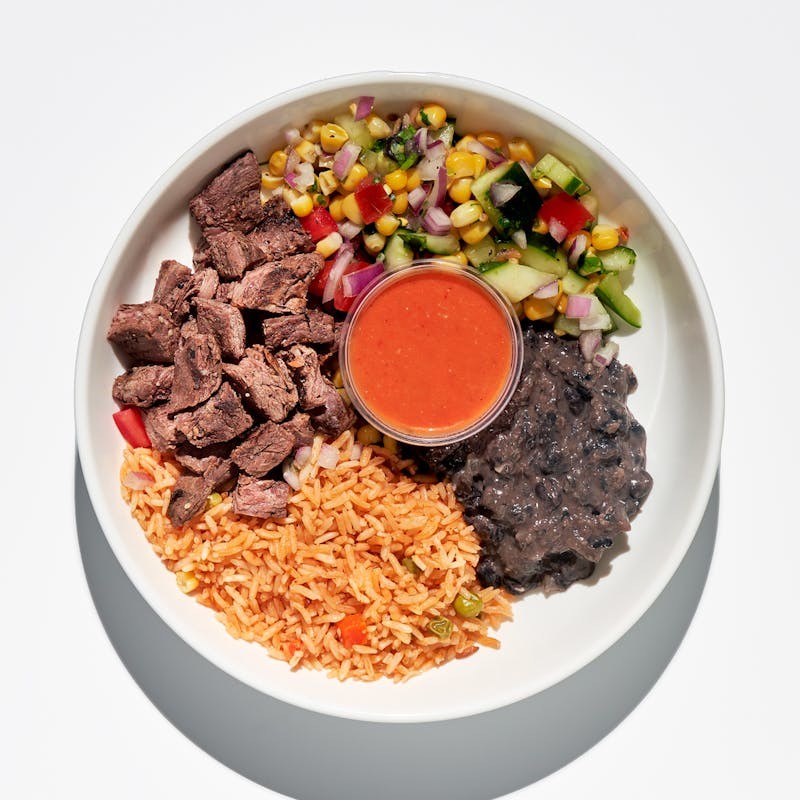
Want to skip the carne asada preparation entirely? Chef Santos Jimenez's Carne Asada Rice Bowl delivers all the bold, citrus-kissed flavor without a single minute of marinating.
How to cook carne asada on the grill or stovetop
Carne asada demands high, direct heat. The goal is a deeply charred exterior with a juicy, medium-rare interior.
Grilling steps
Preheat your grill until it's very hot.
Remove the steak from the marinade and pat it dry with paper towels. Moisture is the enemy of a good char.
Place the steak over direct high heat and sear until well-browned on each side, flipping only once.
Pull the steak once it’s seared on the outside and still springy to the touch for medium-rare.
Let the steak rest, then slice against the grain.
That last step is non-negotiable. Cutting across the muscle fibers shortens them, which is what makes each piece tender enough to melt on your tongue.
Stovetop or broiler alternative
No grill? A cast-iron skillet over the highest heat your stove can manage works beautifully. Heat a cast-iron skillet until very hot, add a thin layer of high-smoke-point oil, and sear until a deep brown crust forms on each side. The broiler is another solid option: place the rack near the heating element and cook on each side until well browned to your liking.
Checking doneness
An instant-read thermometer takes the guesswork out. Cook to your preferred doneness, then let the steak rest before slicing.
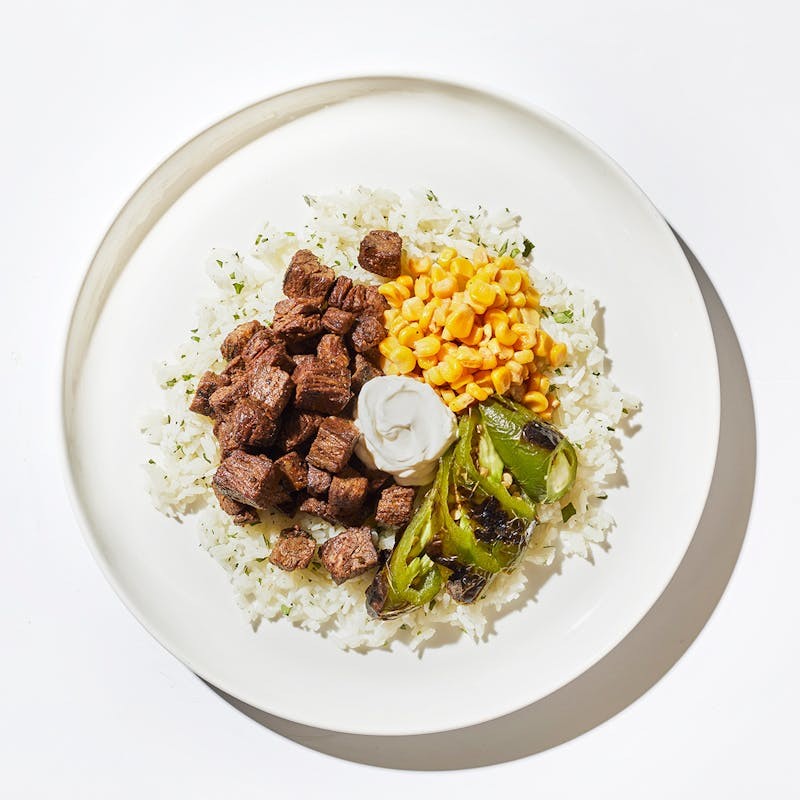
Prefer to let a top chef handle the heat? Chef Nelson Brizuela's Carne Asada Burrito Bowl arrives ready to enjoy, with perfectly grilled beef and all the fixings.
Seasoning tips for authentic carne asada flavor
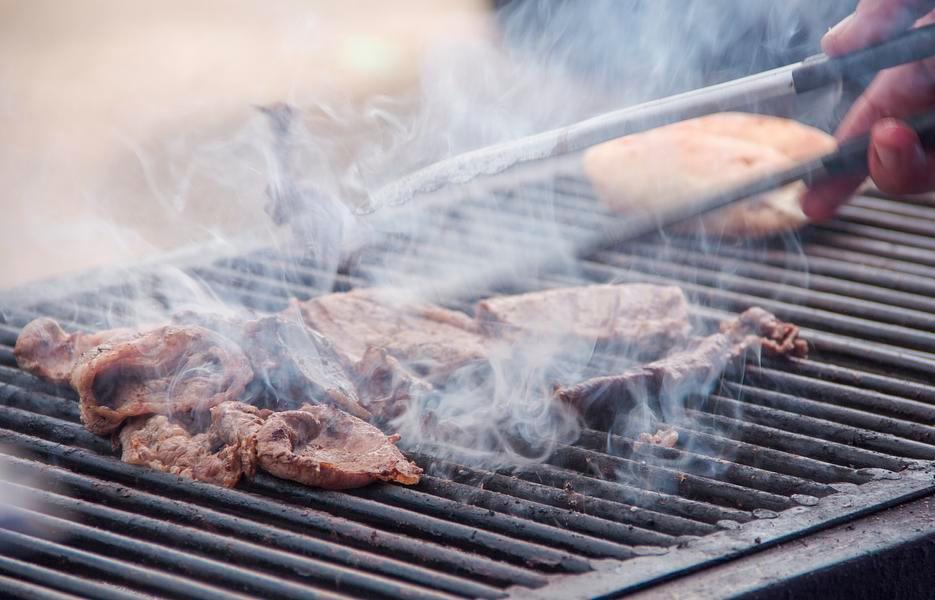
Seasoning carne asada is about layering flavor at every stage, not just in the marinade.
A wet marinade tenderizes and infuses flavor deep into the meat. A dry rub creates a concentrated crust that chars beautifully on the grill. The best carne asada preparation often uses both: marinate first for tenderness, then pat dry and dust with cumin, garlic powder, and salt right before grilling.
Always add a final sprinkle of flaky salt just before the steak hits the heat. The marinade has already done its tenderizing work, and that finishing layer of coarse salt brings all the flavors into sharp focus.
Explore the weekly menu and select your meals at cookunity.com/our-menu.
Serving ideas for carne asada tacos, burritos, and more
Carne asada is generous. It plays beautifully as the star of a meal or as a building block you can take in a dozen directions.
Classic carne asada tacos
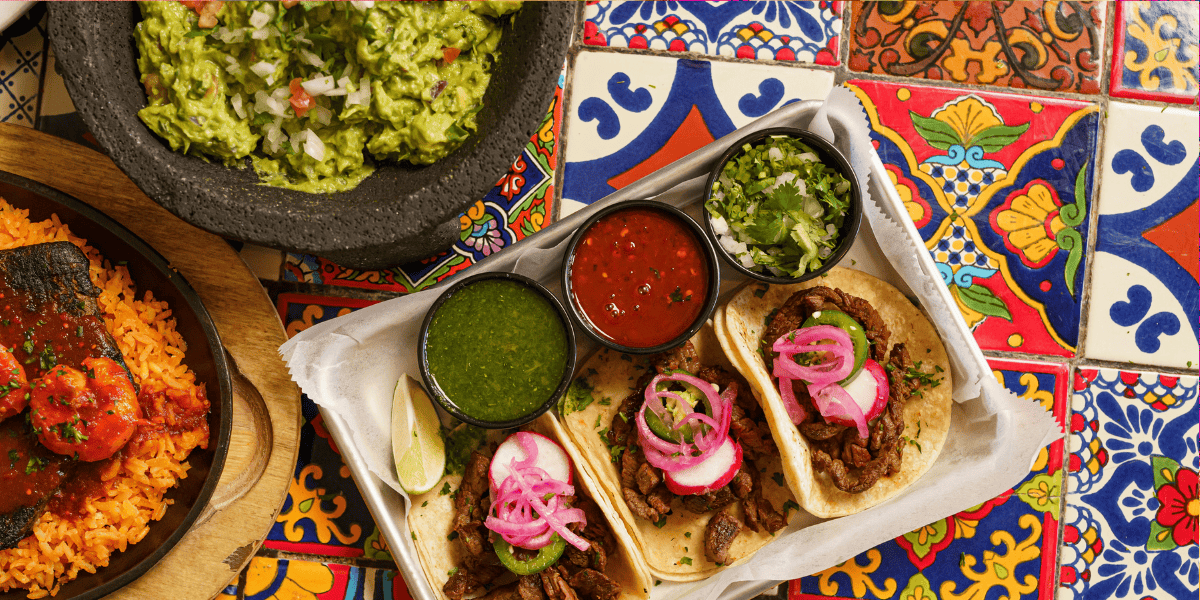
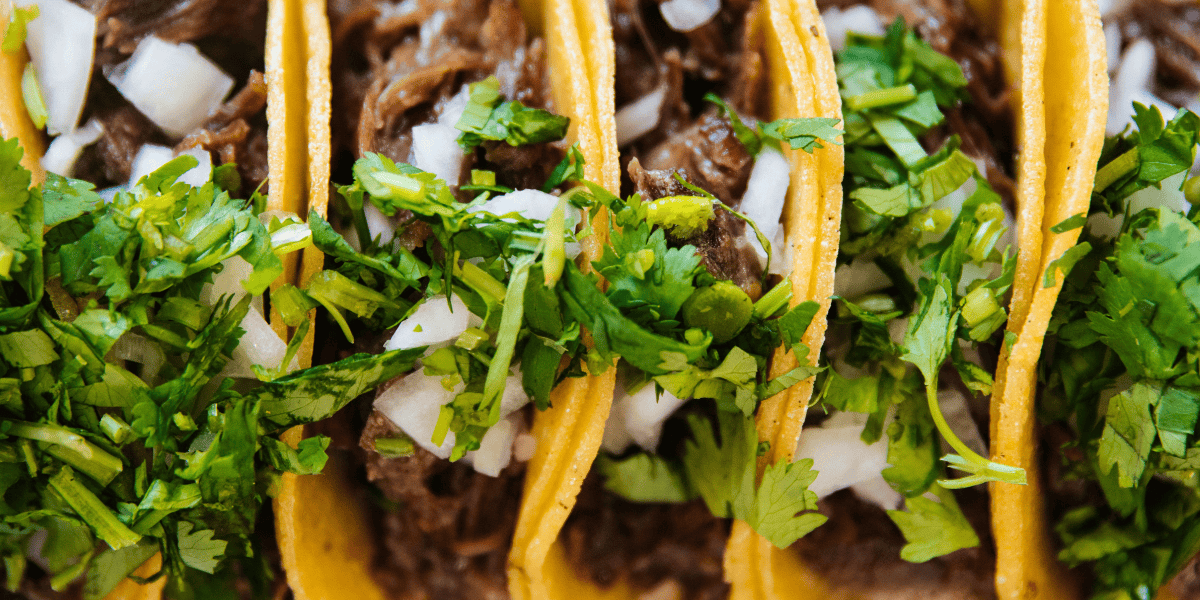
Carne asada tacos are the dish at its purest: warm corn tortillas (doubled up for structural integrity), thinly sliced grilled beef, a squeeze of lime, diced white onion, fresh cilantro, and your favorite salsa. The simplicity is the point. When the meat is this good, it doesn't need a mountain of toppings competing for attention.
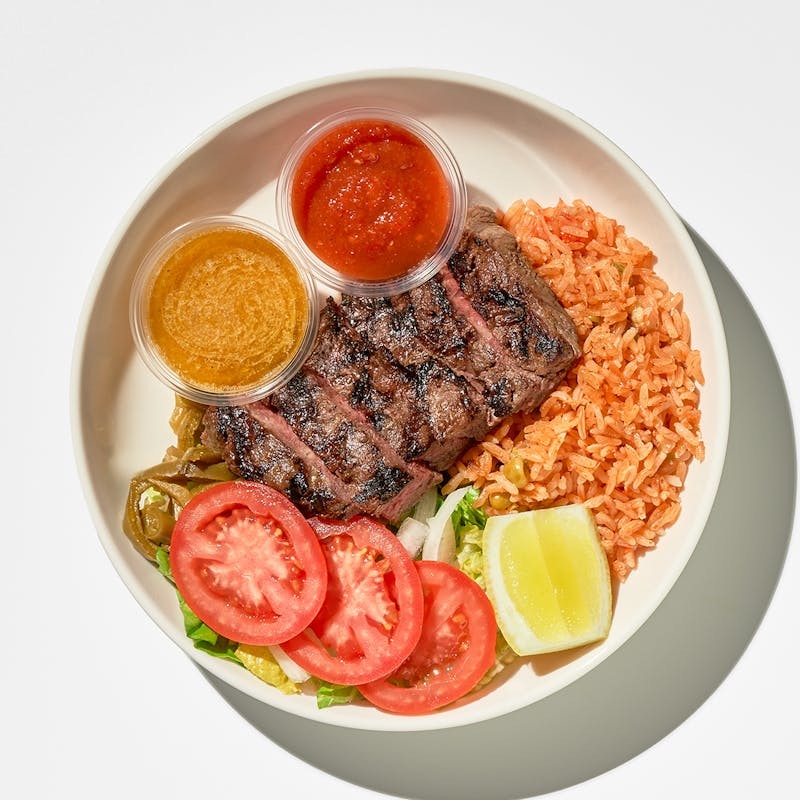
For a chef's take on this tradition, Chef Santos Jimenez's Ranchera-Style Grilled Skirt Steak brings bold ranchera flavors to perfectly grilled beef.
Burritos and bowls
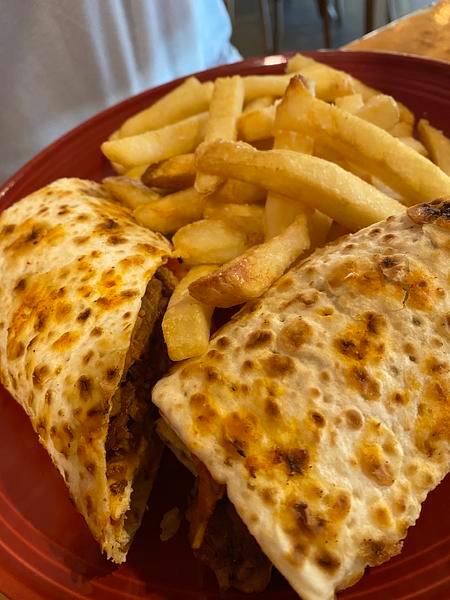
Carne asada burritos wrap everything into one portable package: grilled beef, rice, beans, guacamole, and salsa rolled in a flour tortilla. For a lighter option, skip the tortilla and build a bowl over cilantro-lime rice with black beans, pico de gallo, and a drizzle of crema.
Leftover possibilities
Leftover carne asada might be even better than the original:
Loaded nachos: Chopped carne asada over chips with melted cheese, jalapeños, and guacamole.
Quesadillas: Folded into a tortilla with melted Oaxacan cheese⁶.
Breakfast scramble: Mixed into eggs with peppers and onions.
Carne asada fries: Piled onto crispy fries, a Southern California street food staple that has no business being as addictive as it is.
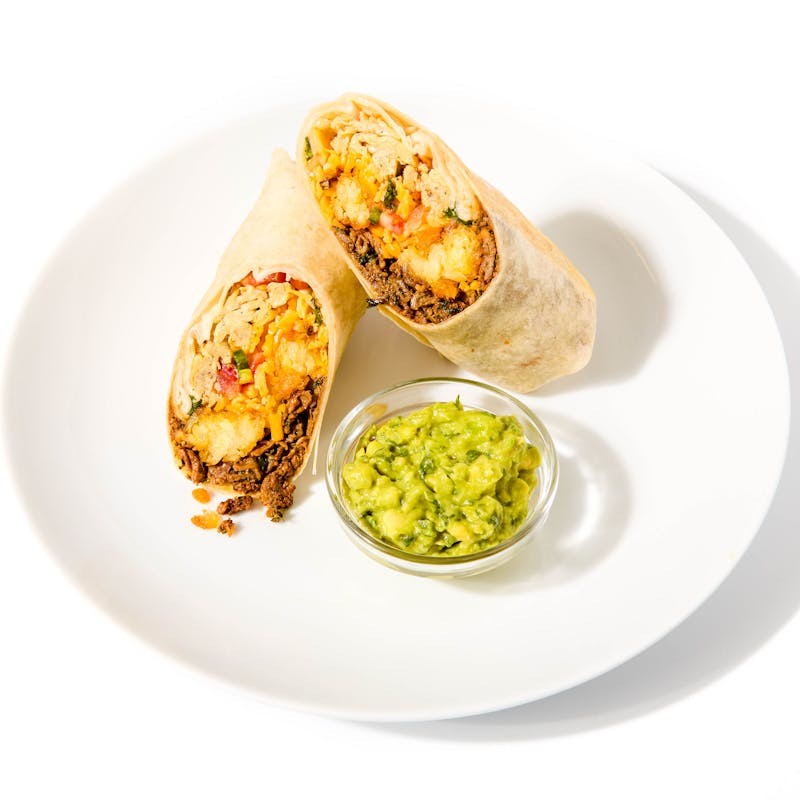
Speaking of breakfast, Chef Akhtar Nawab's Cali Carne Asada Breakfast Burrito proves carne asada belongs at every meal.
Love Mexican flavors? Explore our full collection of Mexican meals crafted by A-list chefs, delivered fresh to your door.
Enjoy carne asada without the prep work
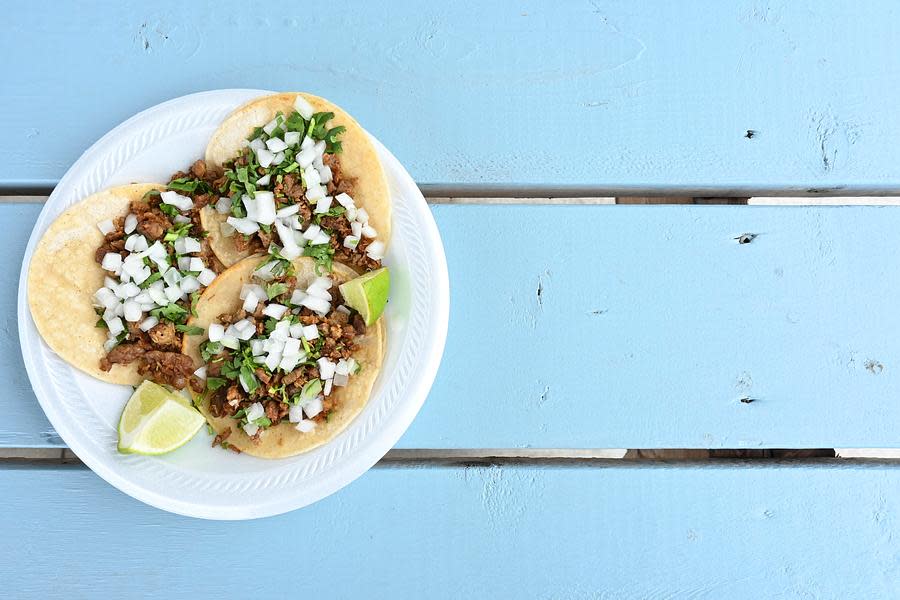
A truly great carne asada takes time: the marinating, the grill management, the slicing against the grain. Sometimes you want that experience without the two-hour commitment.
CookUnity's award-winning chefs, many rooted in Mexican and Latin American culinary traditions, craft carne asada dishes using the same techniques and quality ingredients you'd use at home. The difference is they do all the work, and you get restaurant-quality carne asada delivered fresh, ready to heat in minutes.
Explore the weekly menu and select your meals.
FAQs about carne asada
What does carne asada mean in English?
Carne asada translates directly to "grilled meat" in Spanish, and in Mexican cuisine it specifically refers to marinated, grilled beef sliced thin and served in tacos, burritos, or as a main dish.
What is the difference between carne asada and fajitas?
Carne asada is marinated, grilled beef served sliced on its own or in tacos, while fajitas⁷ are a Tex-Mex dish where strips of meat are cooked with sautéed bell peppers and onions and served with tortillas.
Can you make carne asada without a grill?
Yes, broiling in the oven or searing in a smoking-hot cast-iron skillet produces excellent results when outdoor grilling isn't an option.
Is carne asada safe for people with food allergies?
Common carne asada marinades contain soy sauce, citrus, and various spices, so always check ingredients if you have allergies. Chef-prepared versions from CookUnity list all ingredients and allergens on each meal.
Can you freeze marinated carne asada before cooking?
Place the marinated steak in a freezer-safe bag, press out excess air, and freeze until needed. Thaw overnight in the refrigerator before grilling.
Sources:

Be the first to know about new offers
Multiorder discounts, free items and more.