Back
Essential French recipes: 10 dishes for your repertoire
French recipes are more than instructions for making a meal—they are stories of tradition, technique, and transformation. While French cuisine is often seen as complex, many of its most iconic dishes began as rustic, everyday food. Over time, they were refined into classics that balance simplicity with extraordinary flavor.
In this guide, you’ll discover 10 classic French dishes that form the backbone of French food culture. These recipes highlight the fundamental techniques of French cooking, showcase the regional diversity of French cuisine, and offer approachable ways to bring authentic French food recipes into your own kitchen.
Key takeaways:
Mastering these ten essential French recipes builds core cooking techniques that can be applied to countless other dishes.
In French cuisine, quality ingredients and proper technique matter far more than complexity when creating authentic flavors at home.
Many classic French dishes use just a handful of ingredients yet develop extraordinary depth through slow cooking and careful seasoning.
For those who love French food but lack the time, chef-crafted meals offer authentic flavors and restaurant-quality dishes made easy.
What is French cuisine?
French cuisine is one of the world’s most influential culinary traditions, celebrated for its precise techniques, quality ingredients, and regional variety. At its core, French food is about building flavor through proper methods rather than masking it with heavy seasoning.
While French cooking has a reputation for complexity, many classic French dishes are rooted in rustic, homestyle traditions that were refined over generations. In fact, the French spend more time eating¹ than Americans, which reflects their emphasis on savoring meals and finding joy in the dining experience.
Regional diversity defines much of French cuisine. In Normandy, butter and cream create rich, comforting flavors, while Provence highlights the Mediterranean with olive oil, tomatoes, and fresh herbs. This variety makes French recipes as diverse as the landscapes they come from.
For those who crave authentic French flavors without hours in the kitchen, our French meal delivery service brings the spirit of France to your table, made with traditional techniques and premium ingredients.
10 classic French dishes to master
These ten French recipes represent the heart of French cuisine and serve as the perfect starting point for anyone looking to explore French food at home. Each dish highlights the techniques, flavors, and traditions that define classic French cooking. By mastering them, you’ll build fundamental skills that can be applied across countless other French food recipes.
French onion soup
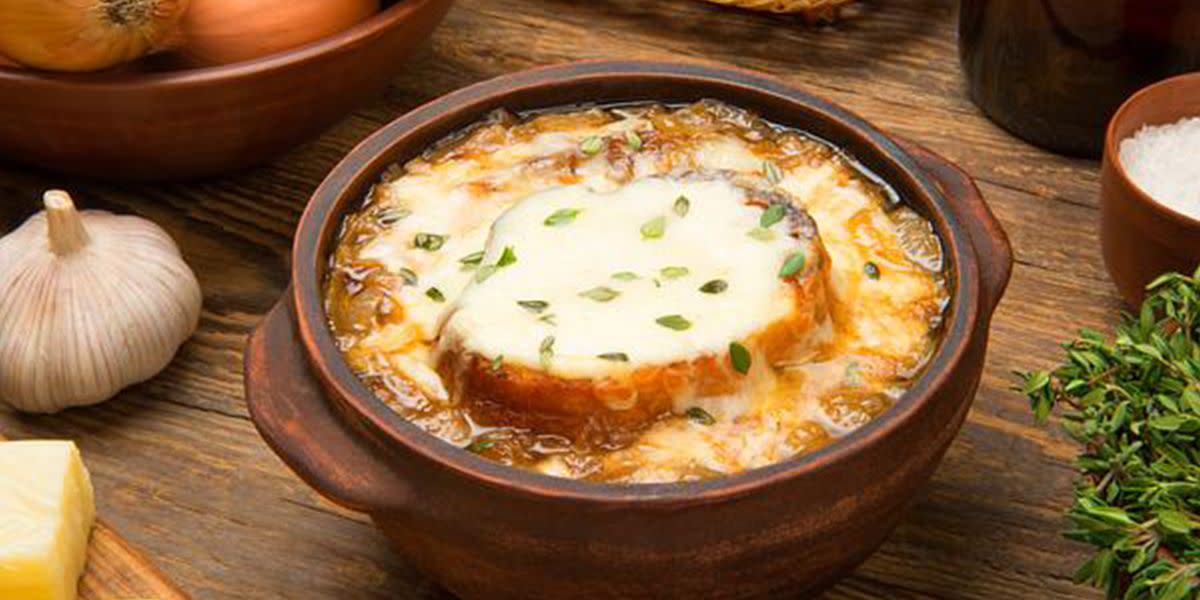
French onion soup is one of the most iconic French recipes, showing how patience and technique can transform the simplest ingredients into something extraordinary. The deep, rich flavor comes from slowly caramelizing onions until they develop a sweet, complex taste, then simmering them in broth and topping with toasted baguette and melted Gruyère.
Ingredients
6 large yellow onions, thinly sliced
3 tablespoons butter
1 tablespoon olive oil
1 teaspoon sugar
2 tablespoons flour
8 cups beef stock
1/2 cup dry white wine
1 bay leaf
2 sprigs thyme
Salt and pepper
1 baguette, sliced
2 cups Gruyère cheese
Directions
Melt butter with oil in a large pot over medium-low heat.
Add onions and cook very slowly for 45–60 minutes until deeply caramelized.
Add sugar and cook for another 10 minutes.
Sprinkle flour over onions and cook for 2–3 minutes.
Add wine and deglaze the pot, scraping up browned bits.
Add beef stock, bay leaf, and thyme. Simmer for 30 minutes.
Season with salt and pepper to taste.
Ladle soup into oven-safe bowls, top with toasted baguette and Gruyère.
Broil until cheese is bubbly and golden.
For those who love the comforting flavors of French onion soup but want something faster, Chef Akhtar Nawab’s French Onion Soup Burger reimagines the classic in a creative, handheld format that delivers the same depth of flavor in a new way.
Coq au vin
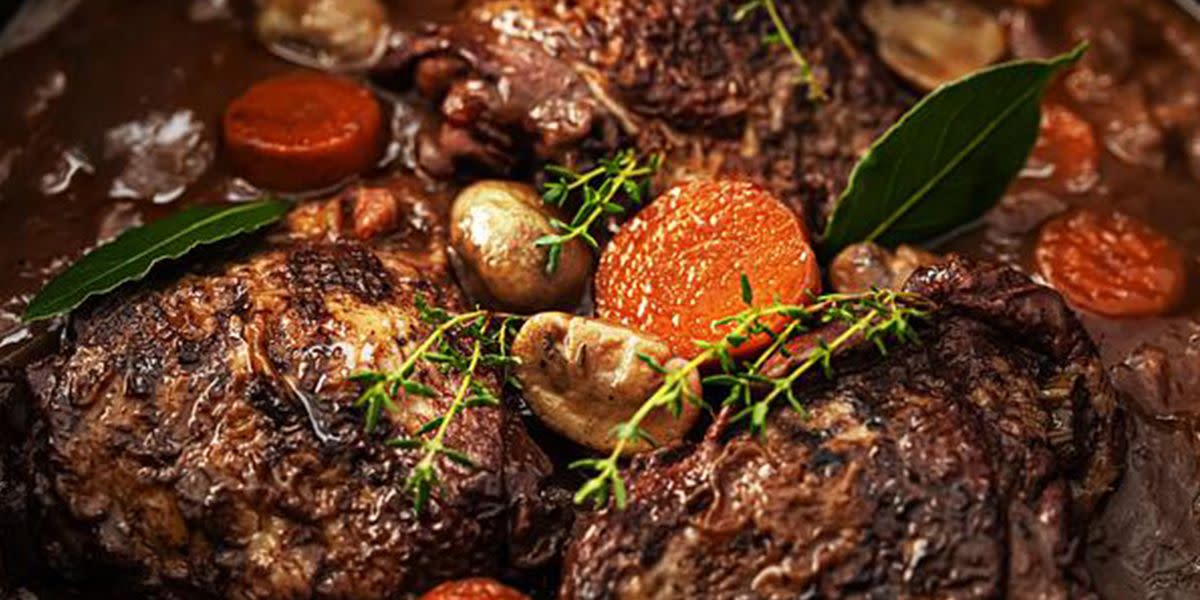
Coq au vin is a rustic chicken dish braised in red wine that epitomizes French country cooking. Through slow simmering, even the toughest cuts of chicken become tender and deeply flavorful, absorbing the richness of wine, mushrooms, onions, and bacon.
Ingredients
8 bone-in chicken thighs
8 ounces bacon, diced
2 cups pearl onions
8 ounces mushrooms
3 cloves garlic
2 tablespoons tomato paste
3 cups red wine
2 cups chicken stock
1 bouquet garni
3 tablespoons butter
3 tablespoons flour
Fresh parsley
Directions
Brown bacon in a Dutch oven until crisp. Remove and set aside.
Season chicken with salt and pepper, then brown in bacon fat.
Add pearl onions and mushrooms, sauté until lightly browned.
Add garlic and tomato paste, cook for 1 minute.
Pour in wine and stock, add bouquet garni, and return bacon to the pot.
Simmer covered for 45–60 minutes until chicken is tender.
Mix butter and flour to form a paste, then stir into the sauce to thicken.
Simmer for 5 more minutes until the sauce coats the back of a spoon.
Garnish with fresh parsley before serving.
If you want the rich, slow-cooked flavors of coq au vin without spending hours in the kitchen, explore chef-made French meals on our menu, prepared with the same care and technique as in a classic French kitchen.
Beef bourguignon
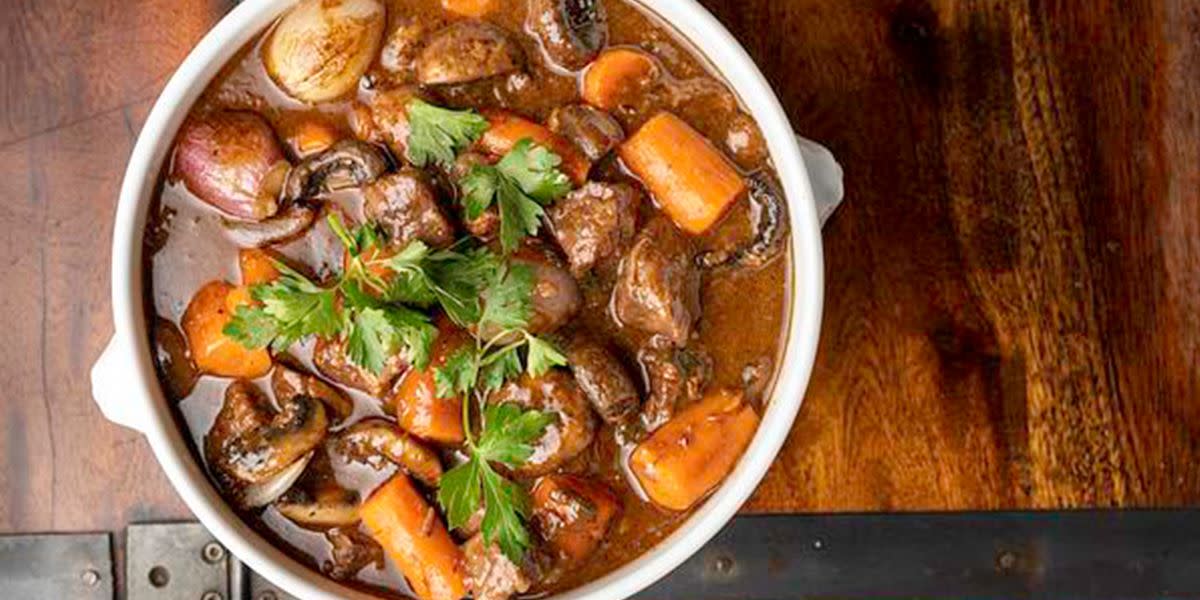
Beef bourguignon is one of the most iconic French recipes, capturing the essence of slow cooking. This hearty stew layers rich flavors through proper browning and hours of gentle simmering in red wine, creating a dish that is as comforting as it is elegant.
Ingredients
3 pounds beef chuck, cubed
8 ounces bacon, diced
2 carrots, sliced
1 onion, diced
2 cloves garlic
1 tablespoon tomato paste
3 cups red wine
2 cups beef stock
1 bouquet garni
1 pound mushrooms
1 pound pearl onions
3 tablespoons butter
2 tablespoons flour
Fresh parsley
Directions
Cook bacon in a Dutch oven until crisp. Remove and set aside.
Brown beef in batches in bacon fat.
Add carrots and onion, sauté until softened.
Add garlic and tomato paste, cook for 1 minute.
Return beef and bacon to the pot. Add wine, stock, and bouquet garni.
Simmer covered for 2–3 hours until beef is tender.
Sauté mushrooms and pearl onions in butter until browned.
Make a beurre manié by mixing butter and flour, then stir into the stew.
Add mushrooms and pearl onions, simmer for 15 minutes until the sauce thickens.
Garnish with fresh parsley before serving.
For an authentic taste without the hours of prep, Chef Chris Ratel’s Traditional Beef Bourguignon stays true to the classic recipe, delivering tender beef and a deeply flavored wine sauce just like the French original.
Quiche Lorraine
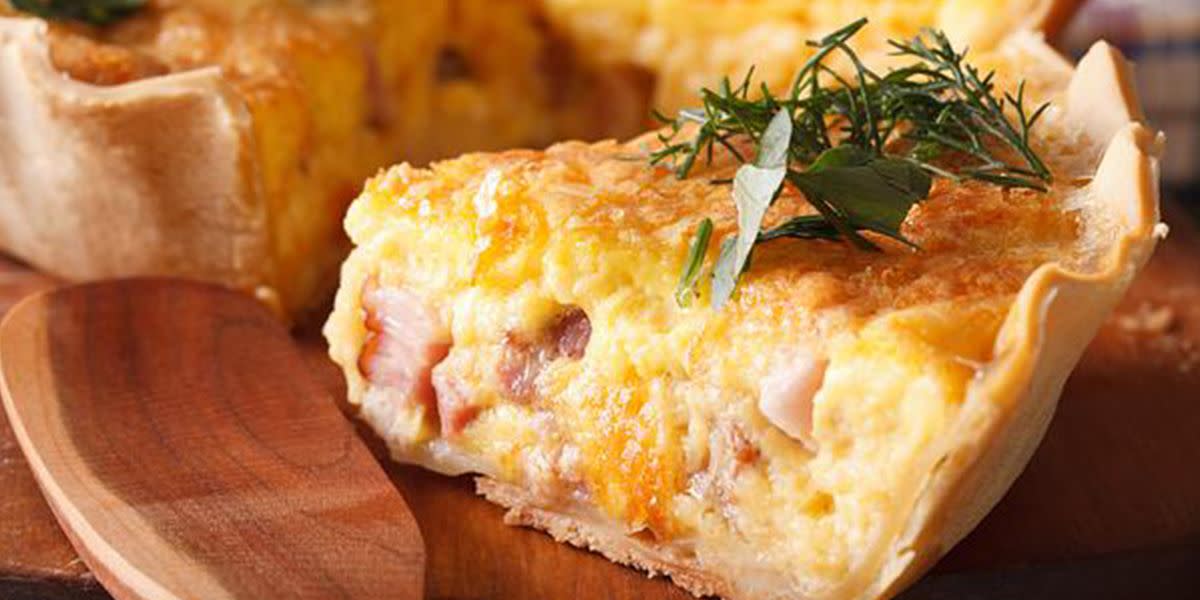
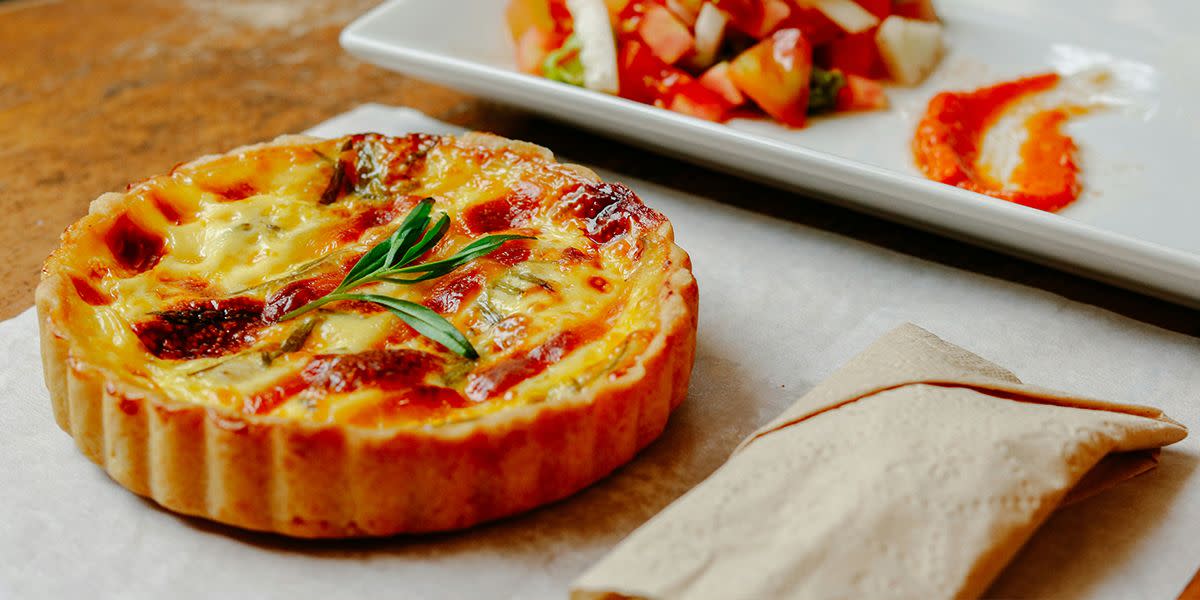
Quiche Lorraine is a savory custard tart with a crisp pastry shell that showcases the French mastery of pastry techniques. Its flaky crust and silky custard filling make it a versatile dish, perfect for breakfast, lunch, or even a light dinner.
Ingredients
1 pie crust
8 ounces bacon, diced
1 shallot, diced
4 large eggs
1 1/2 cups heavy cream
1/4 teaspoon nutmeg
1/2 teaspoon salt
1/4 teaspoon pepper
1 cup Gruyère cheese
Directions
Blind bake pie crust at 375°F for 15 minutes.
Cook bacon until crisp, then add shallot and cook until softened.
Whisk together eggs, cream, nutmeg, salt, and pepper.
Sprinkle bacon mixture and half the cheese over the crust.
Pour in the egg mixture, then top with remaining cheese.
Bake for 30–35 minutes until golden and set, with a slight wobble in the center.
Let cool for 10 minutes before serving.
For a modern twist on the classic, Chef Miriam Milord’s Caramelized Onion and Goat Cheese Quiche layers sweet caramelized onions and tangy goat cheese into a silky custard, blending tradition with contemporary flavor.
The word “quiche” comes from the German word kuchen, meaning cake. Today, the dish remains closely tied to the Lorraine region, a part of France celebrated for its rich culinary heritage.
Ratatouille
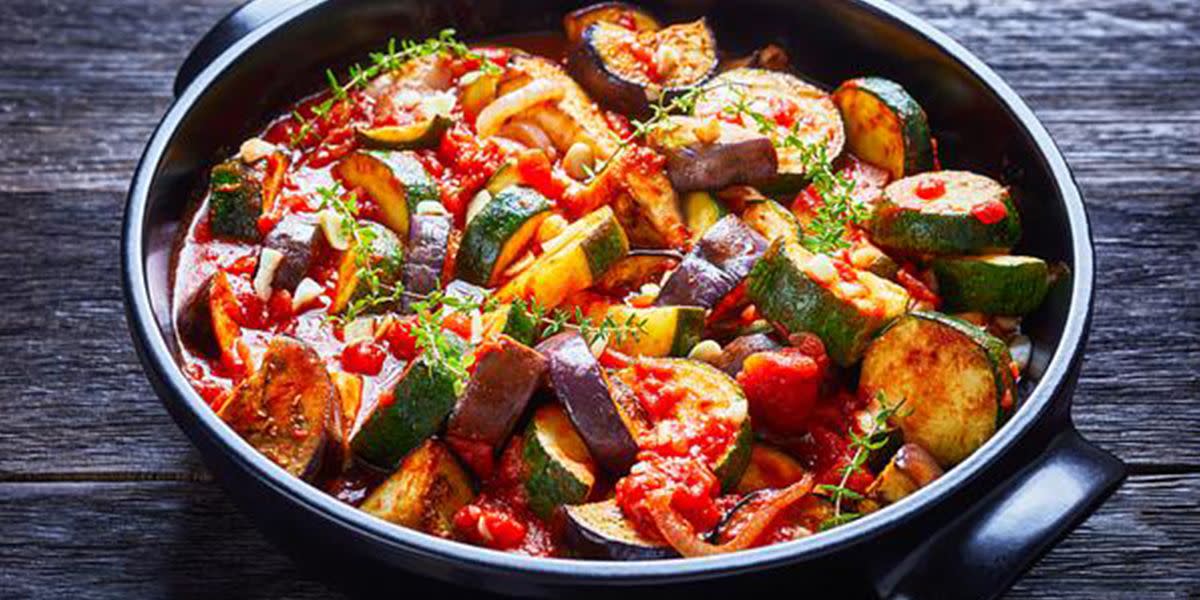
Ratatouille is a classic Provençal vegetable stew that celebrates seasonal produce and the sunny Mediterranean influence on French cooking. The key to great ratatouille is cooking each vegetable properly so that the flavors meld together while still preserving texture.
Ingredients
1 eggplant, diced
2 zucchini, diced
1 bell pepper, diced
1 onion, diced
3 cloves garlic
4 tomatoes, diced
1/4 cup olive oil
1 bay leaf
2 sprigs thyme
1 tablespoon tomato paste
Fresh basil
Salt and pepper
Directions
Salt eggplant and let sit for 30 minutes, then pat dry.
Heat olive oil in a large pot over medium heat.
Sauté onions until translucent, then add garlic and cook for 1 minute.
Add bell pepper and cook until slightly softened.
Add eggplant and zucchini, cook until tender but not mushy.
Stir in tomatoes, tomato paste, bay leaf, and thyme.
Simmer gently for 15–20 minutes until vegetables are tender.
Remove bay leaf and thyme sprigs.
Stir in fresh basil and remaining olive oil.
Season with salt and pepper to taste.
Simple yet full of character, ratatouille is proof that French cooking often turns the humblest ingredients into dishes that are both comforting and elegant.
Salade niçoise
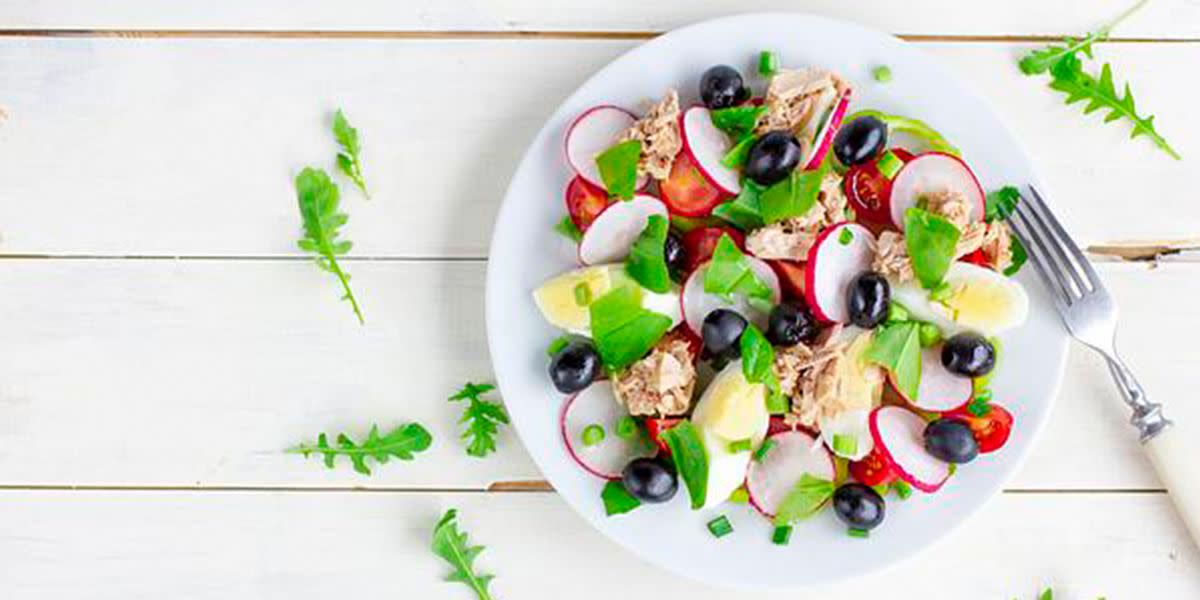
Salade niçoise originated in Nice and has become one of the most recognizable French salads. It is a composed dish that brings together tuna, hard-boiled eggs, green beans, potatoes, and olives, demonstrating the French approach to balance, freshness, and regional ingredients.
Ingredients
1 pound small potatoes
8 ounces green beans
4 eggs
2 cans tuna in olive oil
1 head Boston lettuce
1 cup cherry tomatoes
1/2 cup niçoise olives
4 anchovy fillets (optional)
1/4 cup fresh basil
For the dressing
1/4 cup red wine vinegar
1 tablespoon Dijon mustard
1 shallot, minced
3/4 cup olive oil
1 teaspoon herbes de Provence
Salt and pepper
Directions
Boil potatoes until tender, about 15 minutes. Drain and cool.
Blanch green beans for 3–4 minutes until crisp-tender, then shock in ice water.
Hard boil eggs for 9 minutes, then peel and quarter.
Whisk together dressing ingredients.
Arrange lettuce on a large platter.
Arrange tuna, potatoes, green beans, eggs, tomatoes, and olives over lettuce.
Drizzle with dressing and garnish with basil and anchovies if using.
Light yet satisfying, salade niçoise is a perfect example of French food that celebrates local ingredients and seasonal flavors while maintaining structure and elegance.
Steak au poivre
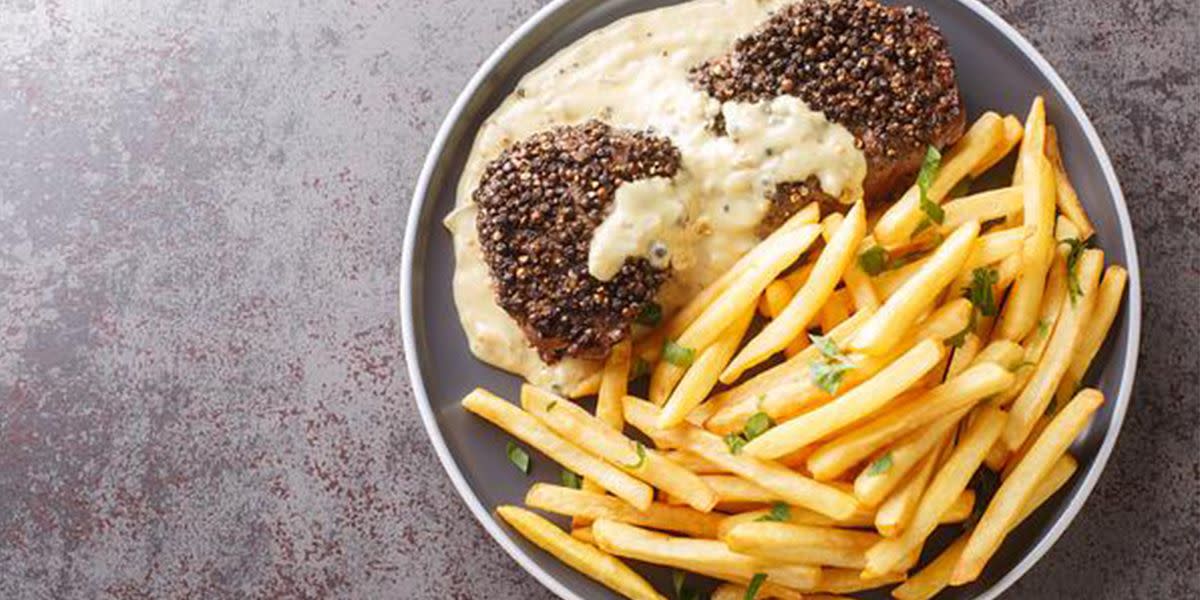
Steak au poivre is a French bistro classic that highlights the country’s expertise in both meat cookery and sauce making. Tender steak is crusted with cracked peppercorns, seared to perfection, and finished with a cognac cream sauce. The contrast between the peppery crust and the rich, silky sauce creates a balance that is simple yet luxurious.
Ingredients
4 tenderloin steaks
2 tablespoons black peppercorns
1 tablespoon kosher salt
2 tablespoons vegetable oil
2 tablespoons butter
1/4 cup shallots, minced
1/4 cup cognac or brandy
1 cup heavy cream
Fresh parsley
Directions
Press crushed peppercorns into both sides of steaks and season with salt.
Heat oil in a heavy skillet over high heat until almost smoking.
Sear steaks for 3–4 minutes per side for medium-rare.
Transfer steaks to a warm plate and tent with foil.
Add butter and shallots to the pan and cook until softened.
Remove pan from heat, add cognac, and carefully ignite if desired.
Return pan to heat, add cream, and simmer until the sauce thickens.
Return steaks to the pan to warm through and coat with sauce.
Garnish with parsley before serving.
For those who want the full bistro experience at home, Chef Cedric Nicolas’s Steak Frites au Poivre delivers perfectly cooked steak paired with crisp fries and a peppery, cream-enriched sauce that stays true to tradition.
Croque monsieur
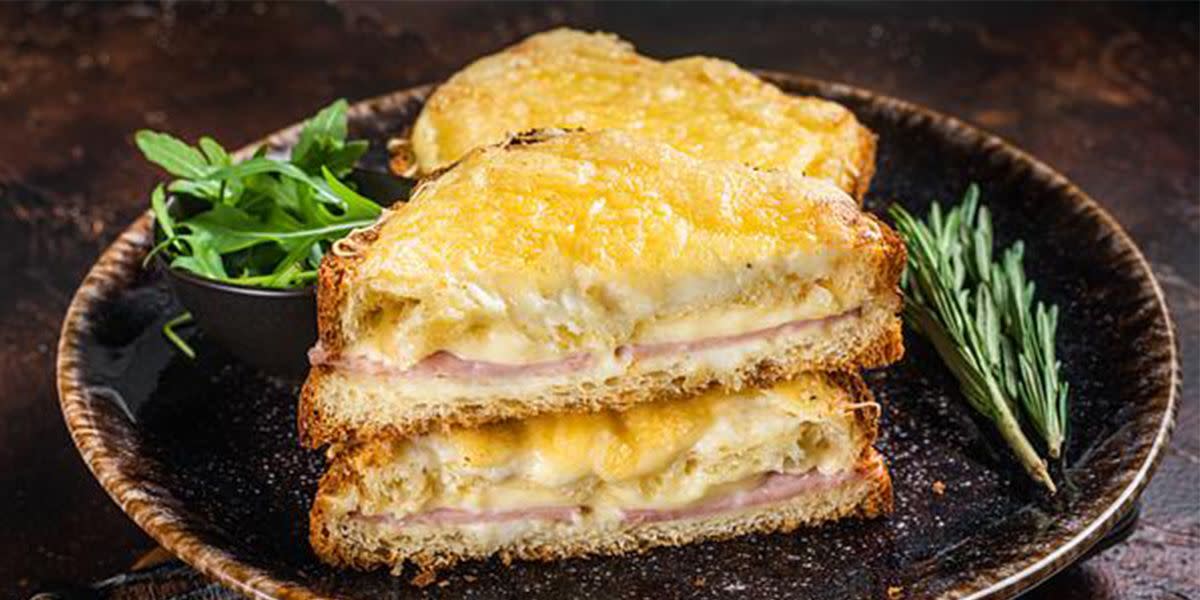
Croque monsieur is an elevated ham and cheese sandwich that shows how French technique can turn everyday ingredients into something irresistible. Layers of ham and Gruyère are tucked between slices of bread, brushed with Dijon, then topped with béchamel sauce and more cheese before being baked until golden and bubbling. The result is a perfect balance of crisp exterior and creamy, indulgent interior—a staple of Parisian cafés for over a century.
Ingredients
8 slices white bread
4 tablespoons butter
2 tablespoons flour
1 cup milk
Pinch of nutmeg
8 ounces ham
8 ounces Gruyère cheese
2 tablespoons Dijon mustard
Salt and white pepper
Directions
Make béchamel: Melt 2 tablespoons butter in a saucepan over medium heat.
Add flour and cook for 2 minutes, stirring constantly.
Gradually whisk in warm milk until smooth.
Simmer, stirring occasionally, until thickened, about 5 minutes.
Season with salt, white pepper, and nutmeg.
Lightly toast bread slices.
Spread one side of each bread slice with Dijon mustard.
Layer half the bread slices with ham and half the cheese.
Top with remaining bread slices, mustard side down.
Spread béchamel over the top of each sandwich.
Sprinkle with remaining cheese.
Bake at 400°F for 10–15 minutes until golden and bubbly.
For a version that stays true to its café heritage, Chef Cedric Nicolas’s Classic Croque Monsieur delivers the same rich flavors and textures with perfectly balanced ingredients and expert technique.
Tips for cooking traditional French food at home
French cooking may seem intimidating at first, but with a few key principles, it becomes both approachable and deeply rewarding. French food culture emphasizes savoring meals, not rushing through them—a habit reflected in the smaller portion sizes typically enjoyed in France compared to the U.S.². With patience and the right techniques, you can confidently bring the flavors of French cuisine into your own kitchen.
Choosing quality ingredients
French cuisine is built on celebrating the natural flavors of ingredients, which makes quality essential. The French BioNutriNet project³ found that organic food consumption was associated with diets richer in plant-based foods and lower pesticide residue, echoing the French commitment to high-quality, seasonal ingredients. Select the best you can afford, especially for items where flavor truly shines.
Key ingredients to prioritize
European-style butter: At least 82% fat content for richer pastries and sauces
Artisanal cheeses: Full-fat varieties deliver authentic taste and texture
Fresh herbs: Essential for building nuanced flavor profiles
When authentic French ingredients aren’t available, try these simple substitutions:
Crème fraîche → sour cream with a touch of heavy cream
Gruyère → Swiss cheese
Fresh herbs → dried herbs (use one-third the amount)
Mastering basic French techniques
Building flavor starts with proper technique. Browning meat before braising develops hundreds of flavor compounds through the Maillard reaction. From there, sauces and stews take on the depth and richness that define classic French recipes.
Essential techniques for French cooking:
Making a roux: Equal parts fat and flour, cooked together to thicken sauces
Deglazing: Adding liquid to dissolve caramelized bits in a hot pan
Braising: Browning first, then slow cooking in liquid for tenderness and depth
Mounting with butter: Finishing sauces with cold butter for richness and shine
Perhaps the most important technique is patience. Many dishes improve with slow cooking or resting, which allows flavors to deepen and harmonize.
Essential French pantry items
Keeping a few staples on hand makes impromptu French cooking possible. These ingredients form the foundation of countless French dishes and can elevate simple recipes into something memorable.
Must-have pantry items:
Dijon mustard
Herbes de Provence
Good-quality butter
Shallots
White and red wine (for cooking)
Heavy cream
Good-quality olive oil
Wine vinegar
Stocking these essentials ensures you’re ready to create authentic French food without a special trip to the store, while also bringing timeless French flavors into your everyday cooking.
Bringing classic French flavors to your table
Start your French cooking journey with one or two recipes that appeal to you most. Remember that French cooking is about technique and patience rather than complexity.
Don't be intimidated by the reputation of French cuisine. Many classic French dishes began as humble, rustic fare designed to make the most of available ingredients. The refinement came later, through generations of cooks perfecting techniques.
For readers who appreciate French cuisine but don't always have time to prepare these classics from scratch, we offer chef-made French dishes delivered fresh to your door. Our top chefs use traditional techniques and quality ingredients to create authentic French flavors.
Looking for easy French recipes to start with? Try Quiche Lorraine or Croque Monsieur, which use familiar ingredients while teaching fundamental French techniques. These approachable dishes build confidence before tackling more complex recipes like Beef Bourguignon or Cassoulet.
Frequently asked questions about French recipes
What are the five mother sauces in French cuisine?
Béchamel, velouté, espagnole, hollandaise, and tomato sauce are traditional French sauces that serve as the starting point for a wide variety of other classic preparations.
How can I substitute wine in French recipes if I don't use alcohol?
Replace red wine with beef stock mixed with a tablespoon of red wine vinegar or pomegranate juice, and substitute white wine with chicken stock with a splash of white wine vinegar or lemon juice to maintain acidity and depth.
What is the difference between French country cooking and haute cuisine?
French country cooking features rustic, hearty dishes made with local ingredients and simple techniques passed down through generations, while haute cuisine represents refined, technically complex restaurant cooking developed for aristocratic tables.
Which herbs are most commonly used in French cooking?
Thyme, bay leaf, rosemary, tarragon, and parsley are the most widely used herbs in French cooking, with thyme and bay leaf particularly essential for stocks and braises, while tarragon defines certain classic sauces and parsley brightens nearly everything.
Sources:

Be the first to know about new offers
Multiorder discounts, free items and more.